Formaldehyde
noun (n.)
Definition
Formaldehyde is a colorless gas with a strong odor, a simple chemical compound composed of hydrogen, oxygen, and carbon. All forms of life (bacteria, plants, fish, animals, and humans) naturally produce formaldehyde as part of cellular metabolism. Exposure to formaldehyde can have adverse health effects.Formaldehyde is a common colorless, strong-smelling chemical that is a gas at room temperature. It is naturally present in the environment, including in certain foods (and even inside our bodies), but it is also a widely used chemical in certain industries.
Formaldehyde product and structures:
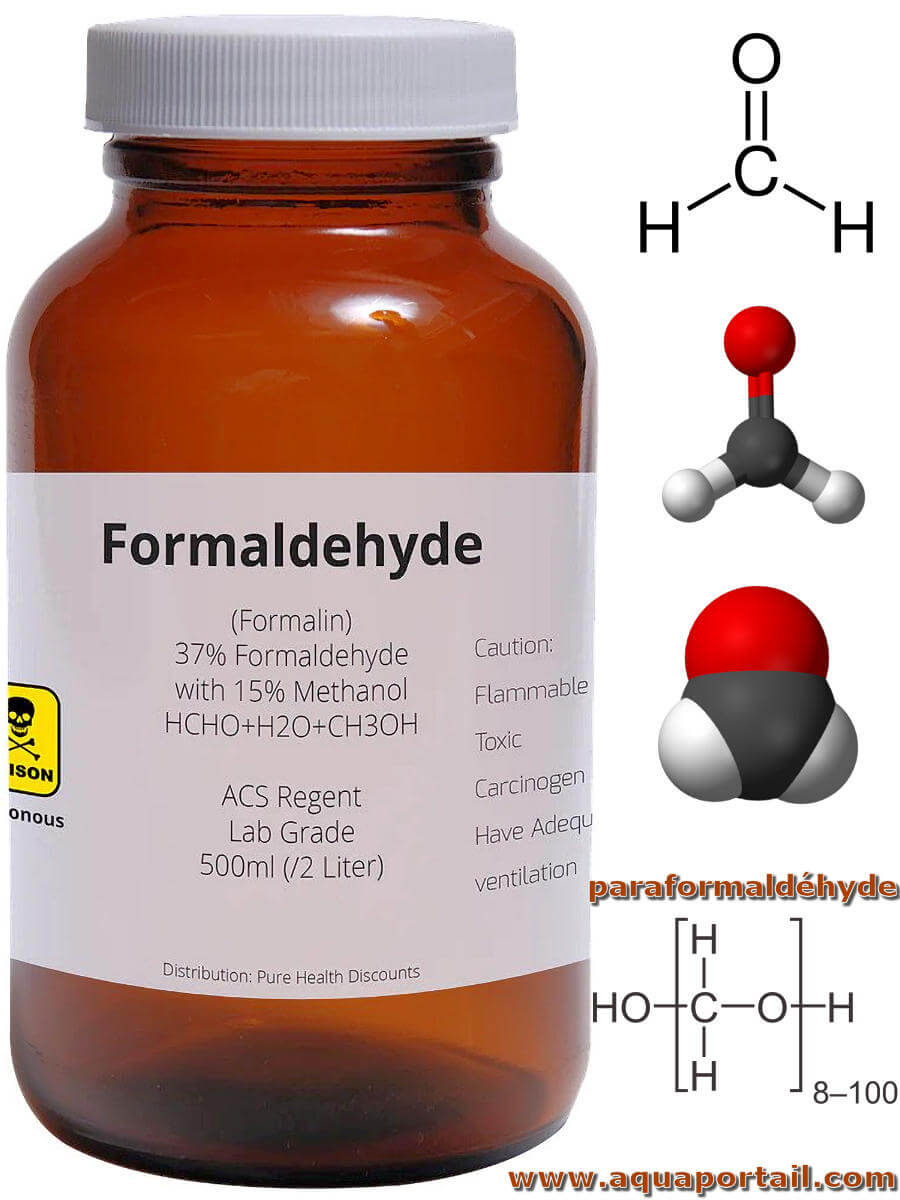
Formaldehyde is common in the chemical industry. It is well known as a preservative in medical laboratories, as an embalming fluid, and as a sterilizer. Its primary use is in resin production and as a chemical intermediate.
Explanations
Formaldehyde is perhaps best known for its preservative and antibacterial properties, but formaldehyde-based chemistry is used to manufacture a wide range of value-added products. Formaldehyde is one of the most studied and best understood compounds in commerce. Moreover, it is used in the manufacture of building materials and many household products.
When formaldehyde is dissolved in water, it is called formalin, which is commonly used as an industrial disinfectant and as a preservative in funeral homes and medical laboratories.
Formaldehyde is the chemical used to preserve biological specimens for centuries. Dead animals (or organs) are injected with the chemical to halt deterioration and decomposition, and are then immersed in a preservative fluid, usually ethanol or isopropyl alcohol.
Formaldehyde is a byproduct of combustion and certain other natural processes, and is therefore also found in emissions from unvented fuel-burning appliances, such as gas stoves or kerosene heaters, and in cigarette smoke.
Biological importance
Formaldehyde is a natural substance produced by every living organism. It is naturally present in a wide variety of fruits, vegetables, meats, fish, coffee, and alcoholic beverages. Formaldehyde is also produced in the human body as part of normal functions to build the basic materials required for important life processes.
Uses in construction
Formaldehyde is an essential chemical component in the production of hundreds of items that improve daily life. Little or no formaldehyde remains in the final products used by consumers.
Formaldehyde is used in pressed wood products, such as particleboard, plywood, and fiberboard, glues and adhesives, permanent-press fabrics, paper product coatings, and certain insulating materials.
Formaldehyde-based resins are used to make composite and engineered wood products widely used in cabinets, countertops, moldings, furniture, shelving, stair systems, flooring, wall coverings, support beams and trusses, and many other household furnishings and structures. Glues that use formaldehyde as a building block are exceptional bonding agents, offering high-quality performance that is extremely economical.
The wood products industry uses formaldehyde-based resins in a wide range of panels and derived products, enabling sustainable use of forest resources and minimizing waste. For example, composite wood panels are generally made from recovered wood waste that would otherwise be burned or disposed of in a landfill.
For urea and a cross-linking agent, see also urea-formaldehyde.
Dangers and issues
When formaldehyde is present in the air at levels above 0.1 ppm, some people may experience adverse effects such as watery eyes, burning sensations in the eyes, nose, and throat, coughing, wheezing, nausea, and skin irritation.
Studies show that formaldehyde does not accumulate in humans or animals because it is rapidly broken down by the body's natural metabolic processes. In the environment, formaldehyde is rapidly broken down in the air by moisture and sunlight, or by bacteria present in soil or water. The uses of formaldehyde are effectively regulated and government oversight has been expanded.
Healthcare applications
Formaldehyde has a long history of safe use in the manufacture of vaccines, anti-infective drugs, and capsules. For example, formaldehyde is used to inactivate viruses so they do not cause disease, such as the influenza virus during the manufacture of the flu vaccine.
Personal care and consumer products
Formaldehyde-based chemistry is essential in the production of many personal care and consumer items. These products may contain formaldehyde-releasing ingredients, which act as a preservative to kill microorganisms and prevent the growth of bacteria and other pathogens, thereby extending the product's shelf life.
In automobiles
Formaldehyde technology helps make vehicles lighter and more fuel-efficient. Formaldehyde-based resins are used to manufacture interior molded components and under-the-hood components that must withstand high temperatures. These resins are also used in the production of highly durable exterior primers, clear coats, tire cord adhesives, brake pads, and fuel system components.
Synonyms, antonyms
Spanish translation: formaldehído
3 synonyms (similar meaning) for "formaldehyde":
- formalin
- formol aldehyde
- methanal
0 antonyms (opposite meaning).
Related words and expressions to FORMALDEHYDE are directly connected by general or specific meaning.
The word FORMALDEHYDE is listed on page 1 of words starting with F in the dictionary glossary.
Related to "formaldehyde"
fabrication

Fabrication is the act or process of making, constructing, or inventing something. The manufacturing or fabrication process, whether artisanal or industrial...
famine

Famine is prolonged hunger with acute undernutrition or malnutrition of a population in a region (country).
fang

A fang is a long, pointed, and curved tooth. All animals equipped with fangs use them to bite. Whereas in mammals the upper-jaw fangs (called canines)...
fatty acids

Fatty acids are molecules possessing a long hydrophobic hydrocarbon chain and a highly hydrophilic carboxyl group at one of its ends.
