Bisulfite
noun (n.)
Definition
Bisulfite is a salt containing the monovalent sulfur-containing oxoanion radical HO3S- (hydrogen sulfite). It is the conjugate base of sulfurous acid (or the conjugate acid of the sulfite anion). It acts as a human metabolite, in yeasts and rodents, etc. For example, sodium bisulfite NaHSO3 is a hydrogen sulfite.Sodium bisulfite is a white crystalline solid with a slight odor of rotten eggs. Bisulfites in aqueous solutions are clear-colored liquids.
They can cause severe burns to the skin, eyes, and mucous membranes. The material is non-combustible.
Bisulfite pyrosequencing technique:

Bisulfite pyrosequencing is a technique used to quantify DNA methylation levels on DNA at single-base resolution. Bisulfite treatment converts all unmethylated Cs into uracil (U) bases. This includes all Cs inside and outside CpG sites. C bases that are methylated (yellow circle in the image above) are resistant to this change and remain as C after bisulfite treatment.
Explanations
Bisulfite is used in paper and leather manufacturing, as a food preservative, and in the production of dyes and chemicals.
In chemistry, the difference between bisulfite and bisulfate lies in the number of oxygen atoms bonded to the central sulfur atom. Bisulfate is the anion HSO4- whereas bisulfite is the anion HSO3-.
In chemistry
Sulfurous acid has the formula H2SO3 and a molecular weight of 82.075 g/mol. There is no clear evidence that sulfurous acid exists in solution, though the molecule has been detected in the gas phase. The conjugate bases of this elusive acid are, however, common anions: bisulfite (or hydrogen sulfite) = HSO3- and sulfite, SO32-.
Bisulfite salts are generally prepared by treating alkaline solutions with an excess of sulfur dioxide: SO2 + NaOH → NaHSO3.
HSO3- is the conjugate base of sulfurous acid H2SO3 and its presence depends on the pH of the solution: H2SO3 ⇌ HSO3- + H+.
Sulfurous acid has not been isolated as a distinct compound and does not appear to exist in solution either. An equilibrium much more consistent with spectroscopic evidence is given as follows: SO2 + H2O ⇌ HSO3- + H+.
HSO3- is a weakly acidic species with a pKa of 6.97. Its conjugate base is the sulfite anion, SO32-: HSO3- ⇌ SO32- + H+.
Bisulfites are reducing agents, as are all sulfites and sulfur dioxide, which contains sulfur in the same +4 oxidation state. Raman spectra of aqueous sulfur dioxide solutions show only signals due to the SO2 molecule and the bisulfite ion, HSO3-. Signal intensities are consistent with the following equilibrium: SO2 + H2O ⇌ HSO3- + H+.
Thus: Ka = 1.54 × 10⁻²; pKa = 1.81.
Aqueous solutions of sulfur dioxide, sometimes called "sulfurous acid", are used as reducing agents and disinfectants, as are solutions of bisulfite and sulfite salts. They are also mild bleaching agents and are used for materials prone to damage by chlorine-containing bleaches.
Sodium bisulfite conversion
Sodium bisulfite conversion of genomic DNA is the most commonly used method for DNA methylation studies providing single-nucleotide resolution. It allows differentiation and detection of unmethylated cytosines from methylated cytosines. This procedure can then be followed either by PCR amplification or next-generation sequencing (pyrosequencing) to reveal the methylation status of each cytosine in gene-specific or whole-genome amplification.
Treatment of DNA with sodium bisulfite converts unmethylated cytosine into uracil, whereas methylated cytosines remain unchanged. The DNA is then amplified by PCR where uracils are converted into thymines.
Bisulfite conversion deaminates unmethylated cytosines to uracil. Methylated cytosines resist the deamination process and are thus protected during bisulfite conversion. This unique feature of bisulfite-converted DNA forms the basis for distinguishing methylated from unmethylated CpG sites. Bisulfite conversion enables downstream applications of a variety of techniques to determine methylation status at selected/specific CpG sites or the overall methylation pattern of a particular genomic region.
However, bisulfite conversion is a harsh process known to cause DNA fragmentation, which can be a limitation. Furthermore, since bisulfite conversion is assumed to convert all unmethylated cytosines to uracil, a methylation-independent post-bisulfite control is necessary to validate the success of the process.
One such example is ALU-C4 (ALU) repeats, which harbor no CpGs and therefore undergo no methylation, making them ideal for use as an internal control. Following bisulfite conversion, DNA samples are analyzed using locus-specific or genome-wide techniques.
Bisulfite sequencing
Bisulfite sequencing is used for DNA methylation profiling. Bisulfite sequencing exploits the fact that methylated cytosine remains unchanged under bisulfite treatment, whereas unmethylated cytosine is converted to uracil.
Whole-genome bisulfite sequencing is made possible by advances in next-generation sequencing technologies to analyze DNA methylation genome-wide at single-nucleotide resolution.
Reduced representation bisulfite sequencing is a bisulfite-based protocol that enriches CG-rich parts of the genome, reducing the amount of sequencing required while capturing the majority of promoters and other relevant genomic regions at single-nucleotide resolution.
Synonyms, antonyms
Spanish translation: bisulfito
2 synonyms (similar meaning) for "bisulfite":
0 antonyms (opposite meaning).
Related words and expressions to BISULFITE are directly connected by general or specific meaning.
The word BISULFITE is listed on page 1 of words starting with B in the dictionary glossary.
Related to "bisulfite"
sulfite
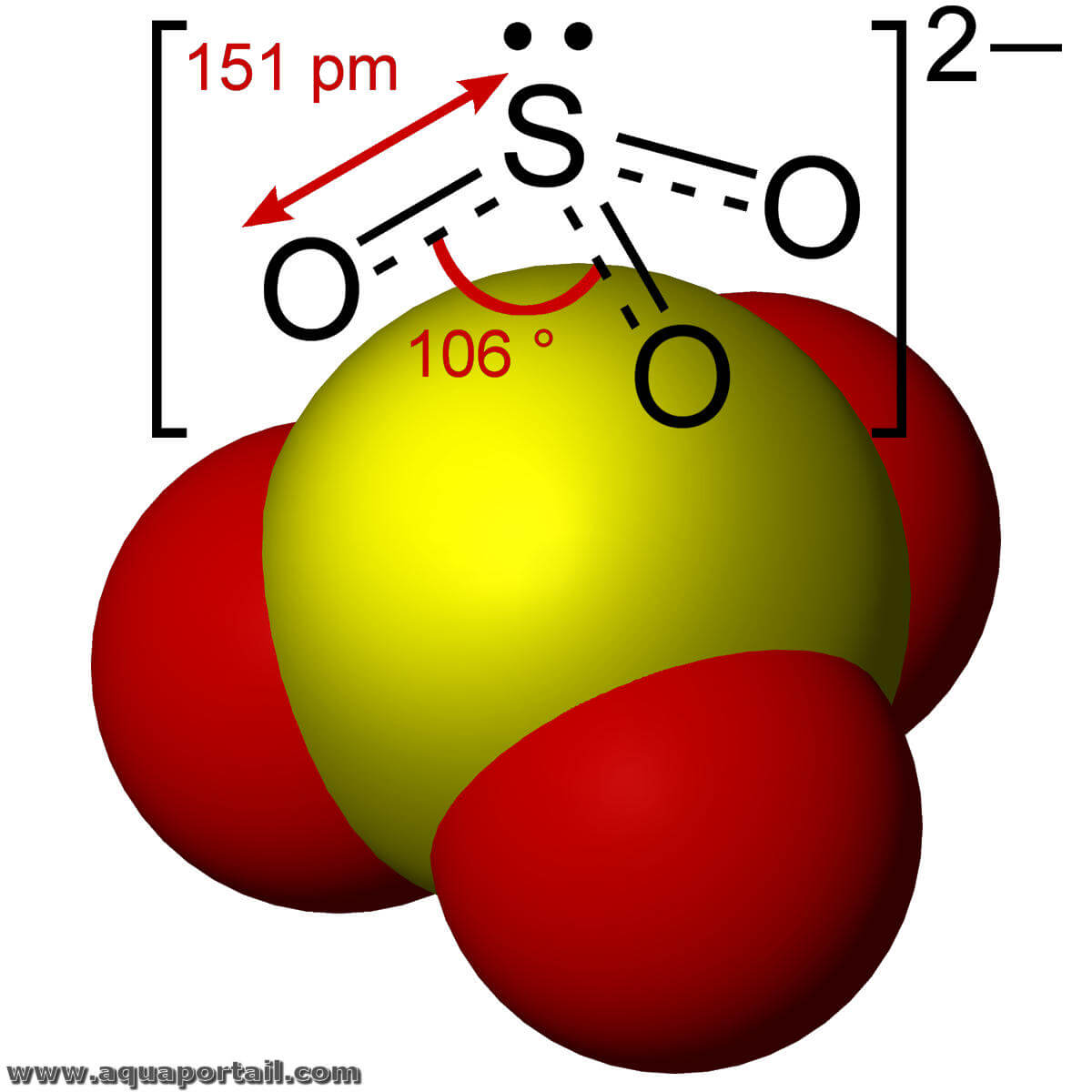
A sulfite is a chemical compound naturally consisting of a salt of sulfurous acid with the anion SO₃²⁻.
back-and-forth motion

A back-and-forth motion is a repeated reciprocating movement from one point to another. Moving back and forth indicates displacement in one direction and then...
bacterial

A bacterial organism or feature relates to bacteria. In bacteriology, bacterial cultures are grown in Petri dishes, allowing the bacteriologist to study...
bacterial artificial chromosome

A bacterial artificial chromosome (BAC) is a DNA construct, based on a functional fertility plasmid or F-factor, used for transformation and bacterial cloning...
