Heterocyst
noun (n.)
Definition
In filamentous cyanobacteria, a heterocyst is a thick-walled cell, lacking the usual pigmentation of this group and specialized in atmospheric nitrogen fixation. Heterocysts are specialized cells found in Cyanophyceae. They differ from the ordinary vegetative cells among which they are intercalated by their clear contents, thick membrane, and size.
Filamentous cyanobacteria can form different types of specialized cells: akinetes, hormogonia, and heterocysts. Cyanobacteria capable of forming heterocysts include Nostoc punctiforme, Cylindrospermum, and Anabaena.
A cyanobacterial heterocyst:

A heterocyst and an akinete are shown among the vegetative cells of the planktonic filamentous cyanobacterium Anabaena solitaria (a freshwater cyanophycean species).
Explanations
Heterocysts, which are nitrogen-fixing cells, fix nitrogen from the air using the enzyme nitrogenase to supply nitrogen to the cells of the filament for biosynthesis. Because nitrogenase is inactivated in the presence of oxygen, the heterocyst must create a micro-anaerobic environment. The unique structure and physiology of heterocysts require a global change in gene expression.
These nitrogen-fixing specialist cyanobacteria occur at a rate of approximately 1 cell per 10 to 20 vegetative cells. The filament (trichome) of these vegetative cells allows the sharing of fixed nitrogen in exchange for fixed carbon sources.
Role of heterocysts
The role of heterocysts is to:
- produce three additional cell walls, including one made of glycolipid that forms a hydrophobic barrier to oxygen
- produce nitrogenase and other proteins involved in nitrogen fixation
- degrade photosystem II, which produces oxygen
- upregulate glycolytic enzymes
- produce proteins that scavenge remaining oxygen
- contain polar plugs composed of cyanophycin that slow down cell-to-cell diffusion
Morphology
Heterocyst formation occurs under nitrogen-limiting conditions, that is, when reduced nitrogen sources (such as ammonia) are scarce; under these conditions, certain vegetative cells develop morphological and physiological characteristics enabling the fixation of atmospheric nitrogen N2, carried out by the enzyme nitrogenase.
Nitrogenase catalyzes the reduction of N2 to ammonia, according to the reaction: N2 + 16ATP + 8e- + 8H+ → 2NH3 + H2 + 16ADP + 16Pi, and it is rapidly inhibited by oxygen O2. Cyanobacteria are photosynthetic organisms that carry out the oxidation of water H2O into dioxygen. Consequently, the processes of water oxidation and nitrogen fixation must be separated. Some cyanobacteria separate these processes temporally: since photosynthesis takes place only in the presence of sunlight, nitrogen fixation occurs at night (cytoplasmic reaction). In organisms capable of forming heterocysts, the separation is spatial: the heterocyst does not perform photosynthesis and can therefore carry out nitrogen fixation regardless of the presence or absence of light.
To ensure an anaerobic environment inside the cell, the heterocyst has a thicker cell wall than the vegetative cell. In addition to the cytoplasmic membrane and the outer membrane delimiting the periplasm present in both cell types, the heterocyst also features a polysaccharide layer and an outermost glycolipid layer. The contact zone between vegetative cells and heterocysts is smaller than that between two vegetative cells, forming a neck-like structure; it is recognized that this tiny contact zone (plasmodesma) serves to prevent O2 penetration; however, some contact is necessary for the transport of sugars (carbon source) from vegetative cells to heterocysts. Nevertheless, in these contact zones, observable under microscopy as poles, some oxygen can enter the heterocyst along with nitrogen, but it is rapidly consumed during cellular respiration. The poles are mainly composed of cyanophycin granules, a substance rich in nitrogenous amino acids, such as arginine.
During the process of cellular differentiation, the heterocyst rapidly loses its carboxysomes (concentrations of proteins involved in carbon fixation) and thylakoid morphology is radically altered, with the cell losing photosystem II activity, which results in reduced pigmentation. Heterocysts generally have a rounder shape than vegetative cells and are larger than them.
✅ In the laboratory, only a small fraction of cells differentiates into heterocysts. For example, the strain Anabaena PCC 7120 exhibits one heterocyst every 10 to 20 cells, and the frequency is similar to that of Nostoc punctiforme (3–10%). The distribution of heterocysts along the filament is not random; rather, it is regulated by several factors, such as specific regulatory proteins diffusing along the filament, species-dependent physiological traits (specific characters), or signals originating from vegetative cells.
Physiology
In the laboratory, the differentiation process from a vegetative cell to a heterocyst takes about 20 hours at 30 °C (86 °F), beginning with a shift in the gene expression pattern in response to a low available amount of nitrogenous compounds. If these compounds are reintroduced into the culture medium within the first 9 to 12 hours, differentiation is reversed, whereas after this period it is no longer canceled.
There is a differentiation process. Alpha-ketoglutarate (also called 2-oxoglutarate), an intermediate of the tricarboxylic acid cycle, is used by cyanobacteria in various biosynthetic pathways and plays a key role in ammonia assimilation. Consequently, when nitrogenous compounds are scarce, α-ketoglutarate is not as extensively used for ammonia uptake and accumulates inside the cell. Rising levels of α-ketoglutarate are sensed by the transcriptional regulator NtcA, which in turn activates the expression of other genes. In particular, activation of the gene encoding the protein HetR involves a general regulator in heterocyst maturation. Other transcription factors (sigma factors) are expressed during differentiation. Several other proteins are expressed at this stage, many of them with functions that are not yet fully elucidated.
Nitrogenase is produced at a later stage, when the heterocyst is fully developed.
There are changes in energy metabolism. Differentiation alters energy metabolism: the cell ceases to fix carbon by losing RuBisCO and photosystem II, but continues to rely on photosystem I-linked photophosphorylation for ATP production. The respiration rate increases. Morphological changes make the intracellular environment more anaerobic, ideal for nitrogenase activation.
To compensate for the loss of carbon fixation capacity, the heterocyst receives sugars (probably sucrose) from neighboring vegetative cells. The polysaccharide granules visible in vegetative cells disappear during the differentiation process into heterocysts, indicating intense carbohydrate catabolic activity. The pentose phosphate pathway also plays an important role in the energy metabolism of the heterocyst, providing the reducing power and chemical energy required for the nitrogen reduction reaction.
The metabolic activity of nitrogenous compounds is significant in heterocysts. Ammonia produced by nitrogenase is incorporated into amino acids, particularly glutamine (derived from glutamate and a synthetase), with large amounts of glutamine synthetase being used for this purpose. Heterocysts then export the nitrogenous compounds to neighboring vegetative cells, notably using the seemingly continuous periplasmic system along the entire filament.
There is an action on hydrogen metabolism. In addition to ammonia, nitrogenase produces hydrogen, H2. All nitrogen-fixing cyanobacteria also possess a hydrogenase capable of oxidizing H2 into H+. Although the exact cellular localization of hydrogenases is debated, there is a strong correlation between nitrogenase and hydrogenase activity, suggesting that the production of H2 by the former induces the expression of the latter.
Synonyms, antonyms
Spanish translation: heterocisto
1 synonym (similar meaning) for "heterocyst":
0 antonyms (opposite meaning).
Related words and expressions to HETEROCYST are directly connected by general or specific meaning.
The word HETEROCYST is listed on page 1 of words starting with H in the dictionary glossary.
Related to "heterocyst"
aerocyst

An aerocyst is a specialized organ in the form of a gas-filled vesicle, often simply filled with air, though in algae this nitrogen-rich gas vesicle acts...
heterokaryote
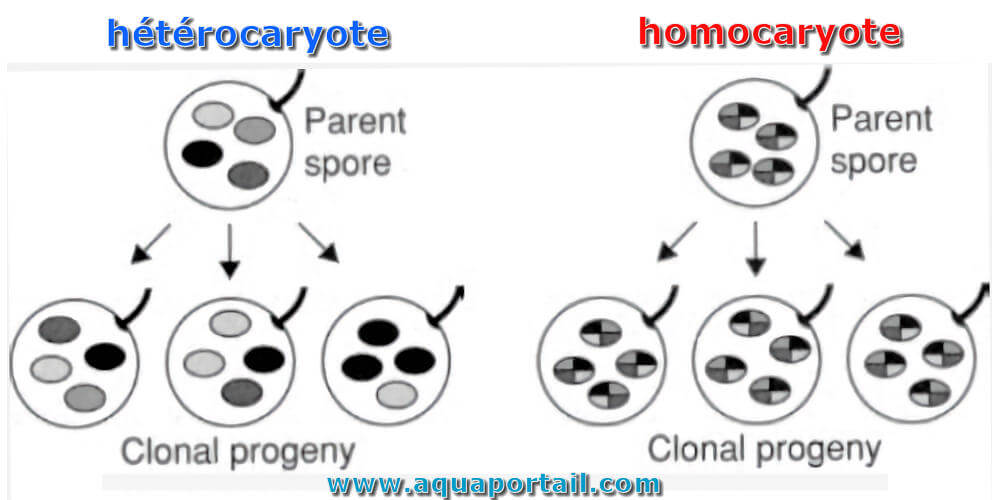
In biology, heterokaryotic describes a cell possessing at least two nuclei of different genetic origins, pertaining to heterokaryons and heterokaryotes.
heterokont
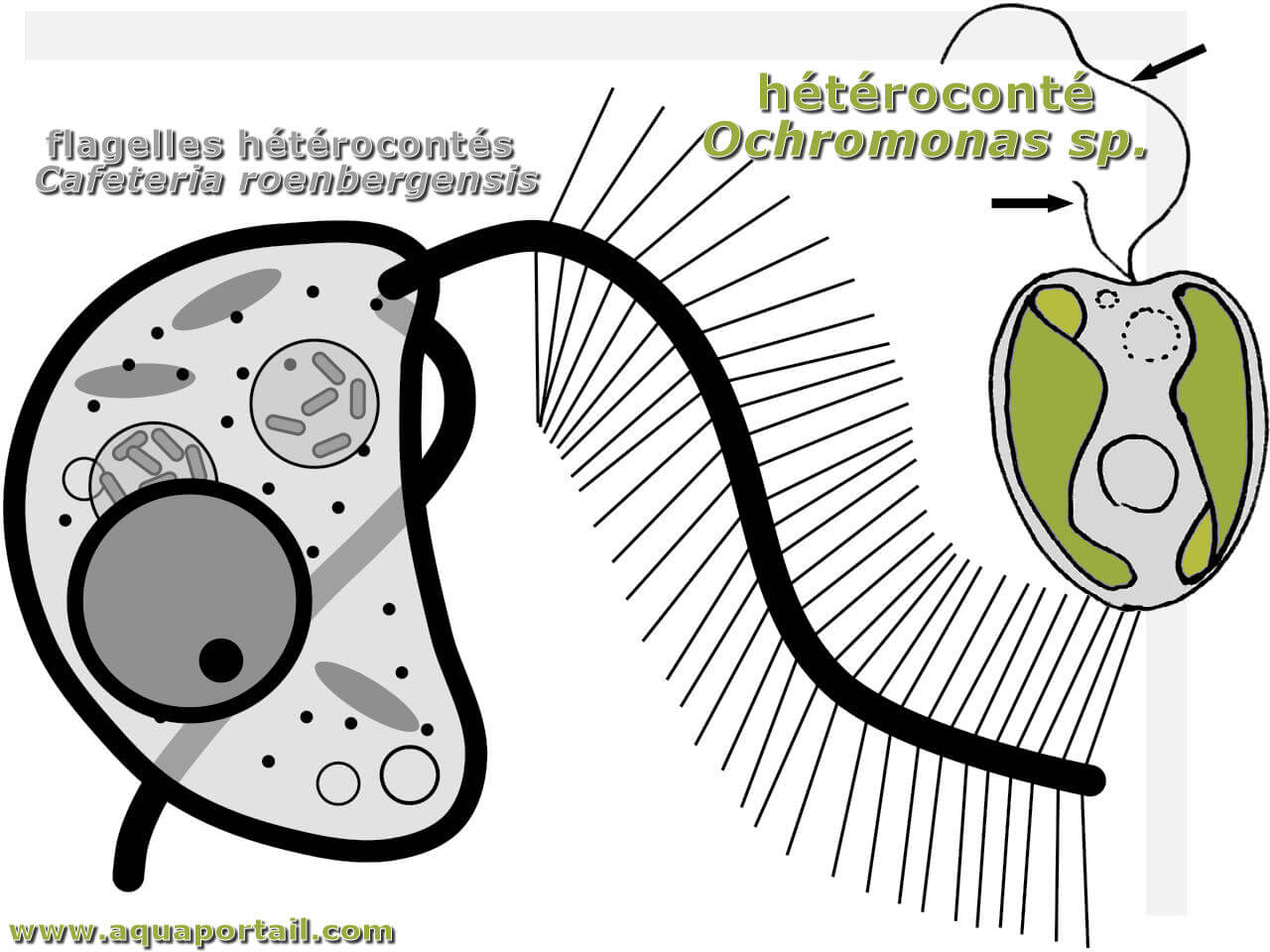
A heterokont (stramenopile) is a eukaryote with swimming cells, of the domain Heterokonta, equipped with an anterior flagellum bearing tripartite tubular...
heteromorphic

Something heteromorphic or allomorphic describes a life cycle in which the individuals making up one generation are morphologically different from those...
