Glutamine
noun (n.)
Definition
Glutamine is a non-essential amino acid in humans, occurring as the γ-monoamide of L-glutamic acid. This proteinogenic amino acid is the most abundant free amino acid in the human body. It participates in nitrogen transport, acid-base balance, and the regulation of cellular metabolism. Furthermore, glutamine serves as an energy substrate for rapidly dividing cells, such as those of the immune system and intestinal epithelium.Structure of glutamine:
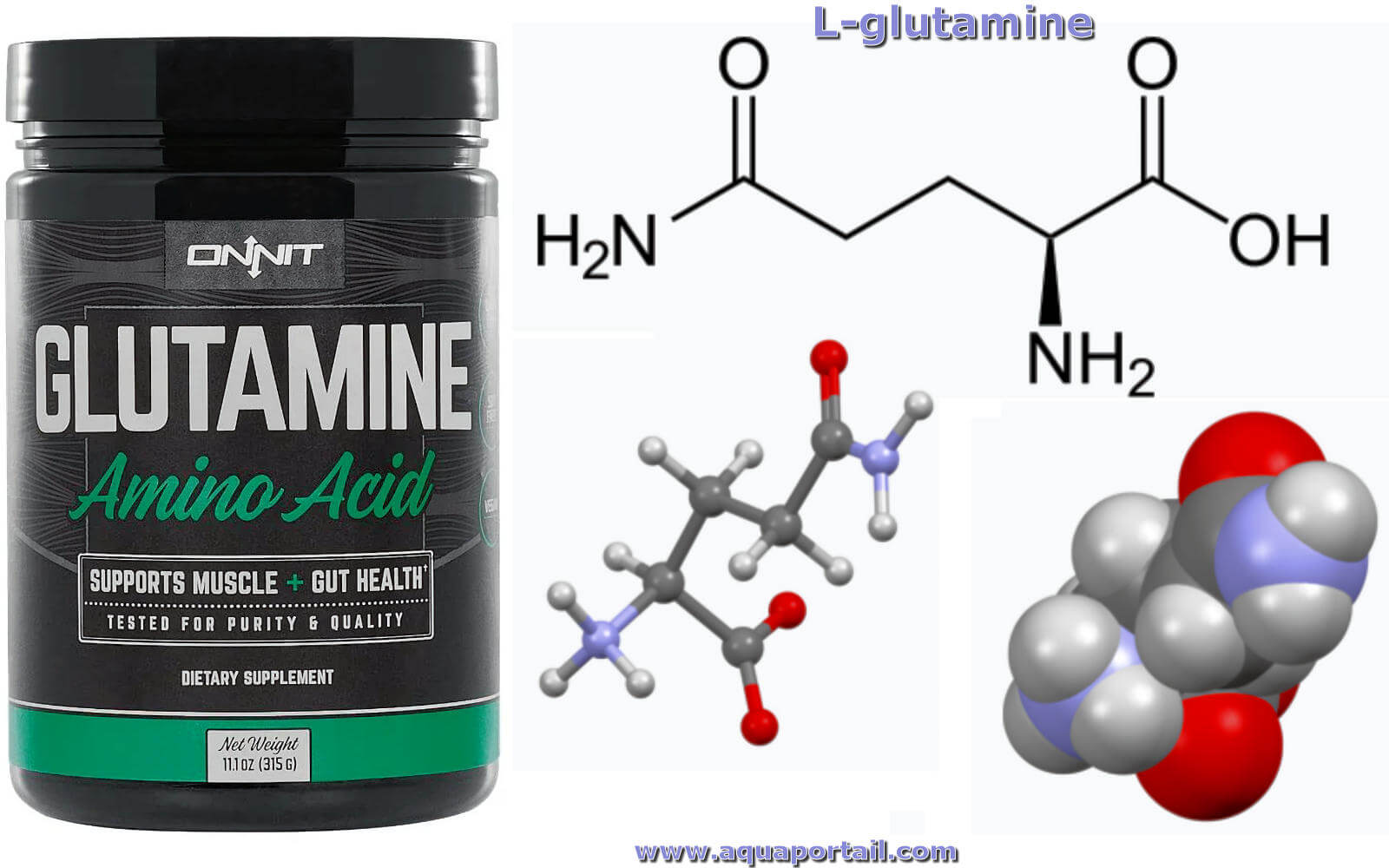
Glutamine, with the chemical formula C5H10N2O3, is a molecule derived from the reaction of glutamic acid with ammonia, serving as a cellular NH2 donor. Glutaminase is an enzyme that catalyzes the hydrolysis of glutamine into glutamic acid and ammonia.
Explanations
Glutamine occurs in free form in all plants, animals, fungi, and bacteria as a central metabolite in the metabolism of all living organisms. In cyanobacteria, nitrogen is exported out of heterocysts in this form.
Various properties
L-glutamine, symbolized as "Gln" or "Q", is one of the twenty proteinogenic amino acids. It serves as a transport and storage form of nitrogen. Glutamine donates its amide nitrogen to 5-phosphoribosyl-1-pyrophosphate for the biosynthesis of nitrogenous bases.
In metabolism, L-glutamine acts as a universal amine donor. In blood plasma, glutamine accounts for about 20% as the primary component of the free amino acid pool. Following surgery, severe trauma, burns, and infections, a pronounced depletion of glutamine is consistently observed. Glutamine is encoded by the mRNA base triplets CAG or CAA.
Colorless crystalline glutamine is insoluble in alcohols, benzene, and chloroform. Conversely, it is moderately soluble in water (approximately 65 g/L at 40 °C / 104 °F).
Glutamine exists primarily as an "inner salt" or zwitterion, whose formation is explained by the transfer of a proton from the carboxyl group to the lone electron pair on the nitrogen atom of the amino group.
The zwitterion does not migrate in an electric field because it carries zero net charge. Strictly speaking, this occurs at the isoelectric point (at a specific pH value), where the zwitterion also exhibits its lowest solubility in water. Its isoelectric point is 5.65.
Synthesis of glutamine
Glutamine is synthesized primarily in skeletal muscles, the lungs, and adipose tissue.
Plasma glutamine plays an important role as a carrier of nitrogen, carbon, and energy between organs and is utilized for hepatic urea synthesis, renal ammoniagenesis, gluconeogenesis in the liver and kidneys, and as a major respiratory fuel for many cells.
Glutamine catabolism is initiated by either of the two isoforms of mitochondrial glutaminase.
L-glutamine is produced industrially via fermentation. Within the organism, L-glutamine is synthesized from glutamic acid by glutamine synthetase, consuming adenosine triphosphate (ATP). It can subsequently be broken down into succinate in three reaction steps.
Synonyms, antonyms
Spanish translation: glutamina
3 synonyms (similar meaning) for "glutamine":
- 2-amino-5-carbamoylbutanoic acid
- Gln
- L-glutamine
0 antonyms (opposite meaning).
Related words and expressions to GLUTAMINE are directly connected by general or specific meaning.
The word GLUTAMINE is listed on page 1 of words starting with G in the dictionary glossary.
Related to "glutamine"
asparagine
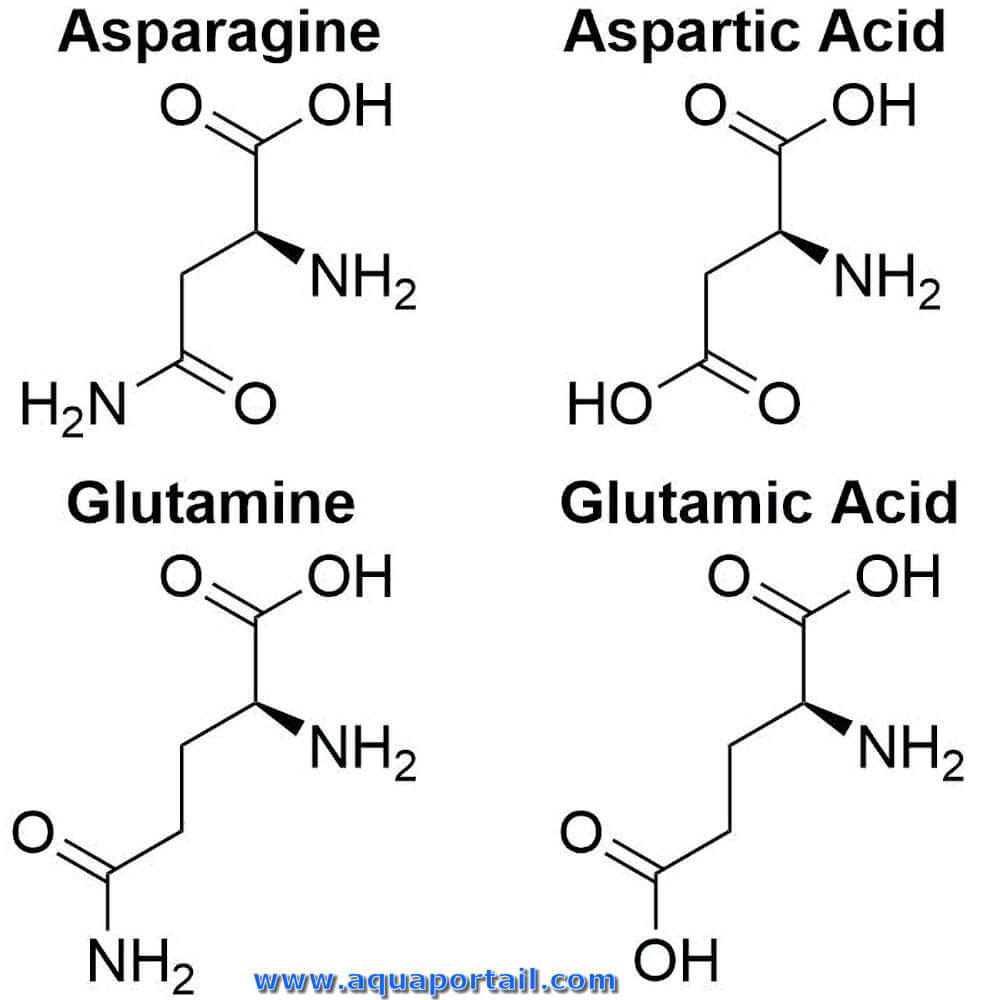
Asparagine is an amino acid (non-essential in humans) that enters into the constitution of proteins in living organisms.
amine

An amine is generally a functional group (amino group) whose nitrogen atom possesses a lone pair of electrons.
chloramine
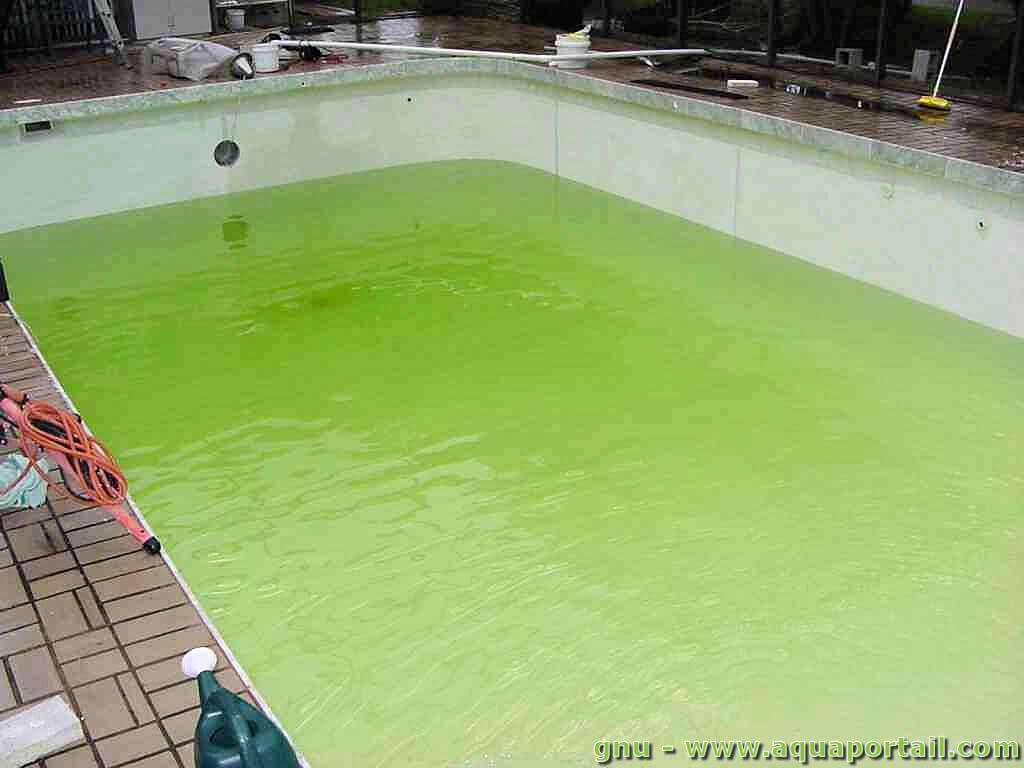
A chloramine is a chemical compound used in chloramination. Monochloramine has the chemical formula NH₂Cl and is typically used in dilute aqueous solution...
famine

Famine is prolonged hunger with acute undernutrition or malnutrition of a population in a region (country).
