Glycolate
noun (n.)
Definition
A glycolate is a salt, ester, or conjugate base of glycolic acid derived from an acetate. Glycolate is a hydroxy monocarboxylic acid anion that is an acetate in which the methyl group has been hydroxylated. It functions as both a human metabolite and an algal metabolite. See also carboxylic acid and glycolic acid.
Diagram of the glycolate pathway:
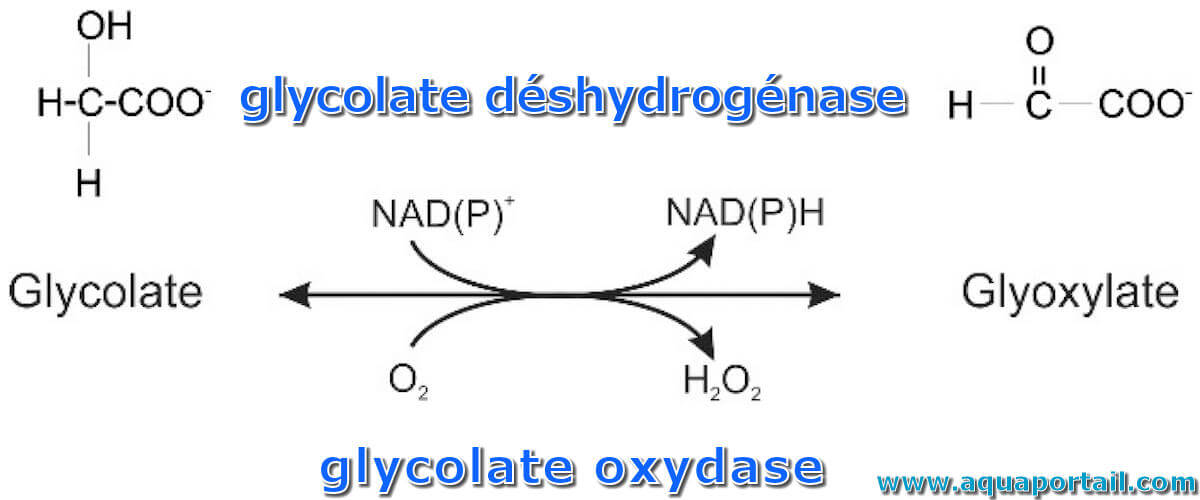
The oxidation of glycolate can be catalyzed either by a glycolate dehydrogenase (top) or by a glycolate oxidase (bottom).
Glycolate oxidase
Glycolate oxidase (GOX, or hydroxyacid oxidase) is an enzyme that catalyzes the degradation of glycolate in certain algae. Glycolate oxidase catalyzes the conversion of an (S)-2-hydroxy acid and molecular oxygen into a 2-oxo acid and hydrogen peroxide. In higher plants, GOX catalyzes the oxidation of glycolate to glyoxylate. GOX is part of glyoxylate and dicarboxylate metabolism and uses FMN as a cofactor. GOX catalyzes the first step in utilizing glycolate as a sole carbon source.
The plants and algae concerned include streptophycophytes (and Embryophyta, but not Chlorophyta), Glaucophyta, Rhodophyta, Raphidophyceae, Chrysophyceae sensu stricto, Eustigmatophyceae, Tribophyceae (Xanthophyceae), and Phaeophyceae; this degradation takes place in peroxisomes and results in the production of hydrogen peroxide. See also glycolate dehydrogenase.
Glycolate oxidase 1 is a protein that in humans is encoded by the HAO1 gene. Mutations in GOX lead to asymptomatic isolated hyperoxaluria type I.
In the biological assembly of the human glycolate oxidase 1 homotetramer, the GOX structure exhibits the typical β8/α8 barrel fold (alpha helices, beta strands, loops, turns) of an α-hydroxy acid oxidase, and its active site contains the FMN cofactor.
Glycolate dehydrogenase
Glycolate dehydrogenase is an enzyme of the oxidoreductase family that catalyzes the degradation of glycolate in certain algae such as chlorophytes (but not streptophycophytes or embryophytes), cyanophytes, euglenids, and diatoms. This degradation occurs in mitochondria and does not produce hydrogen peroxide. The two substrates of this enzyme are glycolate and an acceptor, whereas its two products are glyoxylate and the reduced acceptor. Its oxidase counterpart also exists.
This enzyme participates in glyoxylate and dicarboxylate metabolism. In diatoms, the enzyme differs from that of other groups by showing stereospecificity for L-lactate instead of D-lactate; see also, for the oxidase form, glycolate oxidase.
Glycolate dehydrogenase is one of the enzymes metabolizing glyoxylic acid and dicarboxylic acid, and is an oxidoreductase that catalyzes the chemical reaction: Glycolic acid + acceptor ↔ Glyoxylic acid + reduced acceptor. According to the reaction formula, the substrates of this enzyme are glycolic acid and an acceptor, and the products are glyoxylic acid and a reduced acceptor.
The systematic name of this enzyme is glycolate:acceptor 2-oxidoreductase, and its aliases include glycolate oxidoreductase, glycolic acid dehydrogenase, and glycolate:(acceptor) 2-oxidoreductase.
Synonyms, antonyms
Spanish translation: glicolato
3 synonyms (similar meaning) for "glycolate":
- glycolic acid
- hydroxy acid
- hydroxyacetic acid
0 antonyms (opposite meaning).
Related words and expressions to GLYCOLATE are directly connected by general or specific meaning.
The word GLYCOLATE is listed on page 1 of words starting with G in the dictionary glossary.
Related to "glycolate"
glycogen

Glycogen is the stored form of glucose, composed of numerous interconnected glucose molecules, that animals use as an energy reserve.
glycopeptide
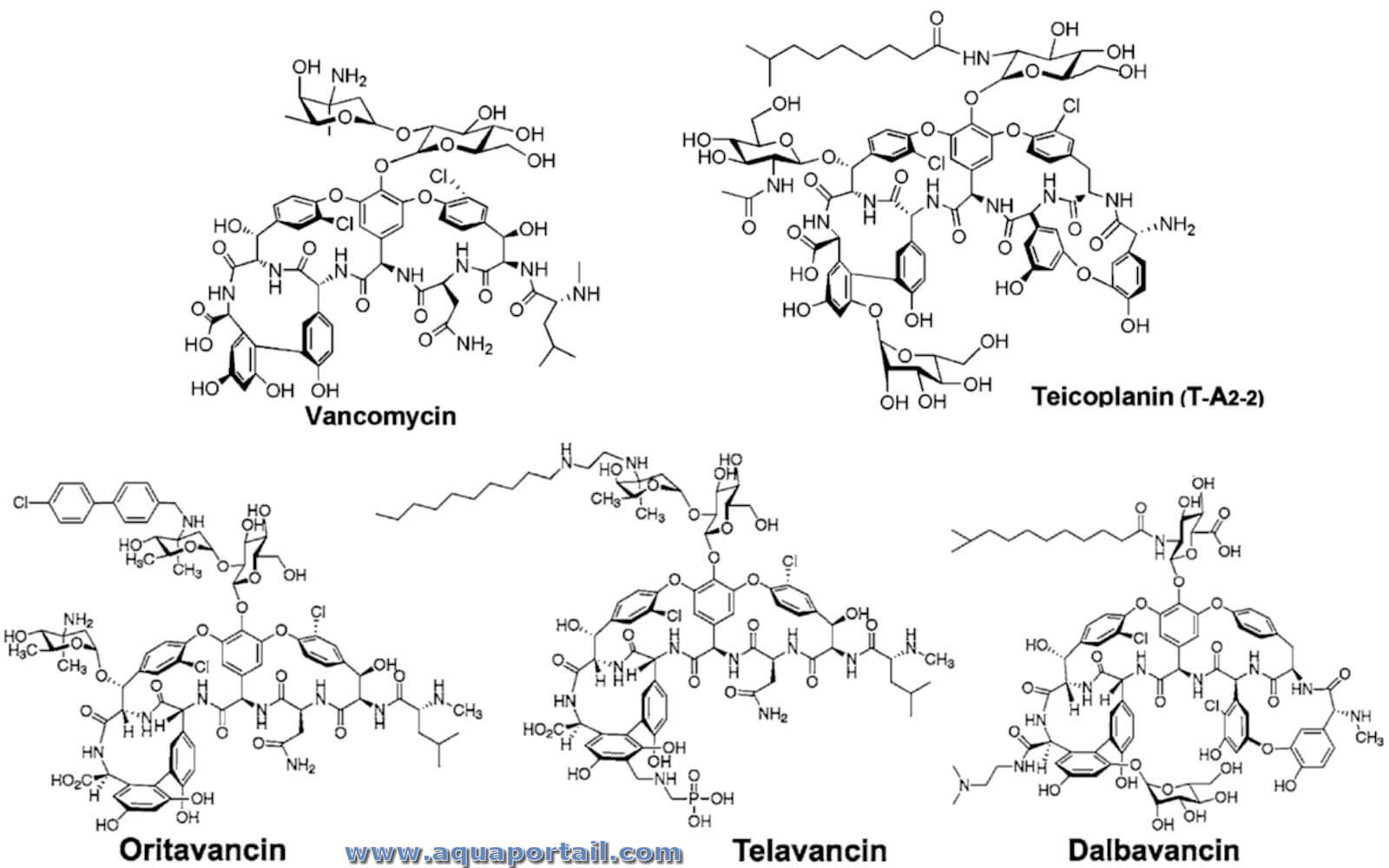
A glycopeptide is a compound formed of a peptide covalently linked to a carbohydrate moiety.
glycoproteic

Glycoproteic describes anything exhibiting the characteristics of, relating to, or involving a glycoprotein, a protein conjugated with carbohydrates.
glycoprotein

A glycoprotein is a heteroprotein consisting of a peptide moiety covalently linked to a carbohydrate moiety.
