Amphisbaena
noun (n.)
Definition
In zoology, an amphisbaena (worm lizard) is one of the many animals belonging to the clade Amphisbaenia among squamates. The name derives from a mythological serpent with a head at each end of its body.
In classical mythology, the amphisbaena is a fabled serpent having a head at each end of its body and the ability to move forward or backward. The creature was popular in medieval bestiaries.
Depiction of a mythological amphisbaena:
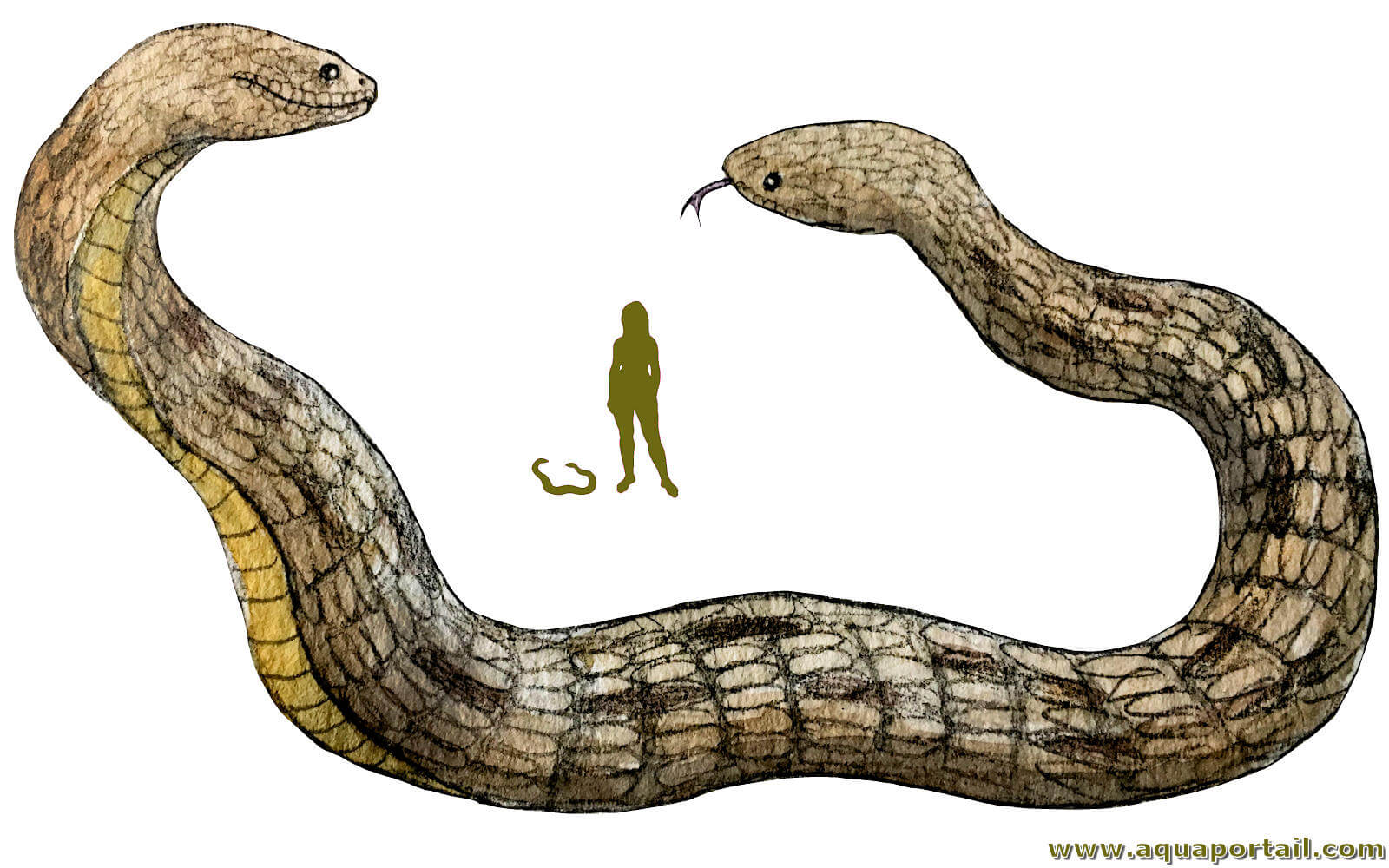
The mythological amphisbaena is a giant serpent with a head at each end of its body. Each half of its body resembles a viper. Both heads display large sets of fangs.
Mythological amphisbaena
According to classical mythology, the amphisbaena (Amphisbaena) is a two-headed serpent, one at the front and one at the tail end. When moving forward, as driven by the need for forward motion, it leaves one behind: the rear one serves as a tail while the front one serves as a head. Conversely, if it wishes to move backward, it uses both heads in the exact opposite way to what it did before.
According to Pliny the Elder, the Amphisbaena (serpent) has a twin head, that is, one at its tail end as well, as though it were not enough for poison to be poured forth from a single mouth.
While the two-headed amphisbaena gently entwines its coils together and spits its venom from each mouth, rolling with a double gliding motion, and the creeping head joins the head as it leaps sideways in twirling waves along its back: so that this splendid twisted necklace shook its twisted back, with its pair of curved necks meeting at the middle of the boss, a flexible two-headed serpent thick with scales. And through the curved joints of the work, the golden circle of the mobile spine bent until the head glided with an undulating motion and belched a mimic hiss through its jaws. With the two mouths on either side, where beginning and end meet, stood a golden eagle that seemed to cleave the open air, perched between the serpent's heads, gleaming brightly with the fourfold sweep of its four wings (that is, an eagle grasping the amphisbaena in its talons).
Modern amphisbaena
Amphisbaenians are terrestrial animals in the squamate group (alongside lizards and snakes). They are distinctive in possessing two hemipenes instead of a single penis. These two hemipenes represent another connection (in addition to the tail resembling a head) to the mythological creature.
See the family Amphisbaenidae.
A white amphisbaena:
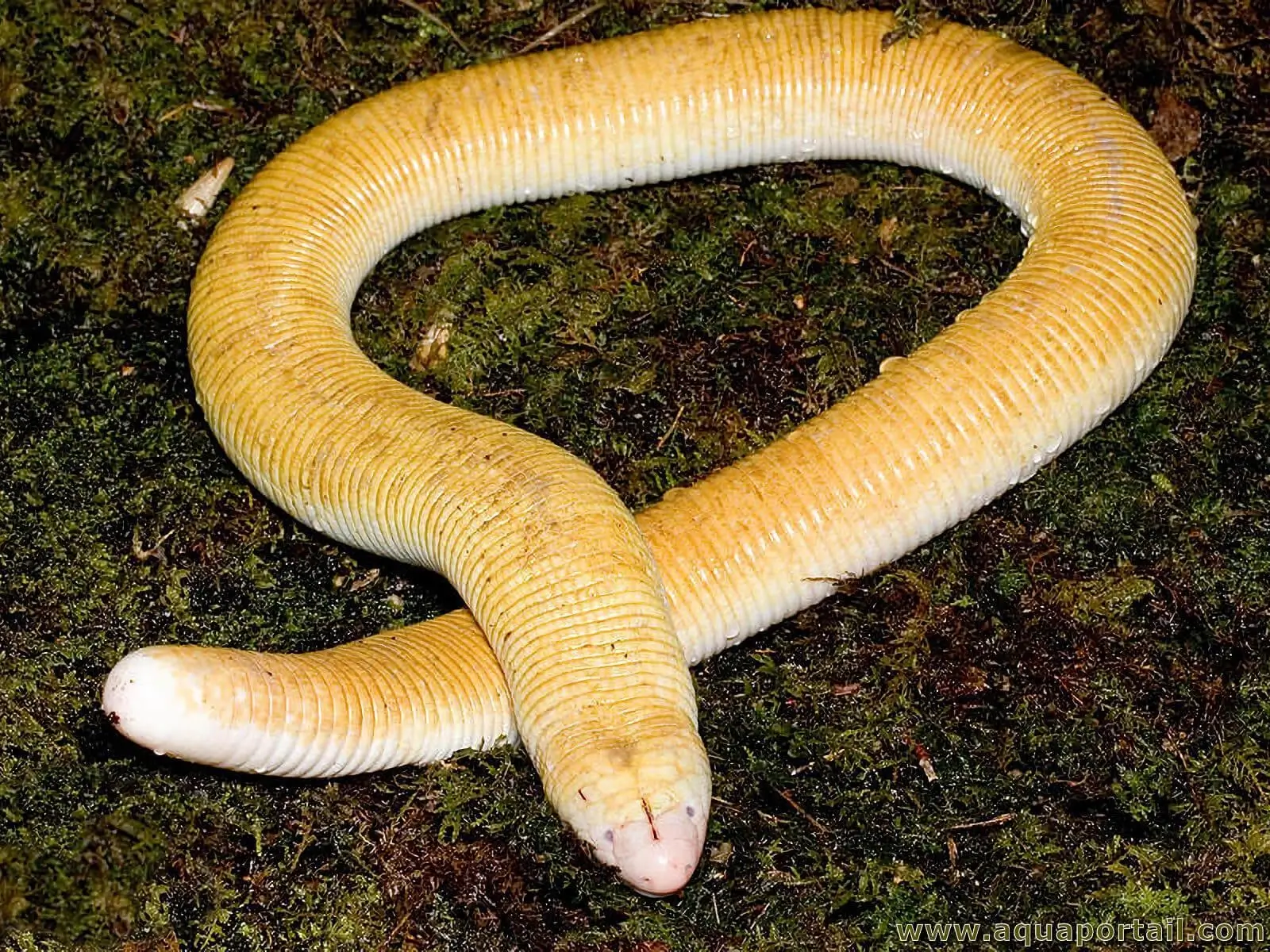
Amphisbaenians, such as Amphisbaena alba, are highly specialized for a fossorial (burrowing) lifestyle. See also the species Amphisbaena bolivica.
Nearly all amphisbaenians are completely limbless, with the exception of the three species of the Mexican genus Bipes, which have small, well-developed forelimbs. All are elongated, measuring between about 10 and 70 cm (4 to 28 in), with a long trunk region and a short tail (the musculature required for burrowing is located in the trunk).
They possess highly distinctive skin made up of conspicuous rings of scales, called annuli, encircling the trunk. This specialized integument, loosely attached to the main trunk, forms a tube within which the animal can move forward and backward. This is the key to the burrowing ability of amphisbaenians. An amphisbaena can use longitudinal muscular contractions between each annulus to bunch up the skin and anchor part of its body in the soil. The trunk muscles can then be used to push the body forward inside the integumentary tube. The front end can then be anchored while the posterior integument is drawn forward, after which the cycle repeats, allowing the amphisbaena to advance.
Amphisbaenians are head-first burrowers, and their skulls are therefore heavily modified for digging.
While the majority of amphisbaenians share a similar appearance close to that described above, some are more distinct and warrant further description. As noted earlier, members of the family Bipedidae (genus Bipes) possess functional forelimbs. These are used for initial excavation at the surface of a tunnel, and the first digit has extra phalanges to increase digging efficiency.
Trogonophids (family Trogonophidae) also exhibit certain distinguishing traits. First, they have a triangular cross-section, as opposed to cylindrical. Second, they have acrodont dentition, unlike the pleurodont dentition of other amphisbaenians. Third, they do not exhibit caudal autotomy (the ability to self-amputate the tail).
Whereas the majority of amphisbaenians are found in Africa and South America (members of Amphisbaenidae, Blanidae, and Trogonophidae), others occur in Florida (Rhineura floridana), Cuba (Cadea spp.), the Caribbean (members of Amphisbaenidae), Mexico (Bipedidae), the Middle East (members of Trogonophidae), and the Mediterranean region (members of Blanidae).
All amphisbaenians burrow into soil or loose, dry sand.
Synonyms, antonyms
Spanish translation: anfisbena
1 synonym (similar meaning) for "amphisbaena":
0 antonyms (opposite meaning).
Related words and expressions to AMPHISBAENA are directly connected by general or specific meaning.
The word AMPHISBAENA is listed on page 1 of words starting with A in the dictionary glossary.
Related to "amphisbaena"
lizard
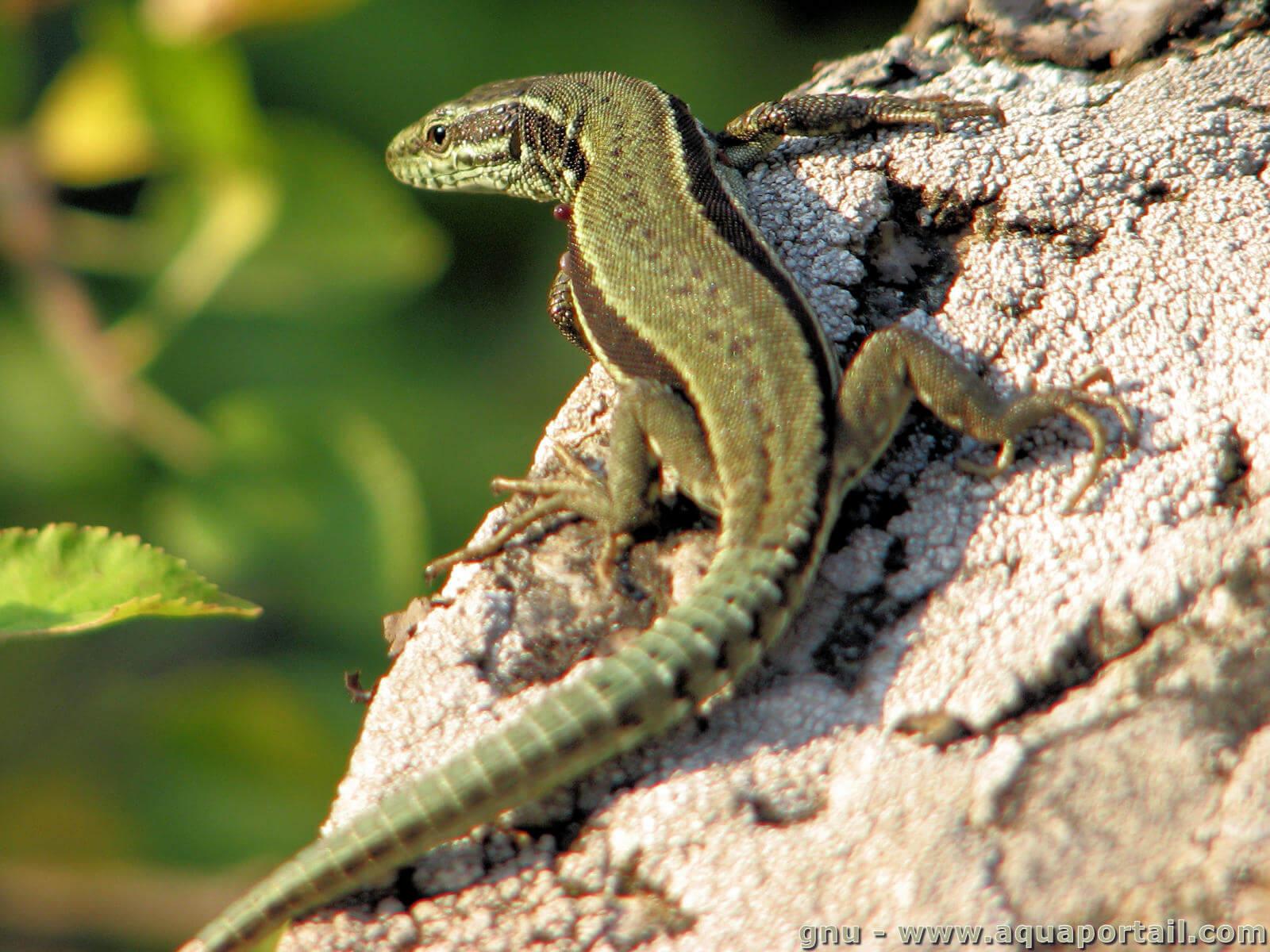
A lizard names certain or all species of certain genera of the families Lacertidae and Gekkonidae among squamate reptiles.
amphibious
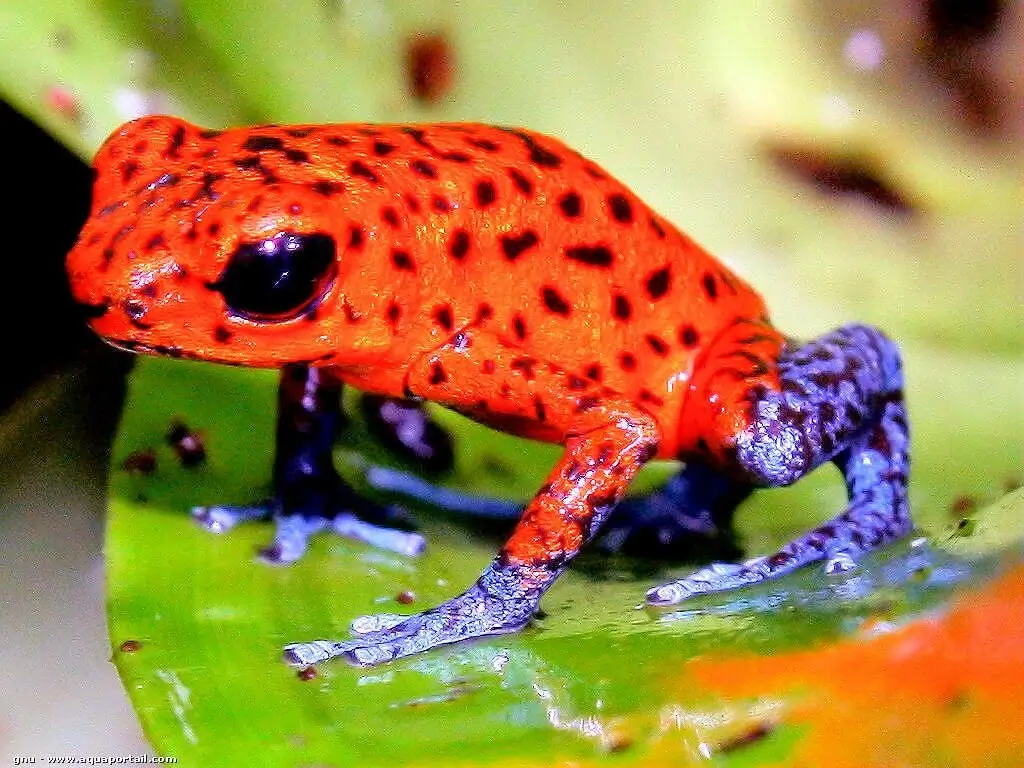
An amphibious animal lives in dependence on water, for reasons other than thirst, while spending part of its life in a terrestrial environment.
amphiesma

The amphiesma is the superficial layer of flattened alveoli, either empty or containing amorphous substances or cellulosic plates.
amphipod
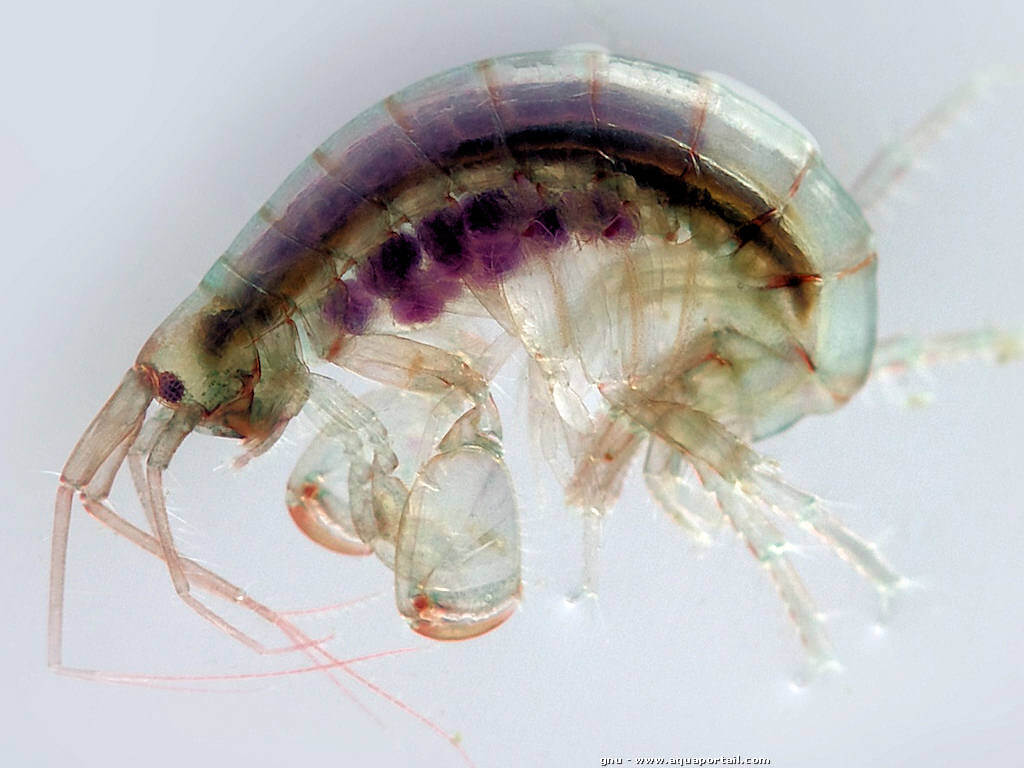
An amphipod is a small crustacean with a laterally compressed body, included within the Arthropoda.
