Dentition
noun (n.)
Definition
Dentition is the process of development and arrangement of teeth in the oral cavity of vertebrate animals. Teeth partially formed during odontogenesis grow vertically by developing their roots through the process of cementogenesis until they emerge into the dental arch.An implantation of human dentition:
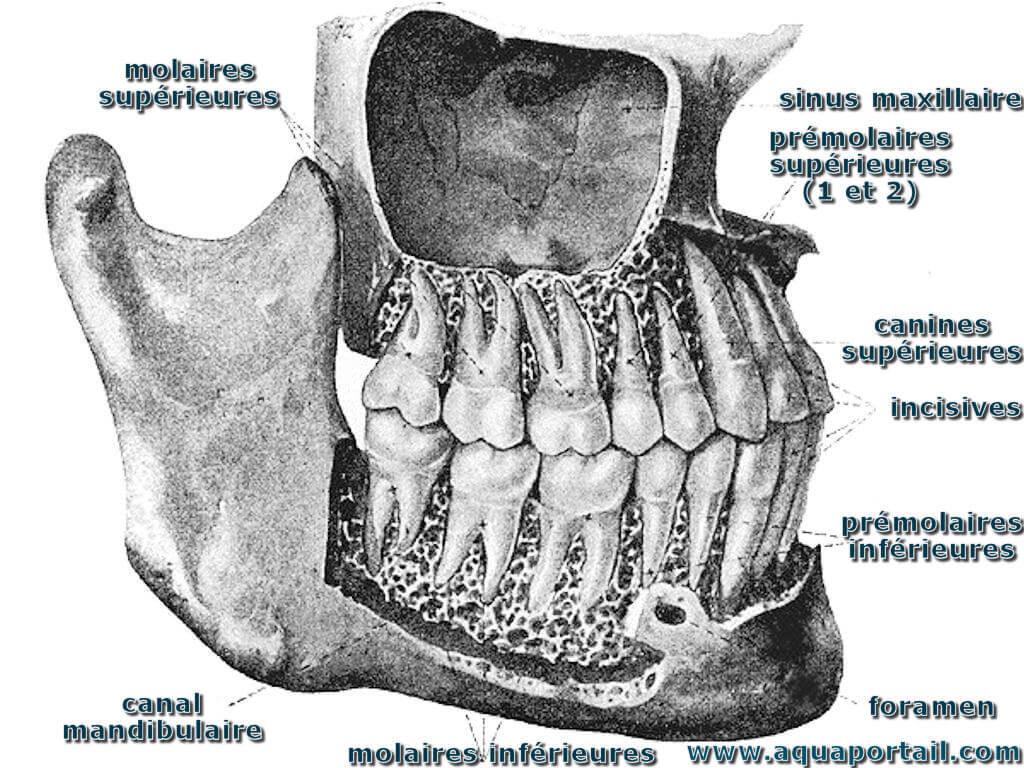
Permanent human dentition is quantified and qualified by its set of teeth along with its dental formula.
Explanations
Dentition is generally referred to as tooth development and occurs in the mouth; in particular, the arrangement of teeth, types of teeth, and their numbers are characteristic of a given species at a given age, quantified by the set of teeth and the dental formula in mammals. Dentition defines the morphophysiology of an animal's teeth.
Differences in types
Vertebrate dentition originates from a fold in the armor of placoderms which, through evolution, became characteristic of fish, amphibians, and reptiles: a long arc of equal (homodont) teeth that are sharp or have cutting edges. Mammalian dentition, including human dentition, follows a different pattern: the teeth of the maxilla and mandible underwent coevolution such that they function as a closing unit (the mouth).
Dentition of the pike Esox lucius:
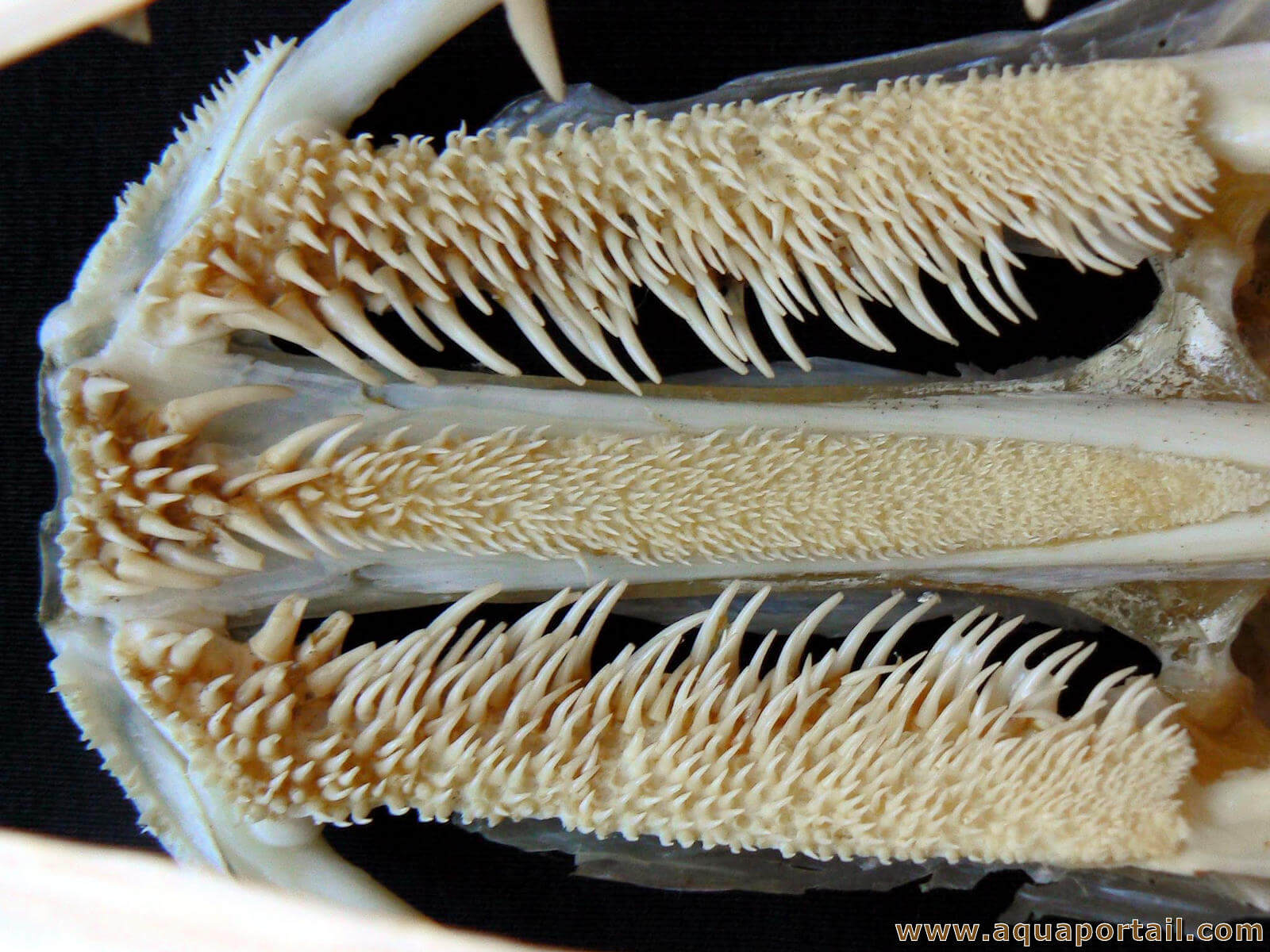
View of the dentition of the lower jaw of the northern pike Esox lucius showing the palatine and vomerine teeth. Such dentition confirms the predatory nature of the pike!
With the exception of monotremes (Monotremata), xenarthrans (Xenarthra), pangolins (Manis spp.), and cetaceans, non-aquatic mammals have up to four different types of teeth, and there is a maximum number of each type: incisors, canines, premolars, and molars.
Incisors occupy the front of the maxillary and mandibular dental arches. They are generally flat, chisel-shaped teeth bordered by a biting edge. Their function is to cut, chop, or gnaw food into pieces that can be chewed.
Canines, located immediately to the sides of the incisors, are in many cases pointed, conical in shape, and project beyond the level of the other teeth. In carnivores, they are essentially offensive weapons used to bring down prey. In other cases, such as in certain primates, they are used to peel tough foods.
Premolars and molars are on the sides of the mouth. Depending on the mammal in question and its diet, these two kinds of teeth serve to crush, crack, or grind.
The groups of different tooth types appear in the same order in all mammals that possess them!
In many species groups, juveniles display a dentition that sheds and is replaced by the definitive adult dentition. This juvenile dentition is called primary dentition, deciduous dentition, or milk teeth. The definitive set is called permanent dentition. Animals exhibiting this trait are described as diphyodonts, and the phenomenon is diphyodonty. The dental formula corresponding to milk teeth is generally the same as that corresponding to permanent teeth, except for the absence of molars.
Use of dentition knowledge in archaeology
The study of dentition is an important field of study in archaeology, particularly regarding ancient fossil remains. Studying dentition offers many advantages over studying the rest of the skeleton: the structure and arrangement of human teeth are constant and, although inherited, do not undergo major transformations during changes in environmental conditions, trophic specialization, or shifts in usage patterns. The rest of the skeleton is more likely to exhibit adaptive changes. Moreover, teeth are better preserved than bones, so the pool of specimens available to archaeologists is much larger and therefore more representative.
Studying dentition is particularly useful for tracing migrations of ancient populations because, although all adult humans have the same 32 teeth, there are minor differences in the shape of the incisors and the number of grooves on the molars, and sometimes additional cusps. These differences can indicate not only distinct populations within the same area, but also changes occurring over time, so their study can be used to determine which populations are involved and to what periods of their history these remains correspond.
The dentition of certain fish such as sharks, and cartilaginous fish more generally, forms the only available fossilized remains because the cartilage of their skeleton, unlike bone and dentin, disintegrates and does not withstand time.
Human dentition
Dentition is the eruption (emergence, odontogenesis) of jaw teeth into the oral cavity. The dentition of humans and most mammals goes through two sets (diphyodonty), one temporary and the other permanent. An adult human has a set of 32 teeth.
Detailed human dentition:
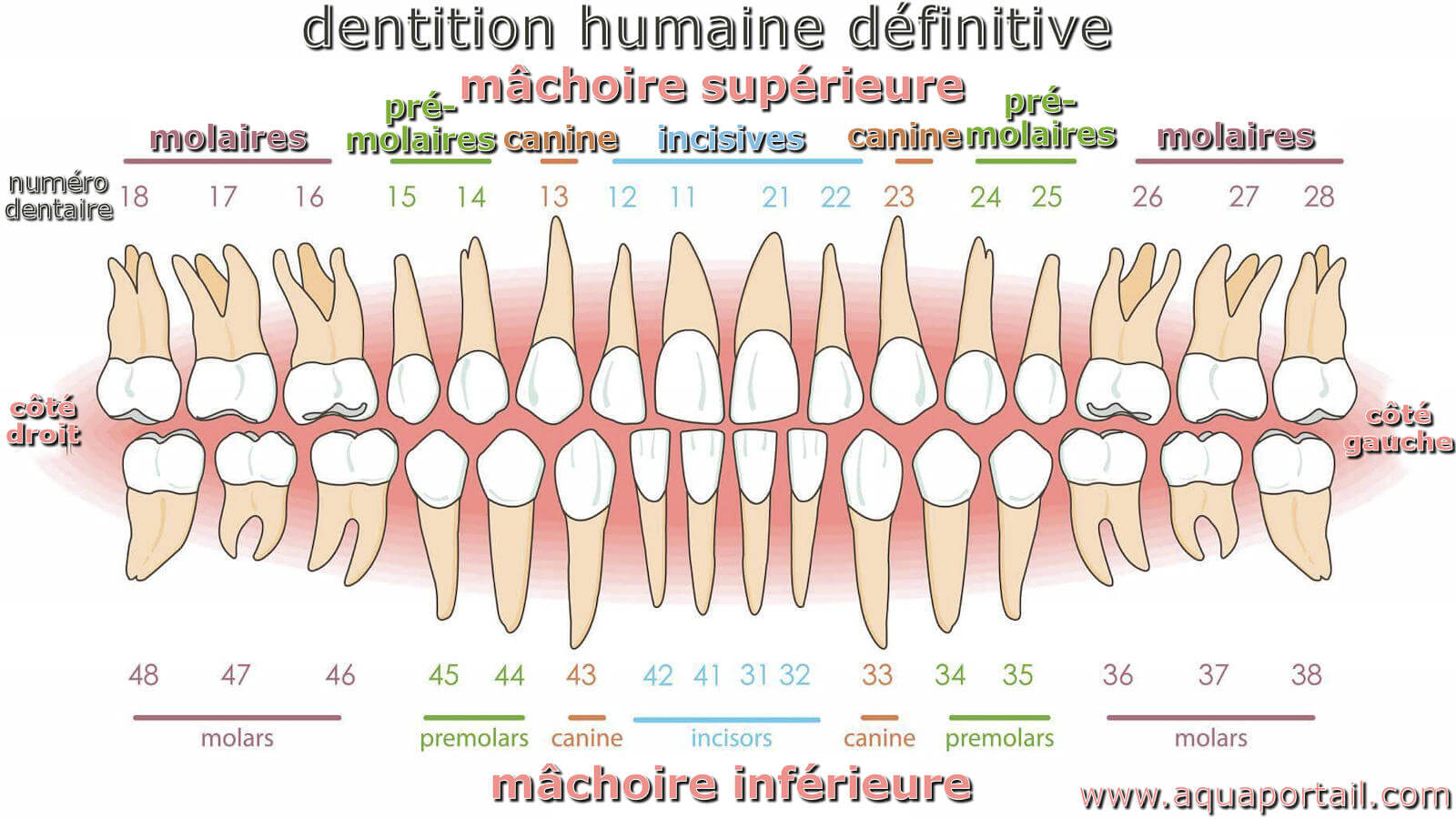
Diagram of human dentition, showing the detail of each tooth (with its dental number) for both upper and lower jaws of an adult.
Tooth eruption is adapted to overall body growth and the size relationships of the jaw and facial structures. Milk teeth require about 2 to 4 years until full development, while permanent teeth take an average of 12 years. Rooted teeth, such as front teeth and especially canines, are deeply embedded in the jawbone at the onset of root formation, whereas multi-rooted teeth sit less deeply in the sockets. Root resorption (breakdown) processes begin with milk teeth (useful so as not to bruise breastfeeding mothers) immediately after root formation. Actual root resorption of milk teeth is always preceded by dissolution of the surrounding alveolar bone and dental supporting apparatus. Hard substances are broken down by osteoclasts and odontoclasts, while the tissue structures of the periodontal ligament and gingival cells dissolve.
The following list provides an initial overview of the various phases of tooth eruption. The annual figures are indicative values and should not be regarded as fixed target values for individuals:
- from 0 to 2.5 years: first dentition, eruption of milk teeth
- from 2.5 to 6 years: use of milk teeth (temporary dentition)
- from 6 to 9 years: first biting phase (molars, incisors)
- from 9 to 10 years: resting phase of tooth replacement
- from 10 to 14 years: second occlusion phase for permanent dentition
- from 16 to 30 years: wisdom teeth
The eruption of deciduous ("temporary") teeth is normally continuous from mesial (front) to distal (back) between 6 and 30 months of life. The first milk tooth, which erupts in a child at around six months, is usually a lower central incisor. Upper central incisors, lateral incisors, deciduous canines, first deciduous molars, and finally second deciduous molars follow. Teething can be painful and sometimes accompanied by fever. After the eruption of milk teeth, the toothed distal alveolar extensions remain in contact. This contact is lost with the eruption of the first permanent molar (first physiological bite elevation).
The eruption of permanent teeth also begins early in humans between the ages of 6 and 14. An exception is wisdom teeth, which only erupt in adulthood (or at age 16–30), if present.
First molars generally erupt before all other permanent teeth, and because they usually emerge before the loss of milk teeth, they are often mistaken by laypeople for late milk teeth. As such, they are often neglected in dental hygiene ("they fall out") and are therefore frequently damaged very early. Dentists and orthodontists often have plenty of work during this period...
Lower teeth are generally "slightly ahead" of upper teeth, even in permanent dentition. In the case of permanent teeth, deviations from eruption times are possible, particularly if milk teeth are lost prematurely.
Synonyms, antonyms
Spanish translation: dentición
5 synonyms (similar meaning) for "dentition":
- dental arrangement
- dental configuration
- dental structure
- jaw
- set of teeth
0 antonyms (opposite meaning).
Related words and expressions to DENTITION are directly connected by general or specific meaning.
The word DENTITION is listed on page 1 of words starting with D in the dictionary glossary.
Related to "dentition"
tooth

In biology, a tooth is a whitish calcified anatomical structure in the jaw of many vertebrates, used to break down, tear, and chew food.
bipartition
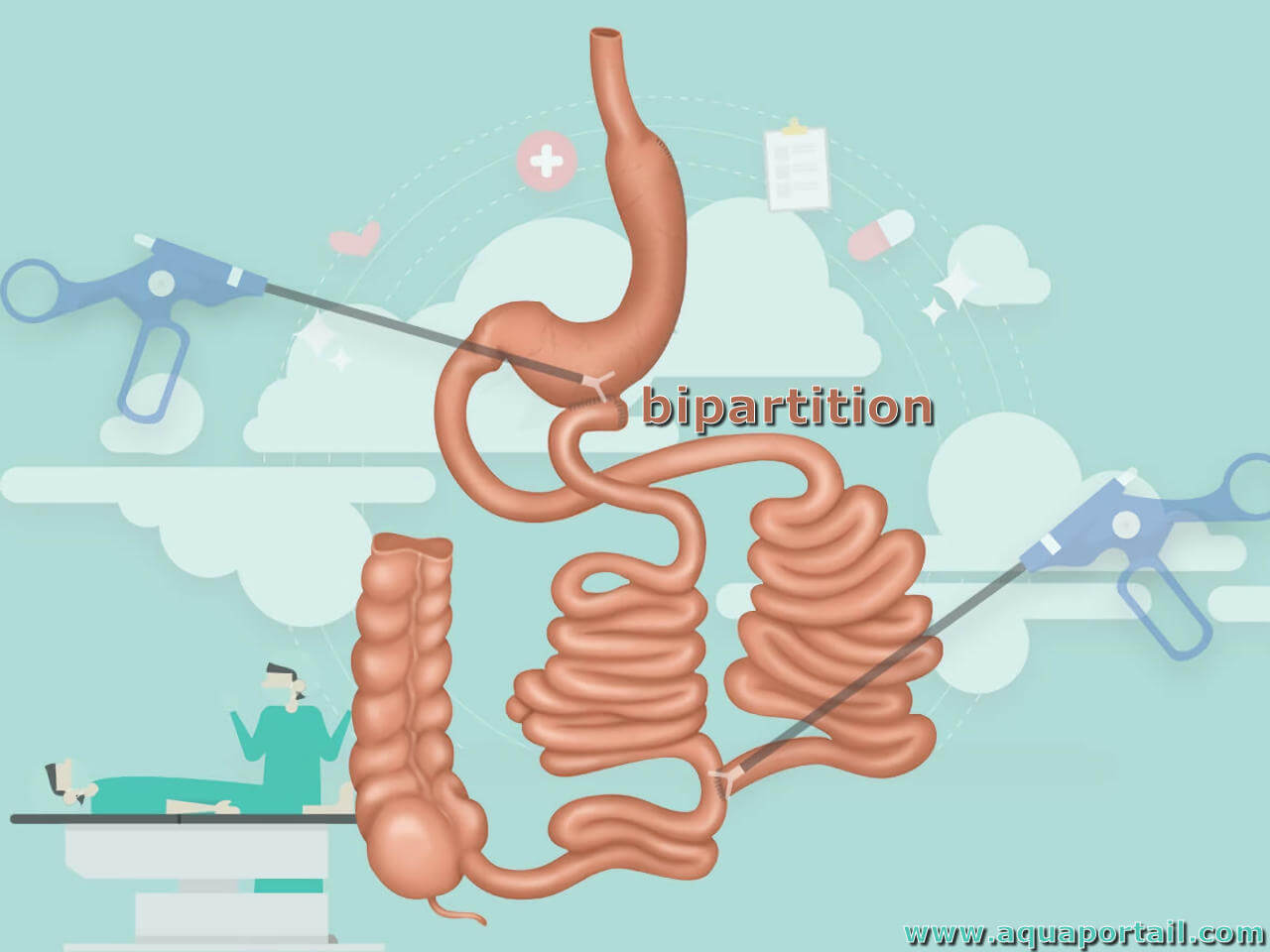
Bipartition is the division into two parts, such as multiplication by binary fission or dichotomy.
overnutrition

Overnutrition is a form of malnutrition by excess (overfeeding), a poor nutrition causing overweight that can lead to obesity.
photodecomposition

Photodecomposition, a form of photolysis similar to photodissociation, is a chemical decomposition of molecules by the radiant energy of visible light.
Simple summary
Dentition refers to the development, arrangement, and condition of teeth in the mouth. It encompasses aspects such as the number and type of teeth, their alignment, as well as their overall health and functionality. Dentition can vary from one species to another and plays an important role in feeding habits and oral health.
