Phytoncide
noun (n.)
Definition
Phytoncides are natural volatile organic compounds released by trees and plants to protect themselves against bacteria, fungi, and herbivorous insects. These substances often emit distinctive aromas, such as the familiar scent of a pine forest derived largely from the phytoncide α-pinene.
How phytoncides work:
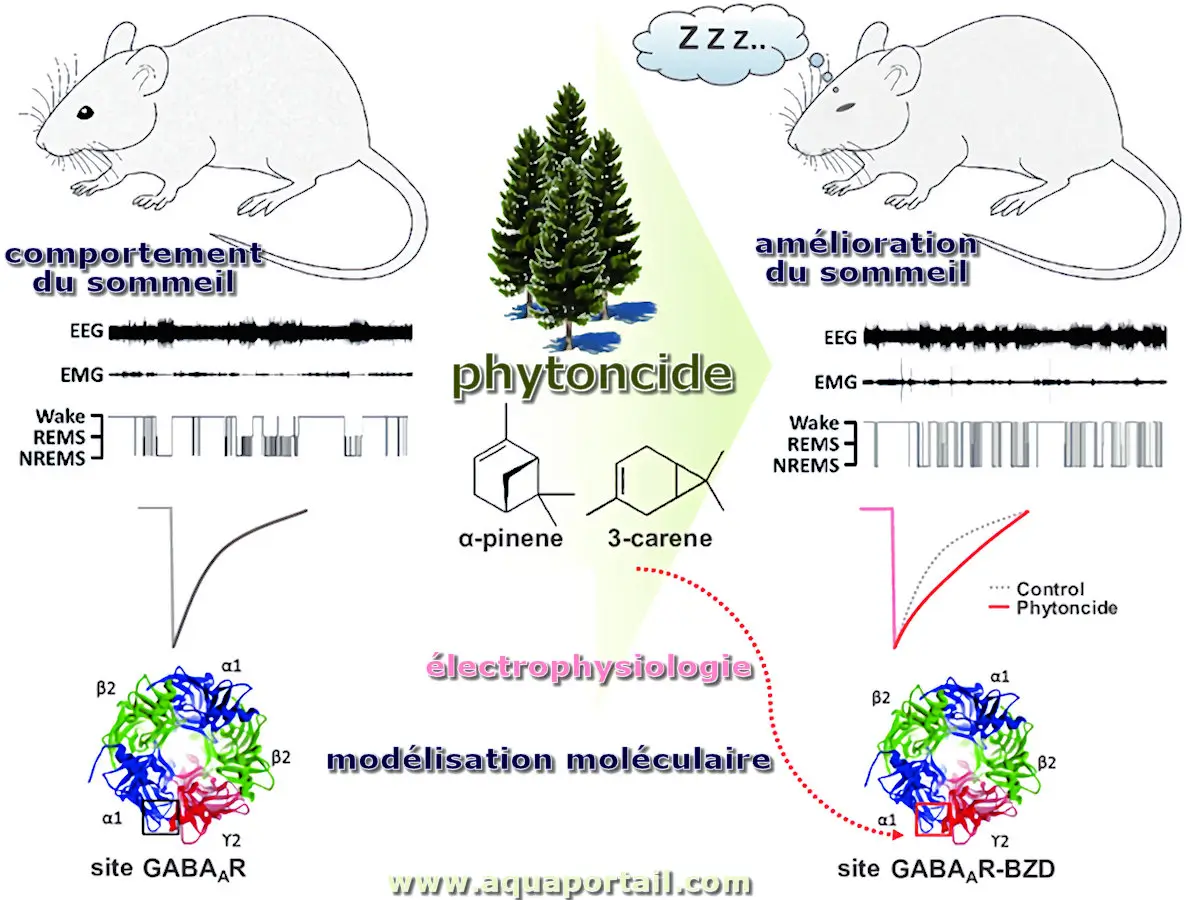
Phytoncides are key compounds behind "forest medicine," yielding tree essential oils with diverse medicinal properties. Sleep-enhancing mechanism of pine phytoncides evaluated via behavioral, pharmacological, electrophysiological, and structural biology approaches.
Explanations
Phytoncides are biogenic volatile organic compounds (VOCs) emitted by trees and plants, particularly conifers such as spruces, pines, and firs. Acting as a natural chemical defense mechanism, they create a protective barrier that inhibits harmful bacteria and repels insects.
Phytoncides possess allelochemical, antibacterial, and antifungal properties that help plants ward off pathogens. When inhaled by humans, forest air rich in phytoncides has been shown to stimulate the number and cytotoxic activity of natural killer (NK) cells, which target virus-infected and tumor cells.
The concentration and profile of phytoncides vary widely depending on tree species, forest density, season, temperature, and time of day. Coniferous forests—including pines, cedars, firs, and cypresses—as well as certain broadleaf forests containing oaks and eucalyptus are renowned for releasing substantial amounts of these terpenes.
Among trees well known for emitting beneficial phytoncides are conifers rich in monoterpenes such as α-pinene and limonene, along with cypress, eucalyptus, and oak, while many green garden and culinary plants produce similar defensive volatiles.
Although thousands of plant volatiles exist, the most abundant forest phytoncides include:
- α-pinene;
- d-limonene;
- β-pinene;
- sabinene;
- myrcene;
- camphene.
Benefits and biological effects
Inhaling phytoncides during forest immersion (forest bathing or shinrin-yoku) has been associated with several physiological benefits:
- Immune system support: a two-hour walk in a forest boosts NK cell activity, with effects lasting several days;
- Anti-inflammatory and antioxidant properties: common forest monoterpenes help attenuate inflammation and oxidative stress;
- Autonomic nervous system regulation: breathing forest air promotes parasympathetic relaxation and reduces sympathetic hyperactivity;
- Mood enhancement: forest exposure lowers cortisol levels, while compounds such as β-pinene exhibit antidepressant-like effects in experimental models;
- Improved sleep quality: terpenes such as α-pinene promote deeper, more restorative sleep;
- Glycemic regulation: exposure to forest VOCs alongside forest walking helps lower blood glucose levels.
Regular time spent in woodland environments thus offers an effective preventive health practice, mitigating chronic stress and supporting immune function.
Effects on sleep
Sleep is vital for survival and normal physiological recovery. Amid rising rates of sleep disorders such as insomnia, interest is growing in natural compounds capable of improving sleep quality without the side effects associated with synthetic hypnotics.
The restorative effects of forest environments—including reduced stress and anxiety and enhanced immune function—are largely attributed to plant-derived phytoncides.
Recent neuropharmacological studies demonstrate that the sleep-promoting properties of pine phytoncides, notably (-)-α-pinene and 3-carene, stem from their activity as positive allosteric modulators of GABAA receptors at the benzodiazepine binding site, enhancing inhibitory synaptic responses.
Synonyms, antonyms
1 synonym (similar meaning) for "phytoncide":
- allelochemical bactericide
0 antonyms (opposite meaning).
Related words and expressions to PHYTONCIDE are directly connected by general or specific meaning.
The word PHYTONCIDE is listed on page 1 of words starting with P in the dictionary glossary.
Related to "phytoncide"
phytodepuration

Phytodepuration (constructed wetland water treatment) is a natural method for treating domestic, agricultural, and occasionally industrial wastewater.
phytophagous

A phytophagous organism (animals, insects, and bacteria) feeds predominantly on plant matter.
phytotherapy

Phytotherapy is the use of plant products for the prevention, treatment, or alleviation of a wide variety of symptoms and diseases.
paedomorphosis

Paedomorphosis (juvenilization) is a phylogenetic change involving the retention of juvenile or even larval traits into a later (adult) stage.
