Chronobiology
noun (n.)
Definition
Chronobiology, a form of temporal biology, is the study of biological rhythms. It refers to the process by which organisms time their behavior and physiology so that everything behaves rhythmically. In particular, it studies the circadian cycle or nycthemeral cycle of plant and animal species.Example of a rhythm studied in chronobiology:

Chronobiology is a valid science in both botany and zoology.
Explanations
Chronobiology is a field of biology that studies periodic (cyclic) phenomena in organisms and their adaptation to solar and lunar, diurnal and nocturnal rhythms. These cycles are known as biological rhythms.
The related terms chronomedicine and chronomics have been used in some cases to describe either the molecular mechanisms involved in chronobiological phenomena or the more quantitative aspects of chronobiology, particularly when comparing cycles across organisms is required.
Chronobiological studies include, but are not limited to, comparative anatomy, physiology, genetics, molecular biology, and the behavior of organisms within the biological rhythms of physiological mechanics (processes).
Other aspects include development, reproduction, ecology and evolution, the study of the nycthemeral cycle, scotobiology, acanthochronology...
Variations in the timing and duration of biological activity in living organisms occur for many essential biological processes.
These occur in animals (feeding, sleeping, mating, hibernation, migration, cellular regeneration, etc.), in plants (leaf movements, photosynthetic reactions, evapotranspiration, etc.), and in microbial organisms such as fungi and protozoa. They have even been demonstrated in bacteria, particularly in cyanobacteria (blue-green algae).
Main rule
The most important rhythm in chronobiology is the circadian rhythm, a cycle of approximately 24 hours, the nycthemeron, exhibited by physiological processes in all these organisms. This science is therefore governed by circadian clocks and photoperiodism.
Chronobiology is an interdisciplinary field of investigation. See also acanthochronology.
In humans, it interacts with areas of medical research and other disciplines such as sleep medicine, endocrinology, geriatrics, sports medicine, space medicine, and photoperiodism.
Despite the similarity in name to legitimate biological rhythms, the theory and practice of biorhythms is a classic example of pseudoscience attempting to describe a set of cyclic variations in human behavior based on a person's date of birth. Biorhythm is not part of chronobiology.
History
Scientists began legitimately studying chronobiology around the 1960s, although it was first recognized in the 1700s by examining the movement of plant leaves.
This 18th-century observation LED Carl Linnaeus, botanist and naturalist, to create a floral clock using certain species of flowering plants. He arranged the plants in a circular pattern to create an accurate clock that could indicate a specific time of day based on the opening of the flowers.
By the 1960s, the study of chronobiology had evolved. At that time, studies brought together biology, psychology, neurology, endocrinology, and genetics. It was then that the term "circadian", defined as a 24-hour period, was coined. Other aspects entering the study of chronobiology include reproduction, development, evolution, and ecology, to name just a few.
Acanthochronology
Acanthochronology is a science derived from botanical chronobiology aimed at measuring past climate via the carbon and oxygen isotope ratios of a plant, such as by studying the growth areoles of the saguaro. Some columnar cacti also exhibit similar seasonal patterns in the carbon and oxygen isotopes of their spines.
Acanthochronology is the study of cactus or euphorbia spines (like a tree ring) to uncover traces of time. Physical, morphological, or chemical characteristics and information on the relative order or absolute age of spines are used to study past climate or plant physiology.
In the modern era, the study of acanthochronology has used the oxygen isotopic composition of saguaro cactus spines to determine historical changes in local precipitation and reconstruct climate and plant ecophysiology over the plant's lifetime.
This subfield, along with paleoclimatology and environmental physiology (ecophysiology), constitutes relatively recent disciplines. Acanthochronology is closely linked to dendrochronology, dendroclimatology, and isotope geochemistry, borrowing many methods and techniques from these subdisciplines of Earth sciences.
Synonyms, antonyms
Spanish translation: cronobiología
3 synonyms (similar meaning) for "chronobiology":
- acanthochronology
- chronomedicine
- chronomics
0 antonyms (opposite meaning).
Related words and expressions to CHRONOBIOLOGY are directly connected by general or specific meaning.
The word CHRONOBIOLOGY is listed on page 1 of words starting with C in the dictionary glossary.
Related to "chronobiology"
biology

Biology is the study of life and living organisms, from unicellular creatures to the most complex living organism.
ecophysiology
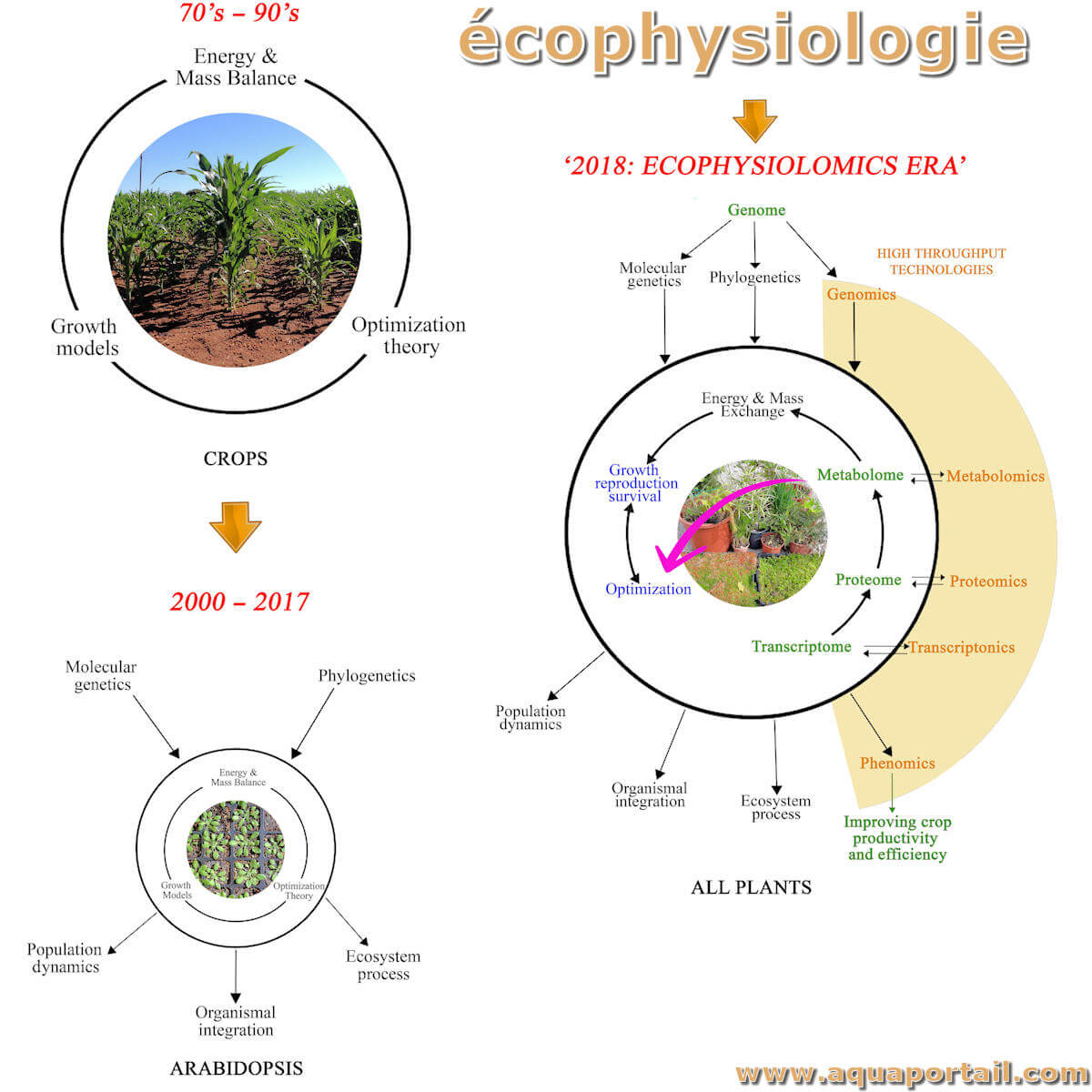
Ecophysiology is the study of the interrelationship between an organism's normal physical function and its environment.
etymology

Etymology is the study of the origin of individual words, their chronology, and their incorporation into a language, along with the source and details...
cactus

A cactus is a thick, fleshy plant that grows in many hot, dry regions of the world. Cacti do not have leaves, and many are covered with spines.
