Nitrogenase
noun (n.)
Definition
Nitrogenase denotes a highly oxygen-sensitive enzyme catalyzing the reduction of gaseous nitrogen N2 into ammonium ion NH4+, combining it with hydrogen H. This enzyme is responsible for biological N fixation. It is present in the cells of organisms. Organisms fixing nitrogen are diazotrophs.Nitrogenase and biosynthesis genes:
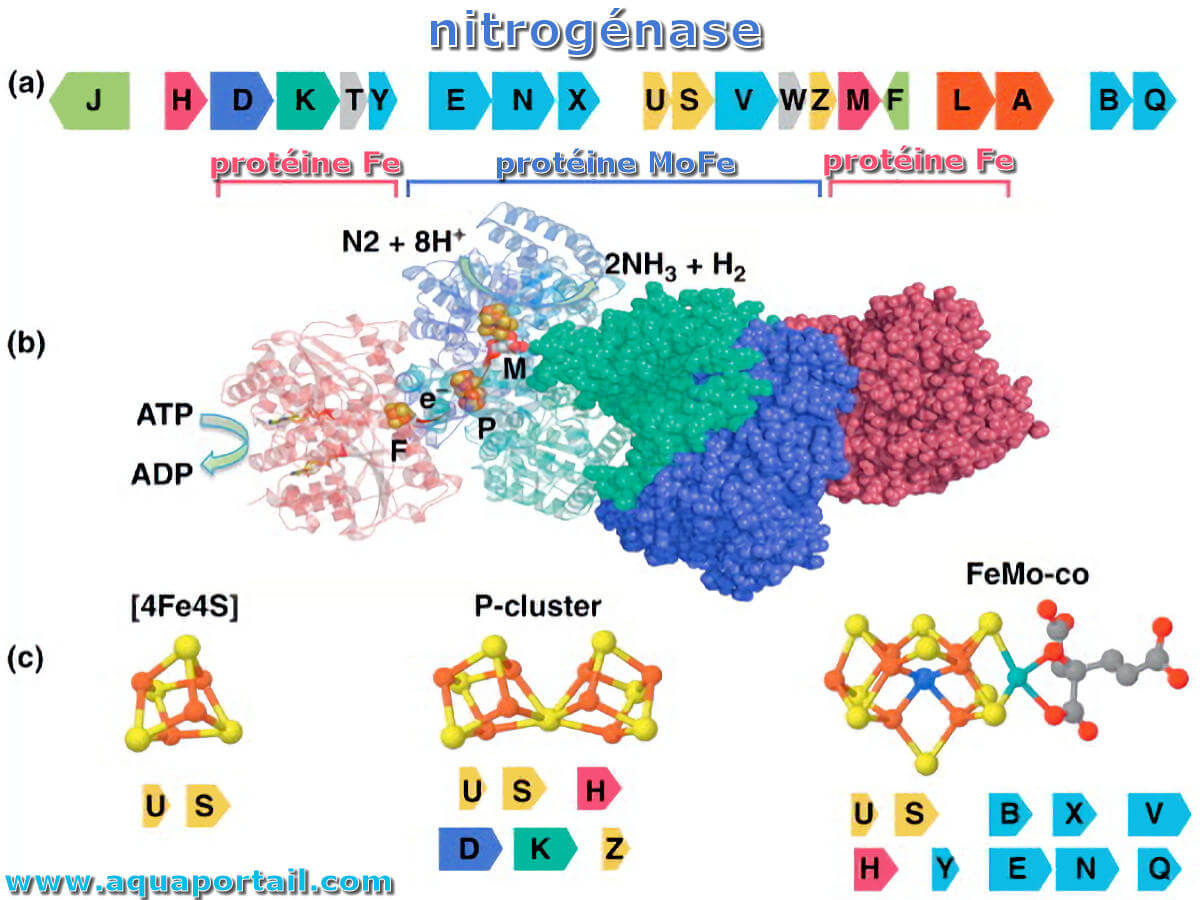
The structure of nitrogenase and the genes required for its biosynthesis (nitrogen fixation, enzyme complex).
Explanations
Nitrogenase can also reduce acetylene to ethylene, a property used to measure molecular nitrogen N2 fixation (ARA technique). Molybdenum, a trace element, is a structural component of nitrogenase, hence its importance for biological nitrogen fixation.
A nitrogenase is thus an enzyme complex of nitrogen-fixing bacteria, formed of a dinitrogenase reductase and a dinitrogenase. It catalyzes the transfer of protons and electrons onto nitrogen or other compounds possessing double or triple bonds. It is inhibited by oxygen, necessitating mechanisms that lower oxygen concentration in the vicinity of nitrogenase.
Only a single family of enzymes capable of carrying out this process is known. Molecular nitrogen is highly inert and therefore difficult to react due to the strength of its N≡N triple bond.
See also a photosynthetic bacterium. See the nitrogen cycle and the bacterium Azotobacter vinelandii.
Structure of nitrogenase
The structure of nitrogenase and the genes required for its biosynthesis are:
- (a) the nitrogen fixation (nif) gene cluster of Klebsiella oxytoca (formerly Klebsiella pneumoniae). The structural genes of nitrogenase (nifH, nifD, and nifK) are colored according to the crystal structure shown in (b). The remaining genes are color-coded by function: dark red, Fe protein maturation (nifM); light blue, FeMoco biosynthesis (nifY, nifE, nifN, nifX, nifV, nifB, nifQ); yellow, Fe–S cluster biosynthesis (nifU, nifS, nifZ); green, electron transport (nifJ, nifF); orange, transcriptional regulation (nifL, nifA); gray, unknown function (nifT, nifW).
- (b) structure of the nitrogenase enzyme complex (PDB code 1n2c) showing the MoFe and Fe protein components, with the three metalloclusters revealed on the left half of the complex (abbreviated F, 4Fe4S; P, P cluster; and M, FeMo-co, respectively). ATP hydrolysis by the Fe protein, the electron transfer pathway to the catalytic site, and the enzymatic reaction are also illustrated on the left half of the structure.
- (c) structures of the three metalloclusters in nitrogenase. The genes required for the biosynthesis of each cluster are shown above.
Nitrogenase subunits
⭐ The three subunits of nitrogenase exhibit significant sequence similarity to the three subunits of light-independent protochlorophyllide reductase, which carries out the conversion of protochlorophyll to chlorophyll. This protein is present in gymnosperms, algae, and photosynthetic bacteria, but was lost in angiosperms during evolution.
Separately, two of the nitrogenase subunits (NifD and NifK) have homologs in non-nitrogen-fixing methanogens, for example Methanocaldococcus jannaschii. Little is understood about the function of these class IV Nif genes, although they are found in many methanogens. In M. jannaschii, they are known to interact with one another and are constitutively expressed.
✅ Nitrogenase is, in reality, a catalytic complex composed of two distinct protein units called dinitrogenase and dinitrogenase reductase. Biological reduction of molecular nitrogen is carried out solely by prokaryotic microorganisms. Among bacteria, nitrogen-fixing activity is distributed between eubacteria and archaebacteria and between heterotrophs and autotrophs. These organisms scavenge and reuse biologically soluble nitrogen, ammonia, amino acids, and nucleotides, thereby maintaining the entire nitrogen cycle. Animals rely on plants as a source of amino acids and ammonia for consumption, as plants take up these molecules from the soil.
Availability of nitrogen
Nitrogen availability is one of the primary factors limiting crop growth. In the developed world, farmers apply unsustainable levels of inorganic fertilizers to boost agricultural production. By contrast, in developing countries, inorganic fertilizers are often unavailable and smallholder farmers suffer the resulting low yields.
Finding alternatives to inorganic fertilizers is essential for sustainable and safe food production. Bacteria and archaea have evolved the ability to fix atmospheric nitrogen into ammonia, a form readily usable in biological processes.
This capability offers an opportunity to improve crop plant nutrition by introducing either nitrogen-fixing bacteria or the nitrogenase enzyme responsible for nitrogen fixation into cereal crops. Although both approaches are challenging, recent breakthroughs have laid the groundwork for launching these biotechnological solutions to the nitrogen problem.
Synonyms, antonyms
Spanish translation: nitrogenasa
1 synonym (similar meaning) for "nitrogenase":
0 antonyms (opposite meaning).
Related words and expressions to NITROGENASE are directly connected by general or specific meaning.
The word NITROGENASE is listed on page 1 of words starting with N in the dictionary glossary.
Related to "nitrogenase"
nitrogen

Nitrogen (N) is the 7th element of the periodic table, a colorless and odorless non-metallic element of group 15.
dehydrogenase
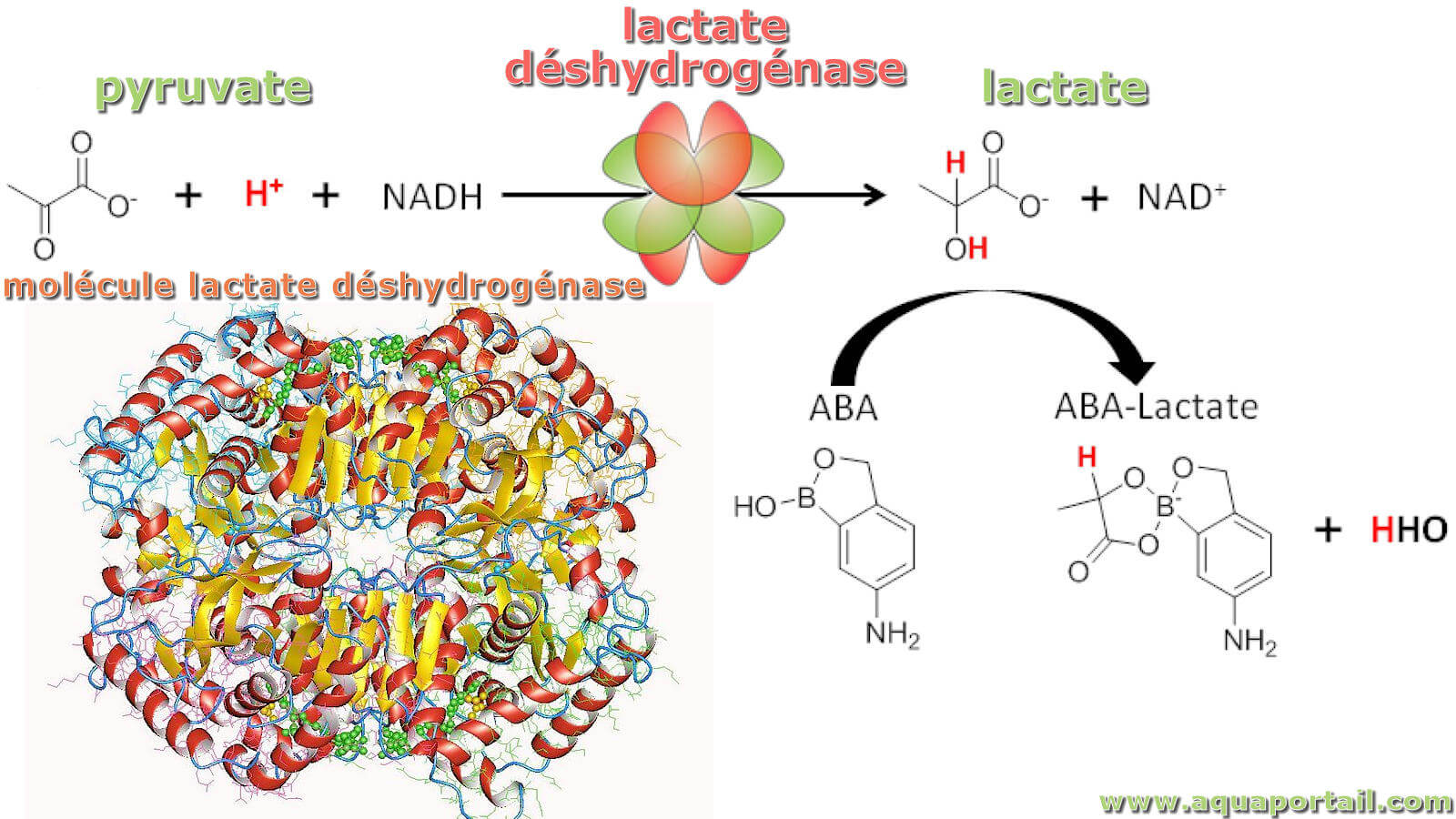
A dehydrogenase is a dehydrogenating enzyme of the oxidoreductase class that catalyzes the removal of hydrogen.
oxygenase
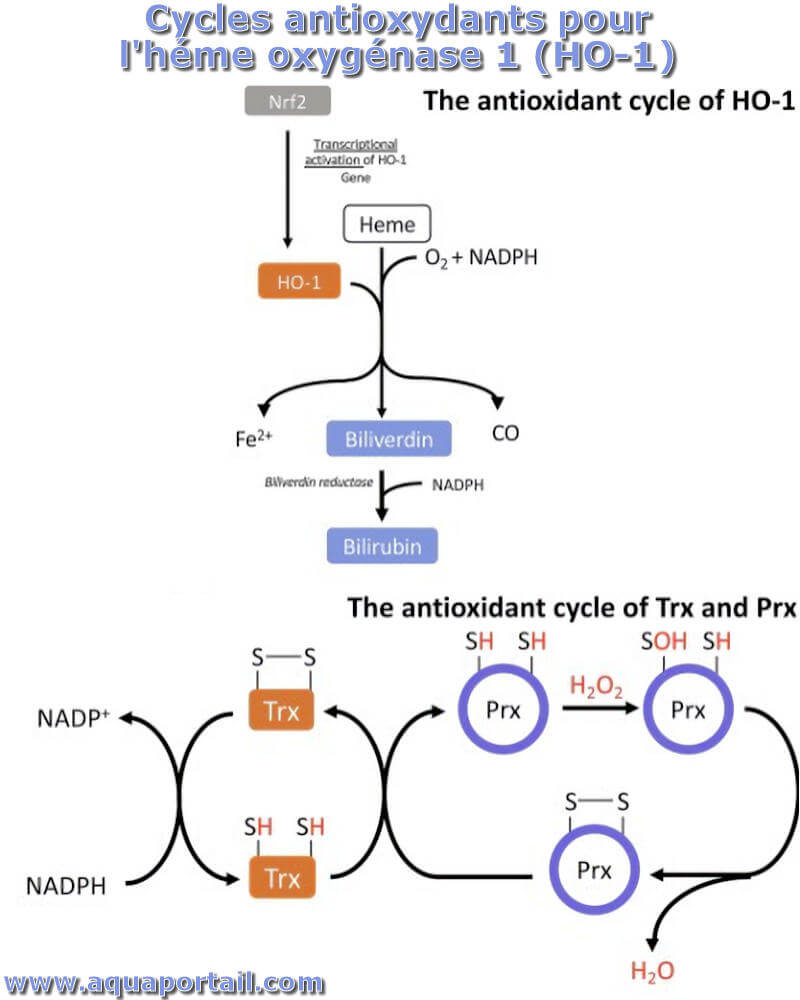
An oxygenase is an enzyme of the oxidoreductase group that catalyzes the addition of one (monooxygenase) or two (dioxygenase) oxygen atoms (dioxygen).
nanandrous

A nanandrous organism refers to a dwarf male individual. The root of the word dwarfism is easily identifiable and defines nanandry. Females, in fish...
