Dilatation
noun (n.)
Definition
Dilatation is the act of increasing the volume of a substance, generally through heating, temperature variation, or thermomechanical stress. Dilatation is an expansion response to a new thermal environment. The substance is thus expanded relative to a predefined standard, with a zone of abnormal enlargement.Comparison of dilatation and constriction:

Compared to a normal blood vessel, dilatation widens the lumen and thus increases blood flow volume; conversely, constriction narrows the vessel diameter and reduces flow.
Explanations
Any dilatation is measured by its coefficient of thermal expansion using a dilatometer in dilatometry.
The opposite of dilatation is constriction (or contraction). In the case of a blood vessel, the term is vasodilation (vs. vasoconstriction).
Physiological dilatation
In physiology, dilatation is a swelling or distension of a tissue or organ. Every dilatation is followed by a constriction to return to the normal state. Muscles (including the heart), cavities such as the lungs and stomach, and vessels such as blood vessels can dilate to increase the space they occupy.
In pathology, overdilatation is the condition of being stretched or enlarged beyond normal dimensions, particularly following overexertion, disease, or abnormal tissue relaxation (of the heart, for example). One of the most common conditions in sighthounds (such as greyhounds) is gastric dilatation (bloat / gastric dilatation-volvulus), which can be fatal.
In surgery, dilatation is an enlargement made in a bodily opening or canal for surgical or medical treatment. It may restore normal patency to an abnormally narrow opening or passage in the body, such as the anus or esophagus.
Thermal expansion
Thermal expansion (dilatation) is the fundamental phenomenon explaining why materials often crack when suddenly heated or cooled. Such materials, undergoing thermal shock, do not have time to undergo gradual thermal adaptation. Refractory materials have nearly zero thermal expansion and can even withstand a flame directly on their surface.
In mineralogy, thermal expansion is the product of the complex microstructure of the fired mineral (unchanged mineral grains, others that have melted and flowed, others that have converted their mineral and crystalline form, and others that have reacted to form new mineral species). The degree of vitrification of a body determines this complex structure, and temperature changes as well as the firing schedule (vitrification) can increase or decrease thermal expansion.
Very few people have access to equipment capable of measuring this property.
Coefficient of thermal expansion
The coefficient of thermal expansion is a dilatometric measurement reflecting a reversible change in volume or length of a material with temperature.
Mathematical dilation
In mathematics, a dilation is a function f on a metric space M satisfying the equation: d(f(x),f(y)) = r d(x,y). In Euclidean space, such a dilation is a similarity of the space. Dilations change the size but not the shape of an object or figure.
Every dilation of a Euclidean space that is not a congruence has a unique fixed point called the center of dilation. Some congruences have fixed points and others do not.
In operator theory, a dilation of an operator T on a Hilbert space H is an operator on a larger Hilbert space K whose restriction to H composed with the orthogonal projection onto H is T.
Synonyms, antonyms
Spanish translation: dilatación
4 synonyms (similar meaning) for "dilatation":
- enlargement
- expansion
- increase
- swelling
2 antonyms (opposite meaning):
Related words and expressions to DILATATION are directly connected by general or specific meaning.
The word DILATATION is listed on page 1 of words starting with D in the dictionary glossary.
Related to "dilatation"
contraction

A contraction is the process of becoming smaller. A contraction is the process by which a contractile muscle becomes or is shortened and tightened.
bio-purification
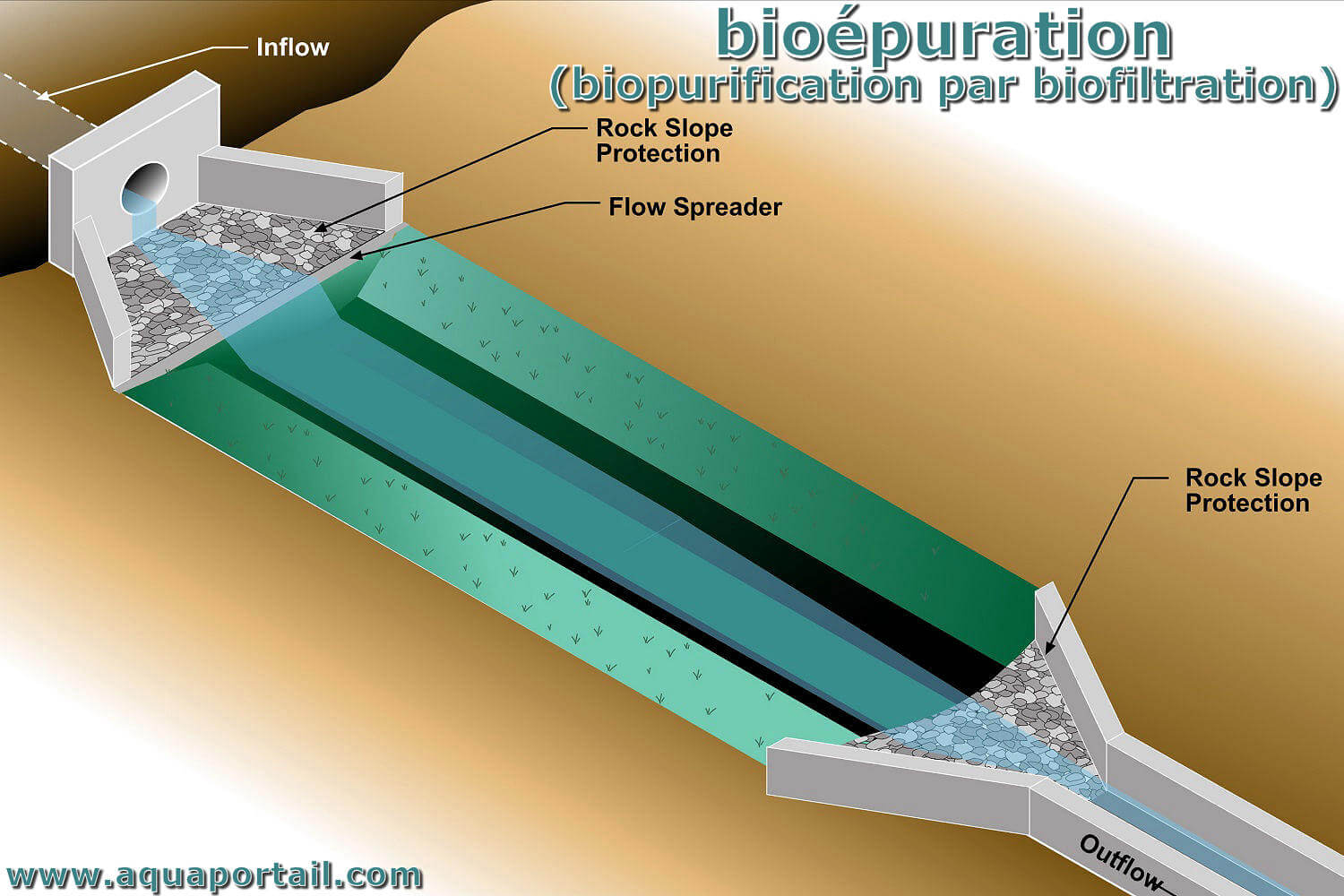
Bio-purification (biodepuration) refers to harnessing living organisms—such as plants, fungi, and symbiotic bacteria—to reduce pollution in an environment.
civilization

A civilization is generally defined as an advanced state of human society containing highly developed forms of government, culture, industry, and social...
cohabitation

Cohabitation is the simultaneous coexistence of several elements, similar or different, in the same place (habitat) over the same (extended) period.
