Dictyotene
noun (n.)
Definition
Dictyotene is a prolonged resting phase during female gametogenesis (oogenesis) that takes place during prophase I of meiotic division. The development of all oocytes is arrested in the dictyotene phase until puberty. Primary oocytes are inhibited by a protein factor called oocyte maturation inhibitor (OMI). Release from inhibition is driven by the MPF complex (maturation-promoting factor).It occurs at the meiotic prophase I stage in oogenesis (ootidogenesis). It begins late in fetal life and ends shortly before ovulation via the surge of LH (luteinizing hormone). Thus, although the majority of oocytes are produced in female fetuses before birth, these pre-eggs remain arrested at the dictyotene stage (see also diplotene stage) until puberty begins and the cells complete ootidogenesis.
Diagram of dictyotene:
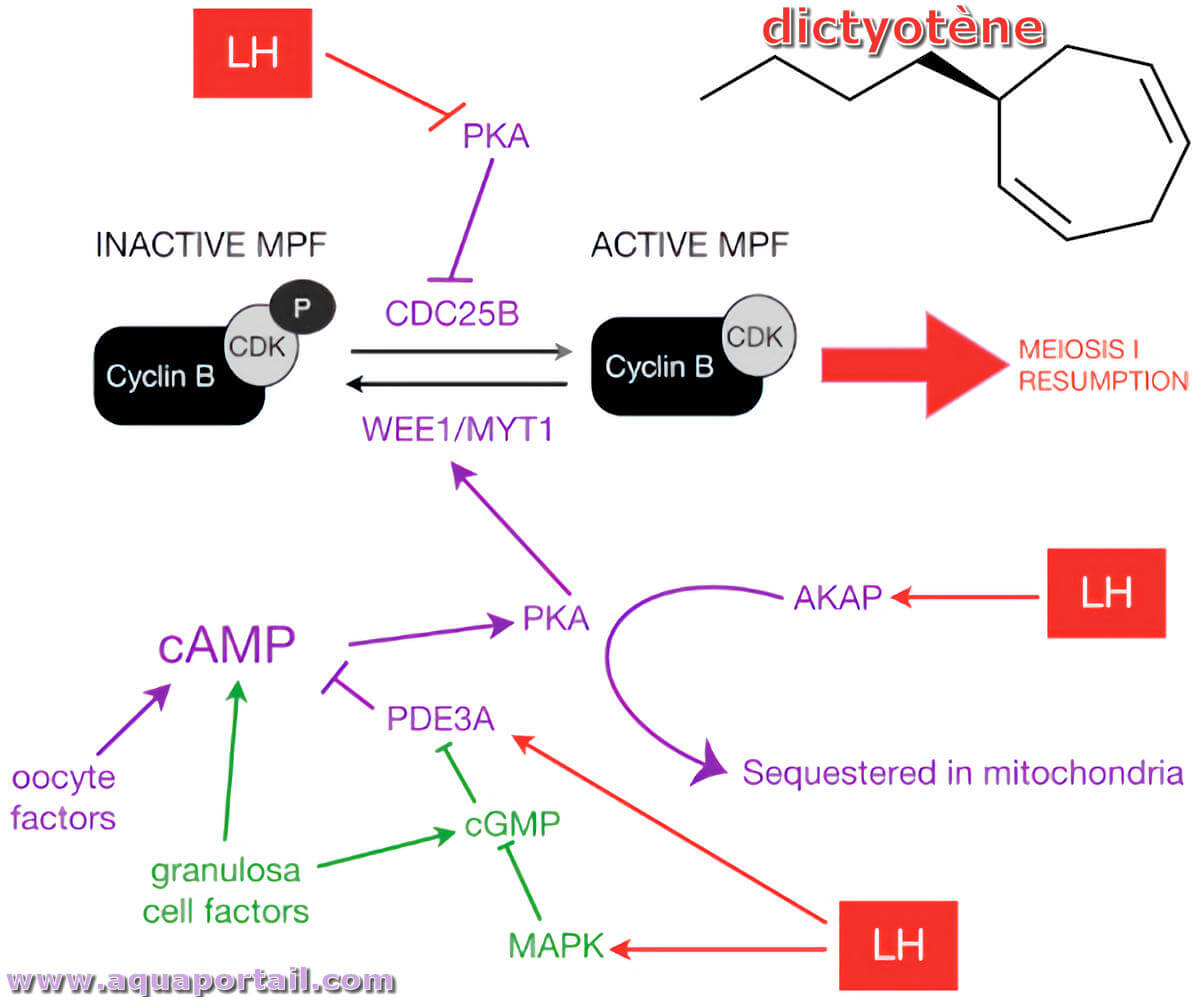
Maintenance of dictyotene (dictyate) arrest and resumption of the first meiotic division. Purple represents events in the oocyte and green represents events in the surrounding granulosa cells. Dictyotene arrest is maintained by keeping maturation-promoting factor (MPF) phosphorylated (by WEE1 kinase). This is achieved through the activity of protein kinase A (PKA), which is activated by high cAMP levels in the oocyte. Orange represents events stimulated by LH at ovulation, all culminating in MPF activation via dephosphorylation by CDC25B upon PKA removal.
Explanations
🚩 In botany, dictyotene is a sexual attractant extracted from the male gametes of certain brown algae belonging to the genus Dictyota.
✅ In humans, at the 5th month of female embryonic development, approximately 7 million primordial follicles are formed. They enter the dictyotene phase and arrest maturation in the first meiotic arrest until puberty. Dictyotene is not a stage separate from prophase I diplotene. At this stage, numerous follicles (ovarian follicles) exist in the cortical region of the ovary, with roughly 400,000 remaining until puberty. From puberty to menopause, 5 to 15 primordial follicles are reactivated each month and stimulated to mature (with only a single follicle ultimately ovulated and the rest undergoing atresia). Some primordial follicles remain at the dictyotene stage for decades (until menopause).
In both mice and humans, oocyte DNA from older individuals exhibits markedly more double-strand breaks than that of younger individuals.
✅ Dictyotene appears to be an evolutionary adaptation within the germline to efficiently eliminate genetic damage in germline DNA via homologous recombination repair.
⭐ Many mRNAs are transcribed but not translated during dictyotene. Shortly before ovulation, the oocyte activates these mRNA stores.
Translation of mRNA during the dictyate stage is explained in part by molecules binding to sites on the mRNA strand, preventing translation initiation factors from binding there. CPEB (cytoplasmic polyadenylation element-binding protein) and "maskin", which bind to the CPE (cytoplasmic polyadenylation element), are two such molecules that block initiation factors. When these two molecules remain bound together, maskin binds the initiation factor eIF4E, preventing eIF4E from interacting with other initiation factors so that no translation occurs. Conversely, dissolution of the CPEB/maskin complex allows eIF4E to bind the initiation factor eIF4G, initiating translation and contributing to the end of the dictyate arrest and subsequent oocyte maturation.
✅ During prophase of the first meiotic division, several stages can be distinguished: leptotene, zygotene, pachytene, diplotene, and diakinesis.
Synonyms, antonyms
Spanish translation: dictioteno
3 synonyms (similar meaning) for "dictyotene":
- dictyate
- dictyopterene
- dihydroectocarpene
0 antonyms (opposite meaning).
Related words and expressions to DICTYOTENE are directly connected by general or specific meaning.
The word DICTYOTENE is listed on page 1 of words starting with D in the dictionary glossary.
Related to "dictyotene"
dictyosome
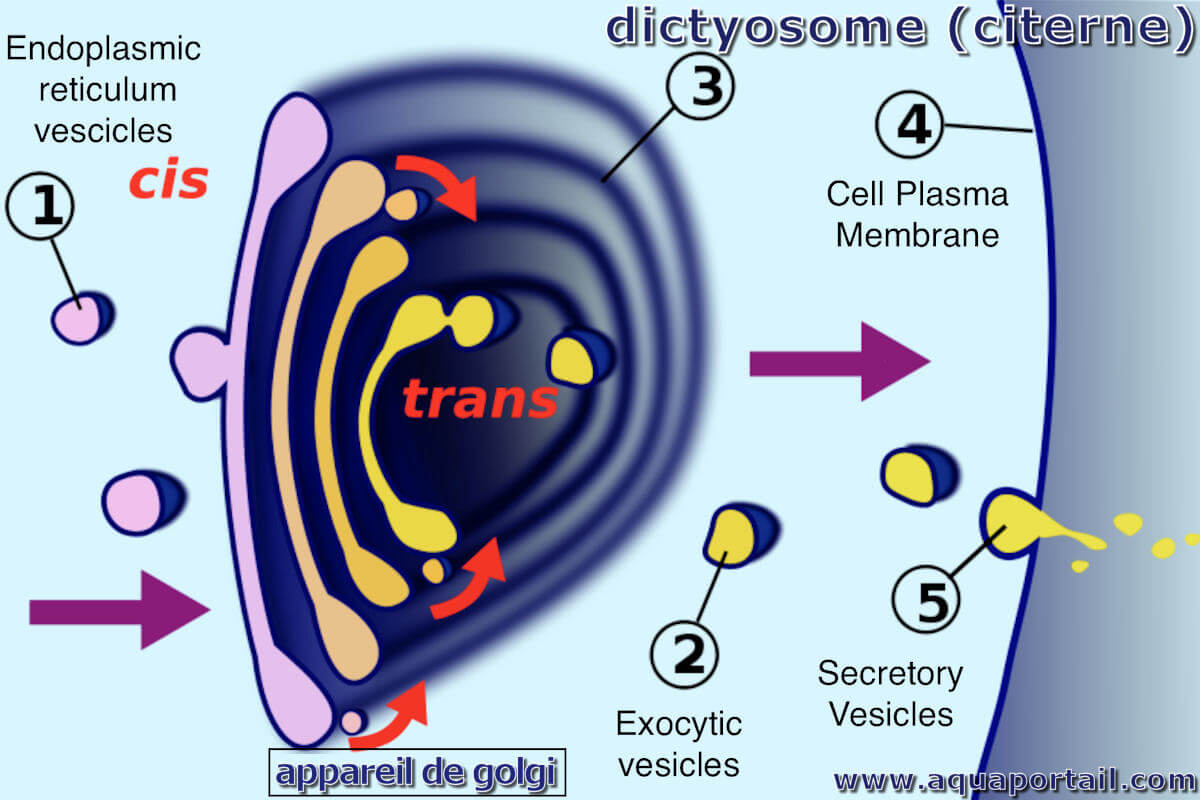
A dictyosome is a stack of flattened, membrane-bound cellular cavities shaped like small concave disks; these cavities are called cisternae.
dale

A dale is a small valley or glen that does not (or no longer) contains a watercourse. The concave hollowed space of a dale is not large enough to build...
daphnia
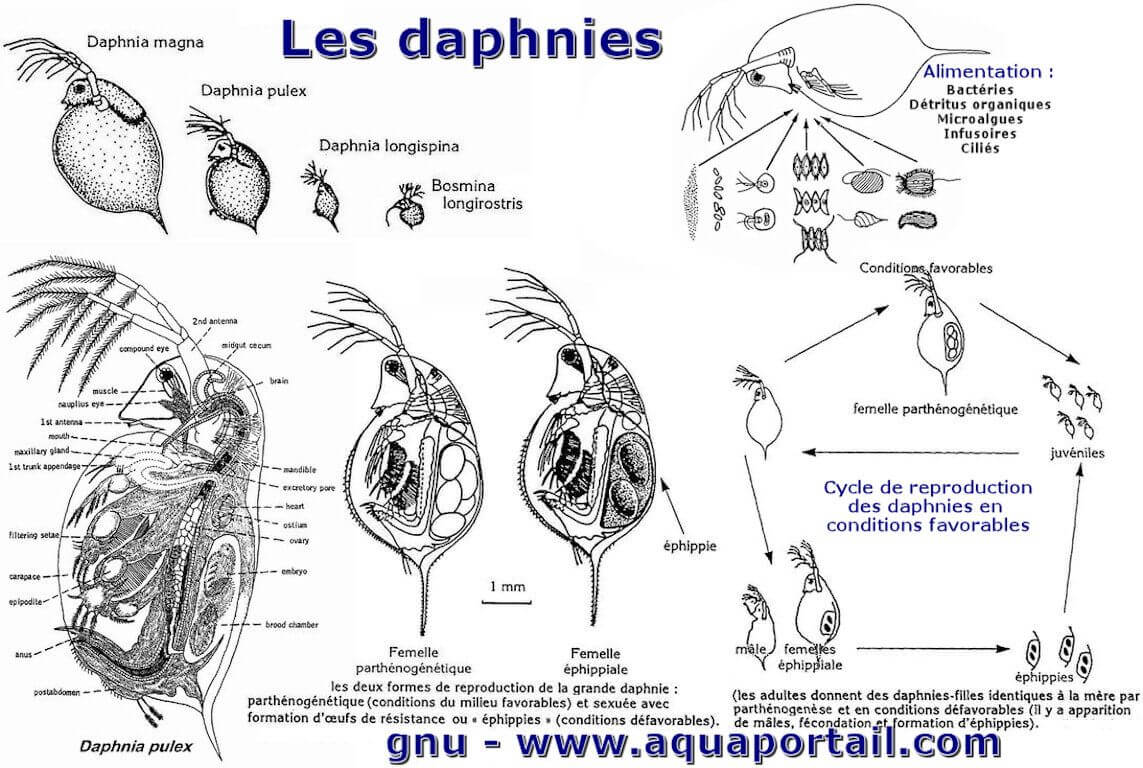
Daphnia is a planktonic branchiopod crustacean of the family Daphniidae, forming a dominant portion of freshwater plankton.
dawn

Dawn marks the transition between night and day, when the sky brightens and morning breaks in the East.
