Oogonium
noun (n.)
Definition
An oogonium is a diploid female germ cell, derived from primordial germ cells, representing the initial developmental stage of female sex cells that gives rise to an oocyte, which in turn develops into an ovum. Its male counterpart is a spermatogonium. The oogonium is the female germ cell representing the first evolutionary stage of the female germline that differentiates into a primary oocyte.
The oogonia of an ovary:
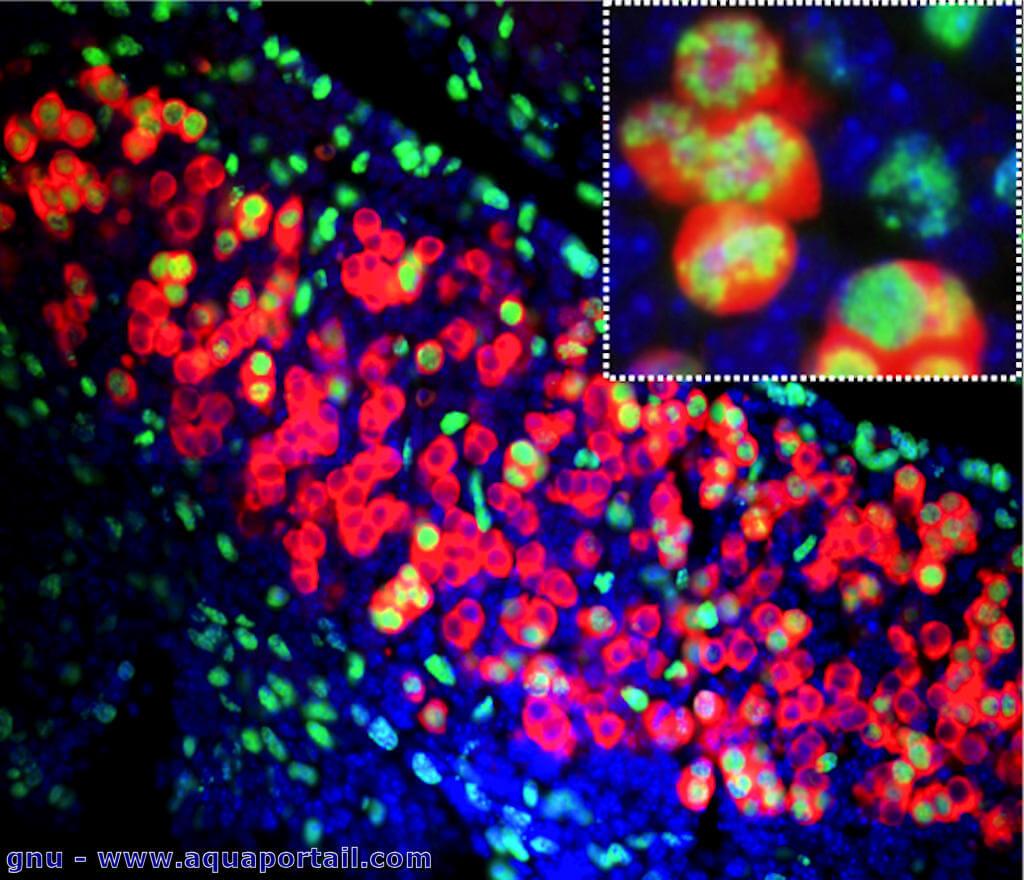
Oogonia are visible in the ovary at low magnification; at higher magnification, oogonia allow immunodetection of proliferating germ cells showing rRNA synthesis (green), red-stained cytoplasm, and nuclei (blue).
Explanations
In humans, during embryogenesis (oogenesis) between 5 and 30 weeks of gestation, oogonia differentiate into oocytes, which are female gametocytes. Oogonia are formed in large numbers by mitosis once primordial germ cells (PGCs) reach the ovary, a process occurring in the embryo between the fourth and eighth weeks. During the sixth week of embryonic development, germ cells migrate from the yolk sac to the gonadal ridge, and some begin differentiating into primary oocytes.
The initial number of primordial germ cells is relatively small and proliferates during migration, reaching a large population of oogonia in the embryonic gonad.
In botany and mycology, oogonia characterize certain algae and fungi (oomycetes).
✅ Normal oogonia in human ovaries are spherical or ovoid in shape and lie interspersed among neighboring somatic cells and oocytes at various stages of development. Oogonia are distinguished from adjacent somatic cells under the electron microscope (EM) by the appearance of their nuclei.
The nucleus of an oogonium contains dispersed granular and fibrillar material, whereas somatic cells have a more condensed nucleus, creating a darker peripheral rim under the microscope. The oogonial nucleus also contains dense, prominent nucleoli. Chromosomal material in the nucleus of mitotically dividing oogonia appears as a dense mass surrounded by vesicles or double membranes.
Oogonia are characterized by diploidy and mitotic proliferation. In humans, virtually all oogonia enter meiosis between 9 and 22 weeks of prenatal development or undergo mitotic arrest and are eliminated from the ovary. Consequently, human neonatal ovaries are generally devoid of oogonia.
The cytoplasm of oogonia resembles that of surrounding somatic cells and contains large rounded mitochondria with peripheral cristae. The endoplasmic reticulum of an oogonium is poorly developed and consists of numerous small vesicles, some forming ribosome-studded cisternae near the Golgi apparatus.
Oogonia differentiate into primary oocytes; these initiate meiosis and remain arrested at the diplotene stage of prophase I in a differentiation process completed before birth. Primary oocytes remain in the ovary from the tenth week of intrauterine life until roughly age 50 in women (menopause).
Synonyms, antonyms
Spanish translation: ovogonia
0 synonyms (similar meaning) for "oogonium".
1 antonym (opposite meaning):
Related words and expressions to OOGONIUM are directly connected by general or specific meaning.
The word OOGONIUM is listed on page 1 of words starting with O in the dictionary glossary.
Related to "oogonium"
archegonium
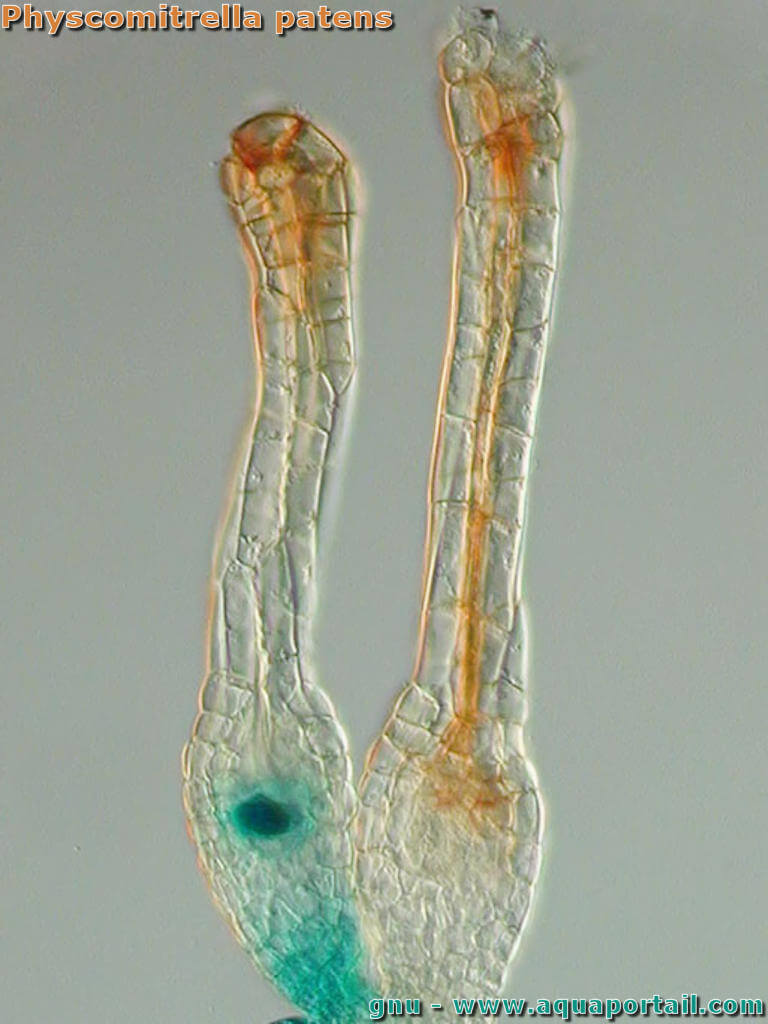
An archegonium is the bottle-shaped female reproductive apparatus, comprising an egg cell (oosphere) enclosed in a sheath and communicating with the outside...
ocean basin

An ocean basin is a benthic environment taking the form of a depression in the ocean floor bounded by the lower part of the continental slope.
ocean floor

The ocean floor (seafloor) is the region of the deep seabed where the topography flattens out, typically just beyond the continental rise at the level...
oceanic

What is oceanic relates to the ocean and designates the marine zone, or ecological province, located far from the coast, beyond the continental shelf.
