Phycobiliprotein
noun (n.)
Definition
A phycobiliprotein designates water-soluble pigments of certain algae (cyanophyceans, cyanobacteria), comprising a protein moiety and chromophores, or bilins, covalently bound to the protein.
A phycobiliprotein thus denotes an assimilatory pigment, a heteroprotein formed with phycobilins as tetrapyrrole prosthetic groups. These include phycoerythrins (red) of Rhodophyceae and phycocyanins (blue) of Cyanobacteria. These pigments are assembled into light-harvesting antennae called phycobilisomes, attached to thylakoids or the bacterial membrane.
✅ See also phycocyanobilins and allophycocyanins. Phycobiliproteins are water-soluble proteins composed of two types of globulin monomers, α and β, generally in equal proportions.
Effects of the presence of phycobiliprotein:
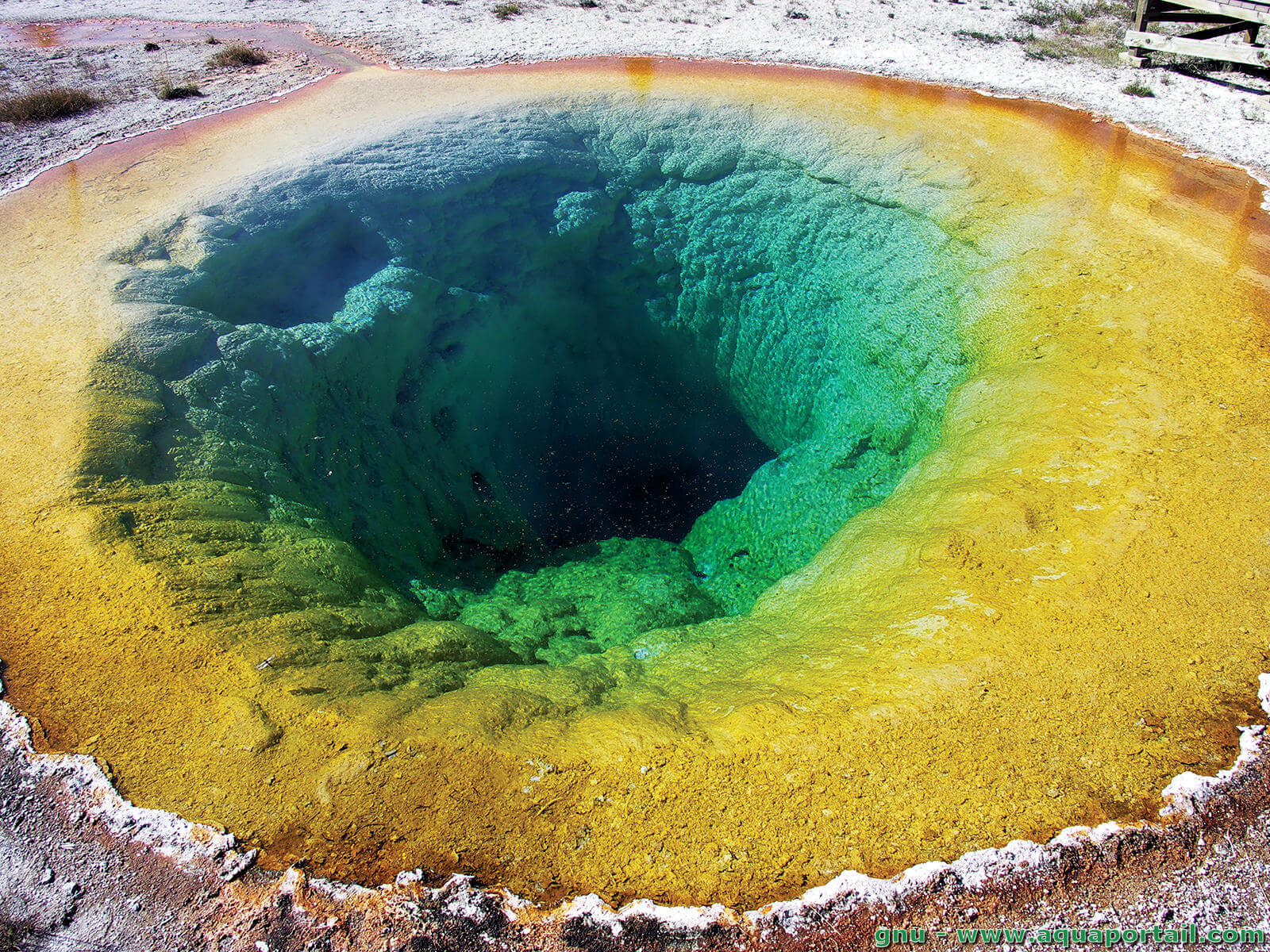
Blue-green algae possess pigments derived from phycobiliprotein, responsible for their characteristic color through light absorption.
Explanations
Phycobiliproteins are present in cyanobacteria and in the chloroplasts of certain algae (rhodophytes, cryptomonads, Glaucocystophytes) to capture light energy that is subsequently transferred to chlorophyll during photosynthesis.
Phycobiliproteins, particularly phycoerythrin, can constitute a major proportion of the proteins in red algal cells, with levels of 1.2% and 0.5% of dry weight reported for P. palmata and Gracilaria tikvahiae, respectively. Phycobiliproteins are currently used as natural colorants in foods such as chewing gums and dairy products, in addition to cosmetic applications such as lipsticks and eyeliners. Dainippon Ink & Chemical Inc. is a Tokyo-based company that markets the phycobiliprotein phycocyanin as a natural food colorant, as does Parry nutraceuticals with its Parry Blue brand.
Various phycobiliproteins have demonstrated antioxidant, anti-inflammatory, neuroprotective, hypocholesterolemic, hepatoprotective, antiviral, antitumor, liver-protective, anti-atherosclerotic, serum-lipid-lowering, and lipase-inhibiting activities.
biliproteins found in plants and algae serve as a pigment system whose purpose is to detect and absorb light necessary for photosynthesis. The absorption spectrum of biliproteins complements that of other photosynthetic pigments such as chlorophyll or carotene. The pigments detect and absorb solar energy, which is then transferred to chlorophyll via internal energy transfer. According to a 2002 paper by Takashi Hirata, the chromophores of certain phycobiliproteins are responsible for the antioxidant activities of these biliproteins, and phycocyanin also possesses anti-inflammatory qualities due to its inhibitory apoprotein. When induced by both collagen and adenosine triphosphate (ADP), the chromophore phycocyanobilin suppresses platelet aggregation in phycocyanin, its corresponding phycobiliprotein.
Phycobiliproteins are grouped into distinct clusters about 40 nm in diameter, called phycobilisomes. The structural changes involved in deriving bilins from their biliverdin IXα isomer determine the spectral range of light absorption.
Synonyms, antonyms
Spanish translation: ficobiliproteína
1 synonym (similar meaning) for "phycobiliprotein":
0 antonyms (opposite meaning).
Related words and expressions to PHYCOBILIPROTEIN are directly connected by general or specific meaning.
The word PHYCOBILIPROTEIN is listed on page 1 of words starting with P in the dictionary glossary.
Related to "phycobiliprotein"
biliprotein

A biliprotein is a protein whose prosthetic group is a tetrapyrrole chain. The best-known phycobiliproteins derived from biliproteins are phycoerythrin...
phycobilin

Phycobilin is a water-soluble photosynthetic accessory pigment found in red algae and cyanobacteria.
phycobilisome

A phycobilisome is a structure formed of large protein complexes, phycobiliproteins, located on the surface of the thylakoids of cyanobacteria, red algae...
paedomorphosis

Paedomorphosis (juvenilization) is a phylogenetic change involving the retention of juvenile or even larval traits into a later (adult) stage.
