Phycoerythrin
noun (n.)
Definition
Phycoerythrin is a red pigment of the erythrin type belonging to the phycobiliprotein family. This pigment is characteristic of red algae, cyanobacteria, and cryptomonads. Phycoerythrin enables the absorption of short-wavelength light radiation that penetrates deep into the sea.Emission and absorption spectra of phycoerythrin:
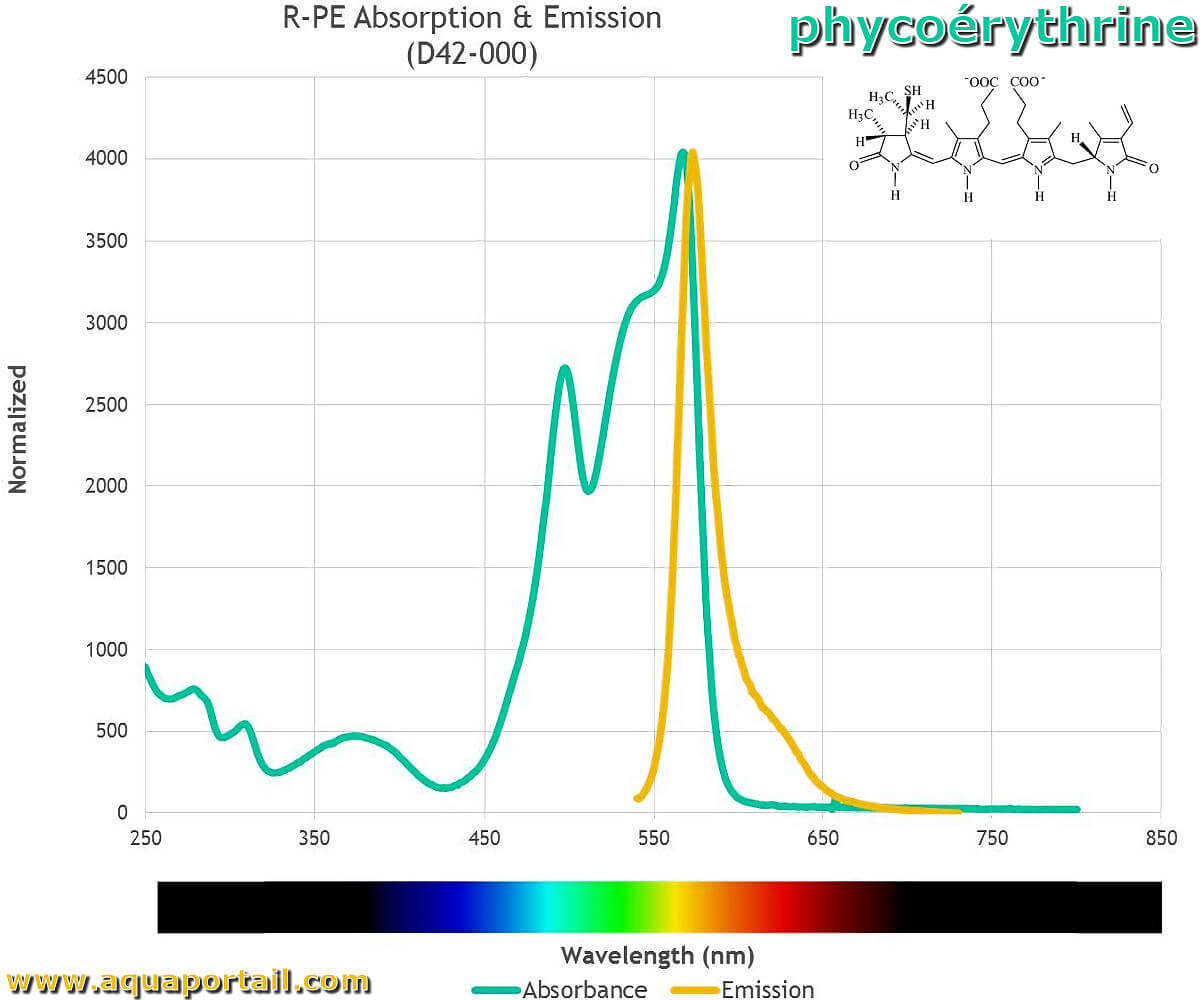
Numerous applications and instruments have been developed specifically for R-phycoerythrin. It is commonly used in immunoassays such as FACS, flow cytometry, and multimer/tetramer applications. With newly available instrumentation, R-PE is also well suited for immunohistochemistry (IHC).
Explanations
This pigment is found in a red alga, dulse Palmaria palmata.
Like all phycobiliproteins, phycoerythrin is composed of a protein moiety, organized in a hexameric structure of alpha and beta chains, covalently bound to chromophores called phycobilins.
The spectroscopic parameters of phycourobilin and phycoerythrobilin on phycoerythrin have been determined. Chromophorylated tryptic fragments of the protein were used to mimic the protein environment and avoid interference from other chromophores in the molecule.
Case of the cyanobacterium Synechococcus
Synechococcus cyanobacteria are widespread in the marine environment because the wide diversity of pigments within their light-harvesting phycobilisomes allows them to utilize various wavelengths of light for photosynthesis. The phycobilisomes of Synechococcus sp. RS9916 contain two forms of the phycoerythrin protein (PEI and PEII).
Case of the alga Griffithsia monilis
The structure of R-phycoerythrin (R-PE) from the red alga Griffithsia monilis was solved at 1.90 angstrom resolution by molecular replacement, using the atomic coordinates of cyanobacterial phycocyanin from Fremyella diplosiphon as a search model. The crystallographic R-factor of the final model is 17.5% for reflections between 100 and 1.90 angstroms. The model consists of an (alpha-beta) dimer with an internal non-crystallographic dyad and a fragment of the gamma-polypeptide.
The alpha-polypeptide (164 amino acid residues) has two phycoerythrobilins covalently attached at positions alpha82 and alpha139. The beta-polypeptide (177 residues) has two phycoerythrobilins bound at residues beta82 and beta158 and one phycourobilin covalently attached at rings A and D to residues beta50 and beta61, respectively. The electron density of the gamma-polypeptide is largely averaged by three-fold crystallographic symmetry, though one dipeptide (Gly-Tyr) and a single Tyr could be modeled. These two tyrosine residues of the gamma-polypeptide lie in close proximity to the phycoerythrobilins at position beta82 of two symmetry-related beta-polypeptides and are related by the same non-crystallographic dyad as the (alpha-beta) dimer.
Synonyms, antonyms
Spanish translation: ficoeritrina
1 synonym (similar meaning) for "phycoerythrin":
0 antonyms (opposite meaning).
Related words and expressions to PHYCOERYTHRIN are directly connected by general or specific meaning.
The word PHYCOERYTHRIN is listed on page 1 of words starting with P in the dictionary glossary.
Related to "phycoerythrin"
phycobilin

Phycobilin is a water-soluble photosynthetic accessory pigment found in red algae and cyanobacteria.
phycobiliprotein
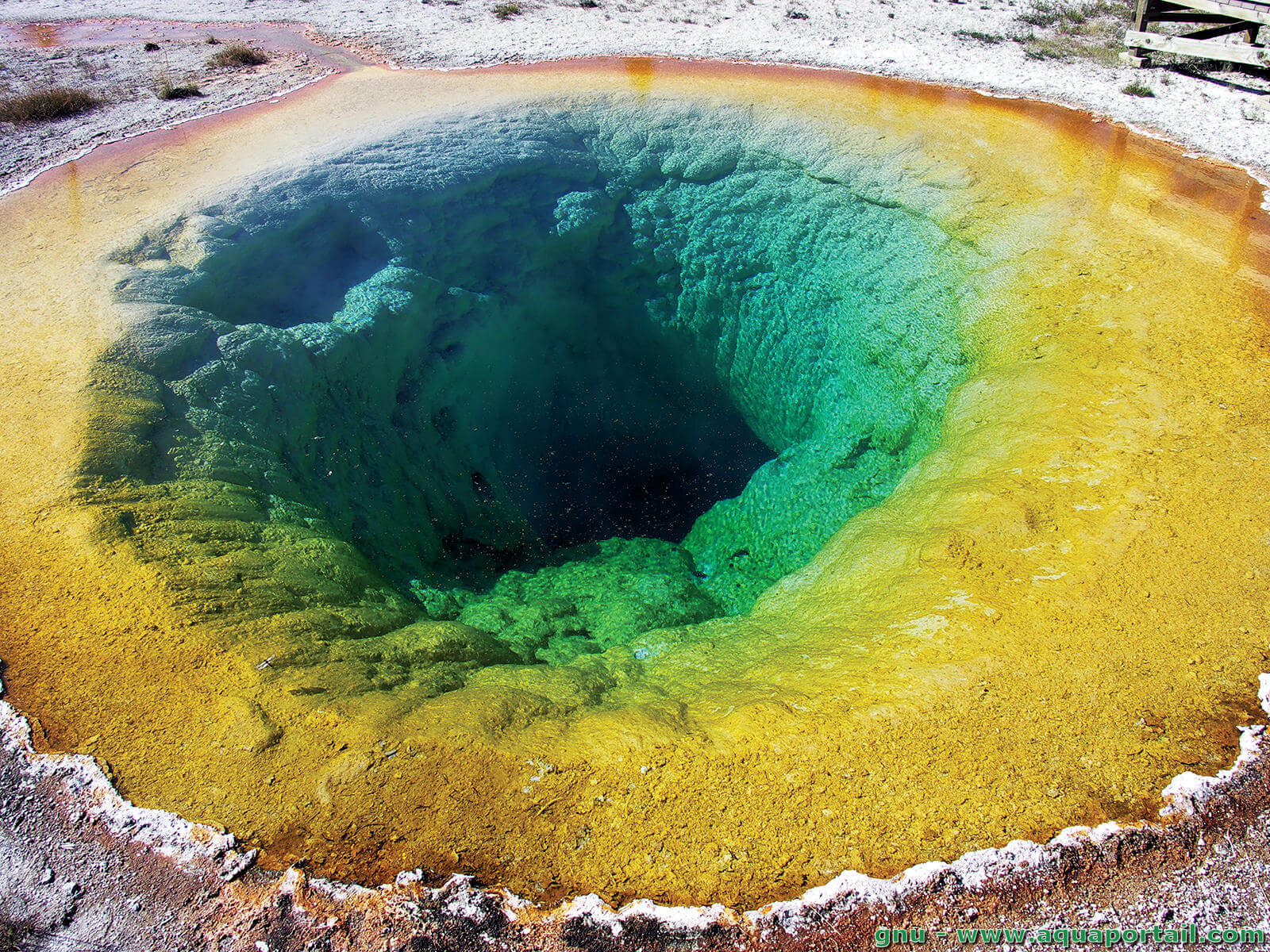
A phycobiliprotein designates water-soluble pigments of certain algae (cyanophyceans, cyanobacteria), comprising a protein moiety and chromophores, or bilins...
phycobilisome

A phycobilisome is a structure formed of large protein complexes, phycobiliproteins, located on the surface of the thylakoids of cyanobacteria, red algae...
phycoerythrobilin

Phycoerythrobilin is a red phycobilin, a chromophore entering into the composition of phycobiliproteins.
