Heterospory
noun (n.)
Definition
In botany, heterospory (or anisospory) is a mode of spore production characterized by two morphological types of spores. These spores correspond, on the one hand, to those that will produce male individuals and, on the other hand, to those that will produce female individuals. Such plants are said to be heterosporous. Heterospory is considered by botanists to be an important step toward the development of the seed.
Heterospory complements homospory (or isospory).
Heterospory of a lycophyte Selaginella:

Heterospory in the strobilus of the lycophyte Selaginella sp. occurs because the sporangia form large megaspores (female) or small microspores (male) on the microsporophylls, so that spikemosses are heterosporous.
Explanations
Heterospory consists of the formation of different meiotic spores by one sporophyte in the case of homophytism or by each of the two types of sporophytes in the case of heterophytism. These male and female spores are called microspores and macrospores and will give rise respectively to male and female prothalli (heteroprothally). Heterospory is sometimes not followed by heteroprothally.
Comparison between homospory and heterospory:

Comparative diagram between homospory (top) and heterospory (bottom). In a typical heterosporous life cycle, separate, unisexual male and female gametophytes are produced.
Plants that produce separate male and female gametophytes germinate these gametophytes from (or inside, in the case of more advanced plants) spores of different sizes (heterospores). The male gametophyte produces sperm and is associated with smaller microspores. The female gametophyte is associated with the larger ones, or megaspores.
In certain species of Basidiomycetes, heterospory describes the formation of spores of different sizes and shapes.
The most primitive plants, bryophytes, are isosporous, whereas heterospory appears in certain pteridophytes and becomes established in the most advanced plants, the spermatophytes, including both angiosperms and gymnosperms.
Heterospory is present in many embryophytes, particularly in flowering plants, gymnosperms, many ferns, as well as certain mosses and lycophytes.
✅ Macrosporangia and microsporangia can also be found on the same plant (monoecious), or they can be separated onto male and female plants (dioecious).
Synonyms, antonyms
Spanish translation: heterosporia
1 synonym (similar meaning) for "heterospory":
2 antonyms (opposite meaning):
Related words and expressions to HETEROSPORY are directly connected by general or specific meaning.
The word HETEROSPORY is listed on page 1 of words starting with H in the dictionary glossary.
Related to "heterospory"
apospory
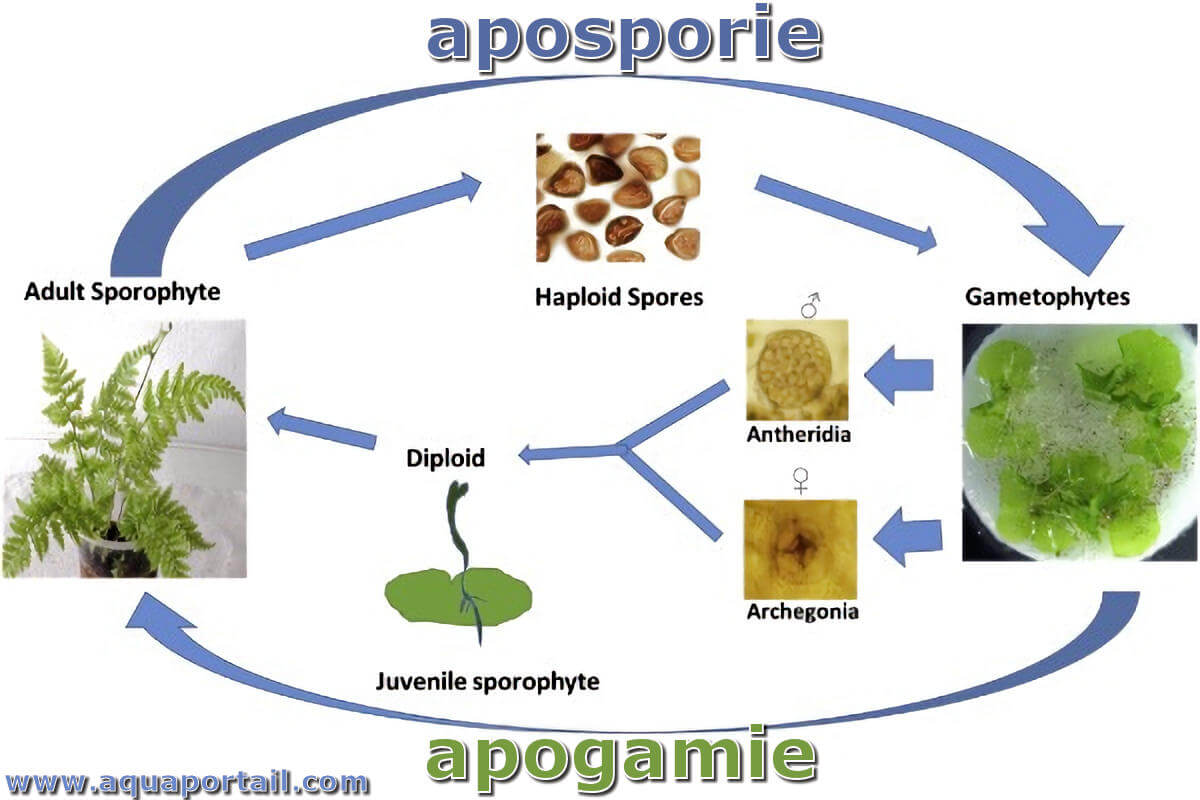
Apospory is the absence of spore production for reproduction. It is a form of apomixis in which the gametophyte develops directly from the sporophyte without...
heterosporous

In botany, a heterosporous plant is a sporophyte species that produces more than one kind of spore, generally of two different sizes and sexes.
isosporous

An isosporous plant produces only a single type of spore. This is characteristic of bryophytes and many pteridophytes, in contrast to heterosporous plants...
heterocyst

In filamentous cyanobacteria, a heterocyst is a thick-walled cell, lacking the usual pigmentation of this group and specialized in atmospheric nitrogen...
