Aragonite
noun (n.)
Definition
Aragonite is a soft carbonate mineral. It forms naturally in mollusk shells and in coral skeletons in the form of stalactites. Aragonite is the second most common form of naturally occurring calcium carbonate (the most common being calcite). It is markedly less widespread and abundant than calcite, forming within a much narrower range of physicochemical conditions.Aragonite crystals:
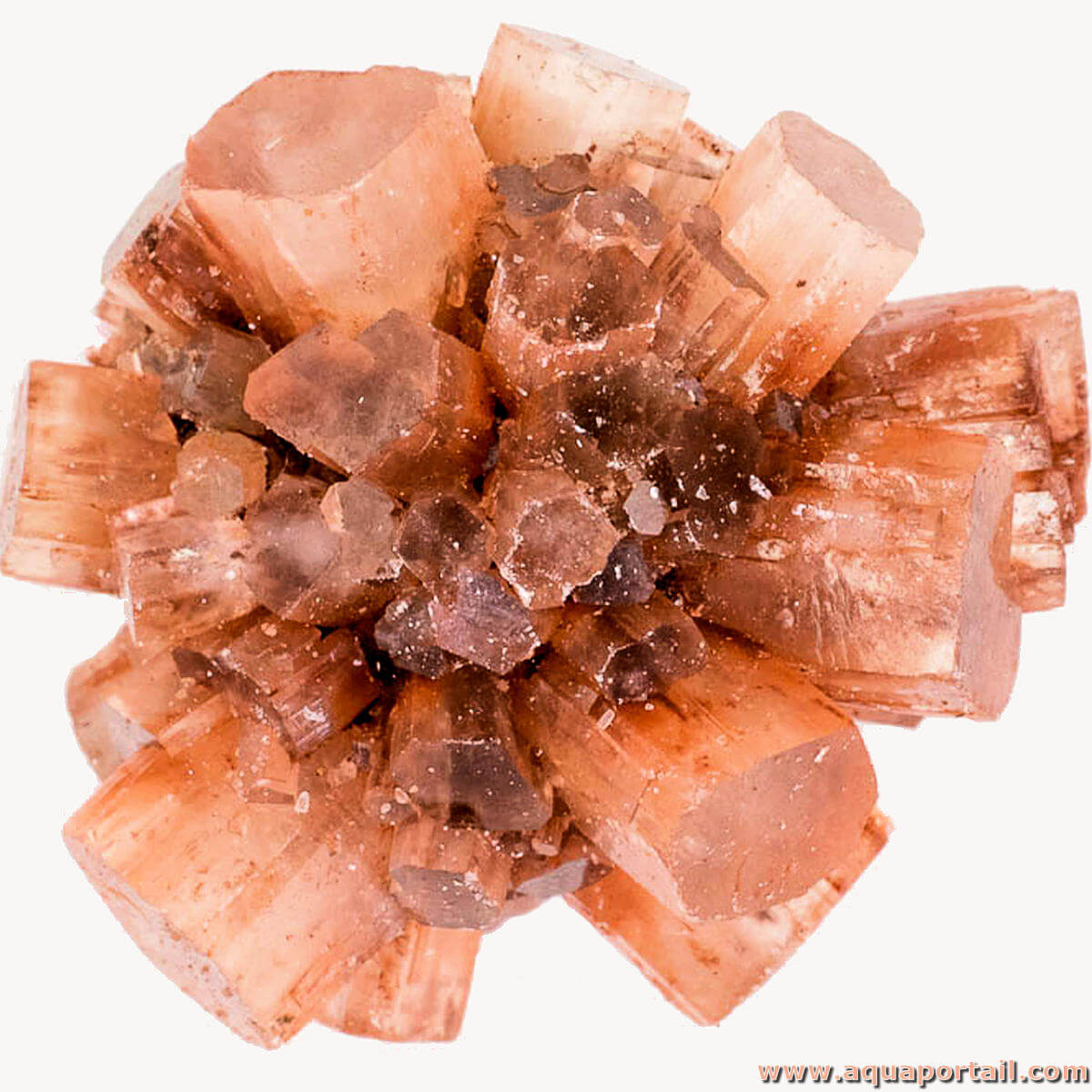
These natural pieces of aragonite are fine specimens with crystals clustered atop one another. This aragonite displays an attractive peach-brown color.
Explanations
An aragonite is an orthorhombic form of calcium carbonate producing usually prismatic crystals. ⭐ The difference between aragonite and calcite lies in the crystal form (or morph) of calcium carbonate: rhombohedral = calcite; orthorhombic = aragonite. Its empirical formula is CaCO3. The third polymorph of calcium carbonate is vaterite (hexagonal).
🚩 The true identity of microcrystalline forms of aragonite or calcite may also remain unknown without complex testing, which can lead to confusion between these mineral species.
Aragonite, being a polymorph, is metastable relative to calcite and frequently transforms into calcite in response to environmental changes. It is almost always a low-temperature, near-surface mineral.
The aragonite/calcite pair was the first recognized case of mineral polymorphism. This means both share the same chemical composition yet possess different crystal structures. Because of this difference, aragonite is more soluble in water (and unstable at ambient temperature and pressure) than calcite. In fact, over geological timescales (10–100 million years), aragonite tends to convert into calcite. This property can be used to determine the age of certain rock formations.
The color of aragonite is usually white, purple, brown, black, blue, or green (along with all kinds of variations).
A flos-ferri aragonite:
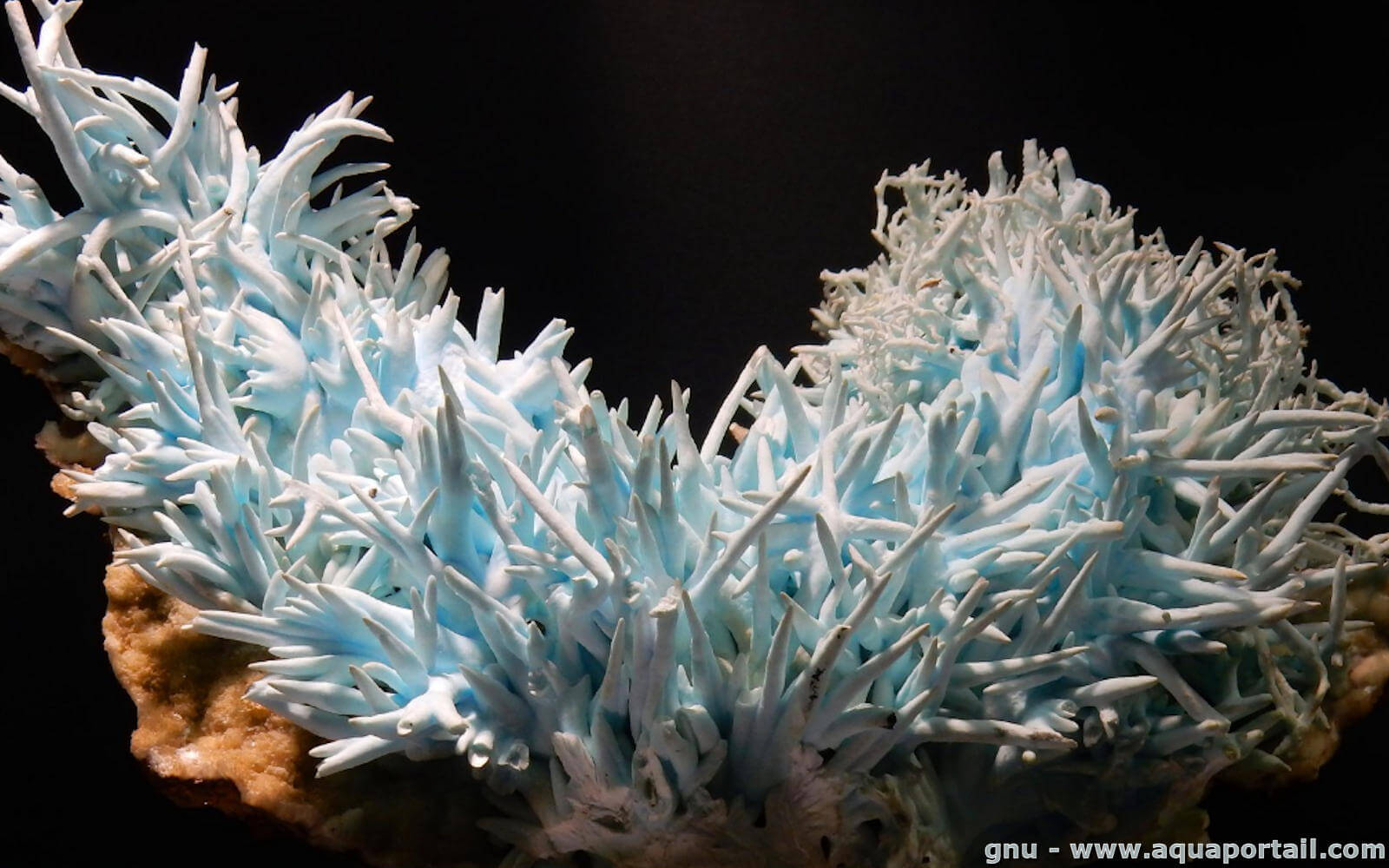
This helictic variety of aragonite is called flos-ferri ("flower of iron"): it resembles a handsome hyaline-colored coral.
Aragonite is a soft mineral, and consequently extra care must be taken when it is worn as jewelry.
🚩 Applications of aragonite are very limited due to the mineral's instability. Aragonite is generally used only as an ornamental stone or collector's specimen.
✅ Large deposits of high-purity aragonite sand are found on the seabed in various areas around the islands of the Bahamas archipelago, extracted on an industrial scale by dredging for use in construction and as a source of calcium carbonate for soil amendment. The formation of aragonite sand (see also coral sand) is likely driven by chemical precipitation caused by water temperature changes as deep waters warm upon nearing the surface.
Aragonite also forms from hot springs or geysers, filtered waters that have come into contact with very hot rocks at great depth and re-emerged at the surface. These waters dissolve minerals from the rocks as they pass through, including calcium. As the hot springs evaporate, the calcium they contain precipitates and, upon contact with air, combines with oxygen and carbon dioxide to form aragonite crystals.
✅ The cell walls of Dasycladales (an order of green algae) are encrusted with aragonite. As a result, these algae fossilize readily, and around 150 fossil genera are known from this order... One of these algae, Acetabularia acetabulum (mermaid's wineglass), is frequently imported on live rock into marine aquariums, though unfortunately it does not survive long in a captive ecosystem.
Synonyms, antonyms
Spanish translation: aragonito
2 synonyms (similar meaning) for "aragonite":
0 antonyms (opposite meaning).
Related words and expressions to ARAGONITE are directly connected by general or specific meaning.
The word ARAGONITE is listed on page 1 of words starting with A in the dictionary glossary.
Related to "aragonite"
abiotic

In biology and ecology, abiotic refers to what is not biotic, that is, not part of living beings.
aboral

Aboral refers to what is situated away from or opposite the mouth in zoology, and especially in marine biology.
absence

Absence refers to non-presence at an expected location, or the complete non-existence of something.
acetyltransferase
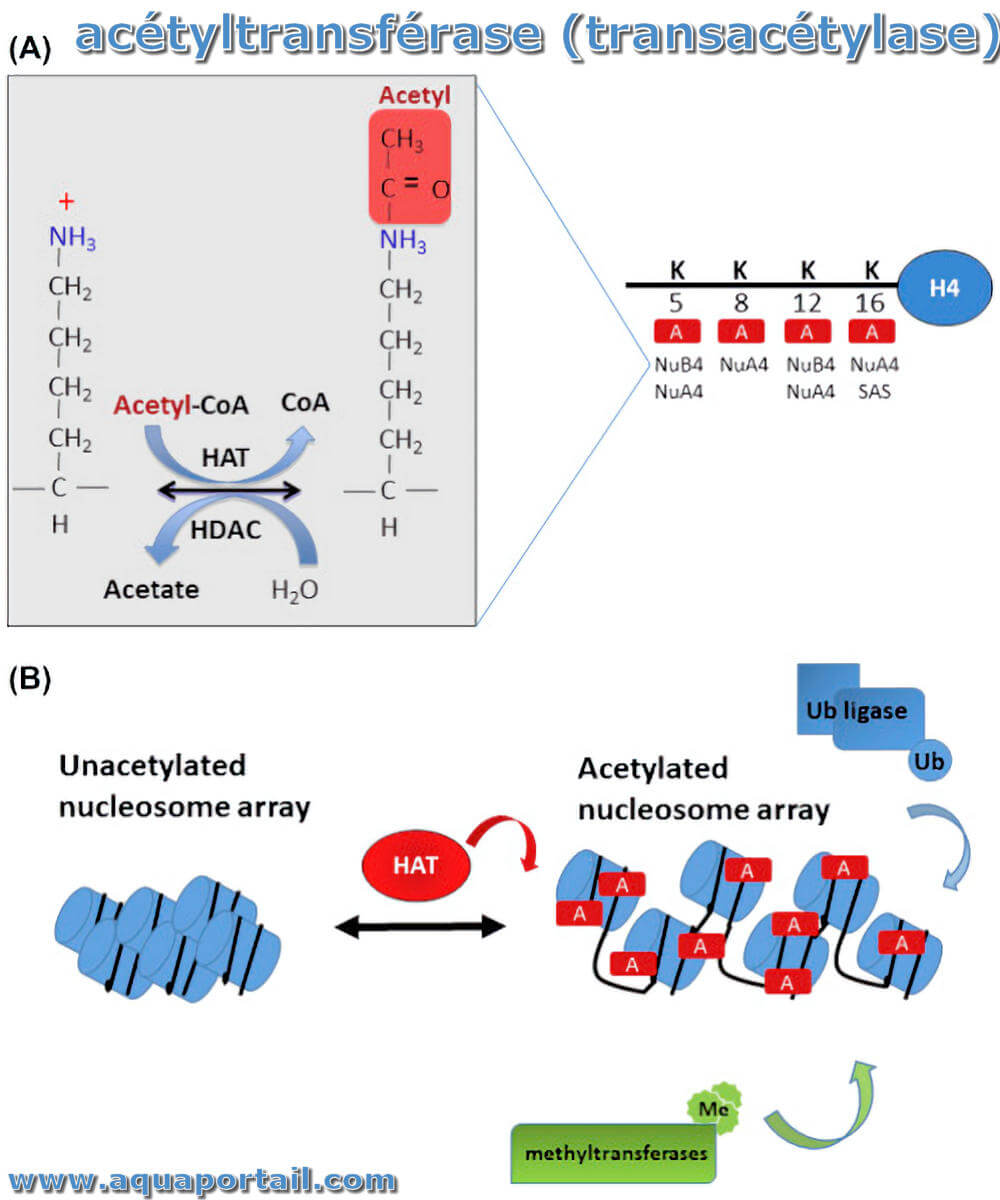
An acetyltransferase is an enzyme that transfers an acetyl group from acetyl-CoA to lysine amino acids.
