Littoral drift
noun phrase (n. phr.)
Definition
Littoral drift is the transport of sediments along the coastline, a movement carried out by waves, wind, and currents along the shore of material deposited on coasts, involving non-cohesive sediments such as sand, as well as coarser sediments such as gravel.Littoral drift or longshore sediment transport is the term used to designate the coastal transport of sediments (primarily sand) along the upper part of the shore due to the action of breaking waves and longshore currents.
A diagram of littoral drift:

Littoral drift occurs because sediments are transported at an oblique angle to the shore, depending on the prevailing wind direction, swash, and backwash current. Material is transported by suspension, traction, solution, and saltation. Littoral drift forms a link between erosion, transport, and deposition.
Explanations and mechanism
Schematic littoral drift illustrates the movement of transported sediments arriving along the foreshore and nearshore due to the action of breaking waves and coastal currents. The angle relative to the shore depends on the prevailing wind direction, swash, and backwash (wave receding seaward). This process occurs in the littoral zone, and within or near the surf zone.
Littoral drift is influenced by many aspects of the coastal system, with processes occurring within the surf zone largely governing sediment deposition and erosion. Longshore currents can generate oblique breaking waves that result in sediment transport.
Coastal littoral drift can generally be defined according to the systems operating within the wave-breaking zone. Sediments are transported along the coast: first, sediment is pushed toward the shore by swash (in the direction of the prevailing wind), moving particles at the angle of the wind direction, and then returns seaward perpendicular to the shore via backwash, which carries particles back down the beach under the influence of gravity.
It affects many types of sediments of various sizes. It operates differently depending on sediment type (for example, the difference between coastal drift of sediments on a sandy beach versus a shingle beach).
Sand is strongly affected by the oscillatory force of breaking waves and swash-backwash action, sediment movement caused by breaking wave impact, and the path of coastal currents. Because shingle beaches are much steeper than sandy beaches, waves tend to break closer to shore, causing most coastal drift to occur in the swash zone due to the narrowness of the breaker zone.
There are numerous calculations that account for the factors producing littoral drift. These formulas include:
- Bijker formula (1967, 1971)
- Engelund and Hansen formula (1967)
- Ackers and White formula (1973)
- Bailard and Inman formula (1981)
- Van Rijn formula (1984)
- Watanabe formula (1992).
All of these formulas provide a different perspective on the processes generating this coastal drift. The factors most commonly accounted for in these formulas are:
- suspended load and bedload transport
- waves (e.g., breaking and non-breaking)
- shear stress exerted by waves or wave-associated fluid motion.
Characteristics of coastal evolution
Littoral drift plays a fundamental role in the evolution of a coastline, because if there is a slight change in sediment supply, wind direction, or any other coastal influence, coastal drift can change drastically, affecting the formation and evolution of a shoreline.
These changes do not occur due to a single factor in the coastal system, but because of numerous modifications within the coastal system that can affect the distribution and impact of coastal drift.
Some of these modifications are:
- geological changes, such as erosion, shoreline shifts, and the emergence of headlands
- changes in hydrodynamic forces, e.g., changes in wave diffraction at headlands and offshore environmental dynamics
- modification of hydrodynamic influence, e.g., the influence of new low-water levels and deltas on drift
- alterations to the sediment budget, e.g., changes in drift coasts toward flow alignment, depletion of sediment sources
- human intervention, e.g., cliff protection, breakwaters, detached breakwaters.
Synonyms, antonyms
Spanish translation: deriva litoral
2 synonyms (similar meaning) for "littoral drift":
- coastal drift
- longshore transport
0 antonyms (opposite meaning).
Related words and expressions to LITTORAL DRIFT are directly connected by general or specific meaning.
The expression LITTORAL DRIFT is listed on page 1 of words starting with L in the dictionary glossary.
Related to "littoral drift"
aquarium driftwood

Aquarium driftwood is natural dead wood suitable for underwater use because it is rot-resistant, typically seasoned driftwood.
L-form bacteria
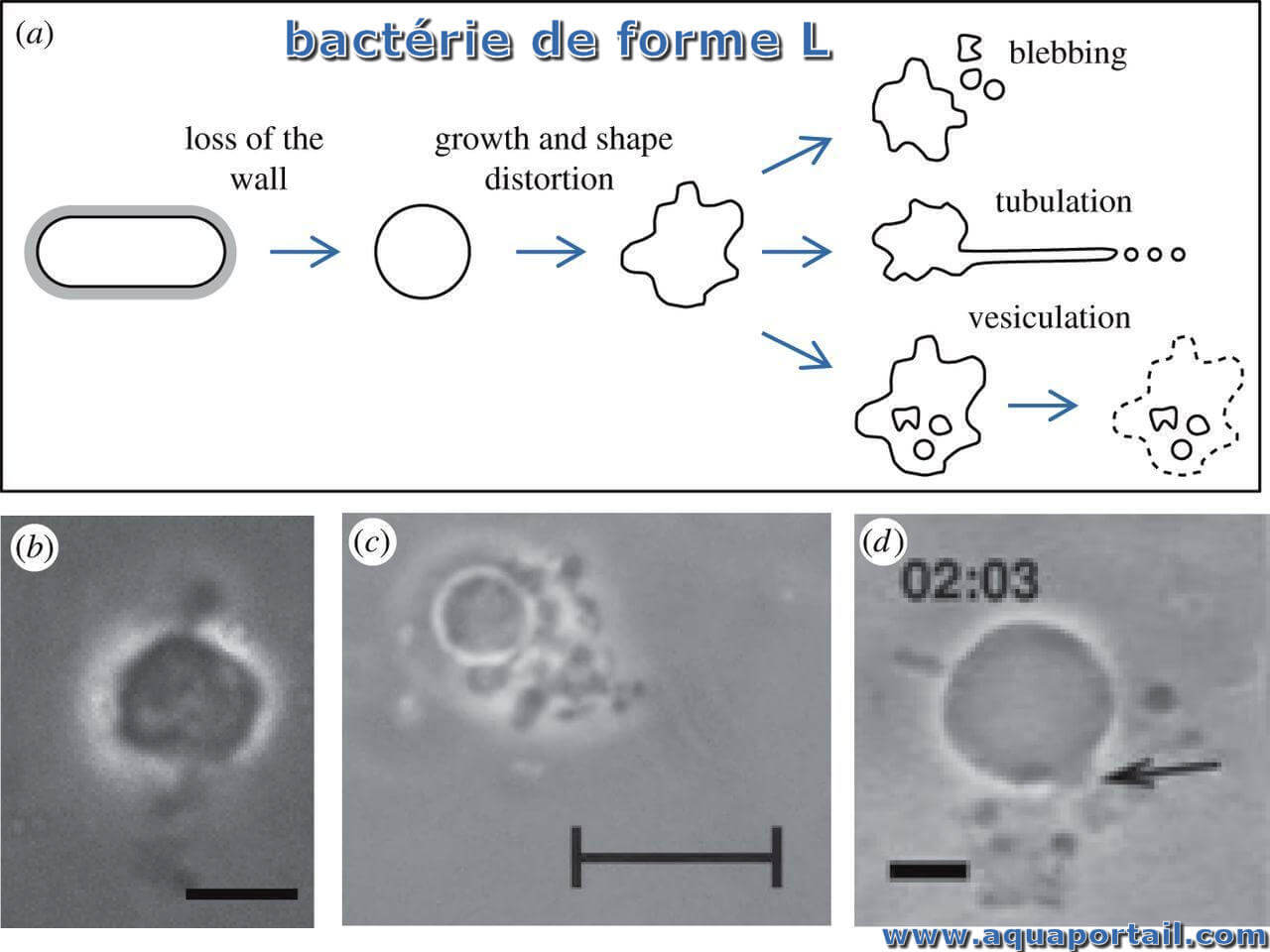
L-form bacteria originate from a strain of bacteria that lack cell walls while retaining the ability to grow.
lake

A lake is a large inland and continental body of freshwater, nearly stagnant or slow-moving.
lamprey

A lamprey is an aquatic vertebrate of the class Petromyzontida within the cyclostomes. Adult lampreys are characterized by a toothed, funnel-like sucking...
