Gonidium
noun (n.)
Definition
A gonidium is a group of asexual reproductive cells within colonies of Volvox (microscopic chlorophyte algae). Gonidia are non-motile and eventually give rise to new daughter colonies through repeated divisions.
Gonidia also refer to any unicellular asexual reproductive body, such as a tetraspore or zoospore, or to an algal cell or filament growing within the thallus of a lichen.
Gonidia of Volvox:
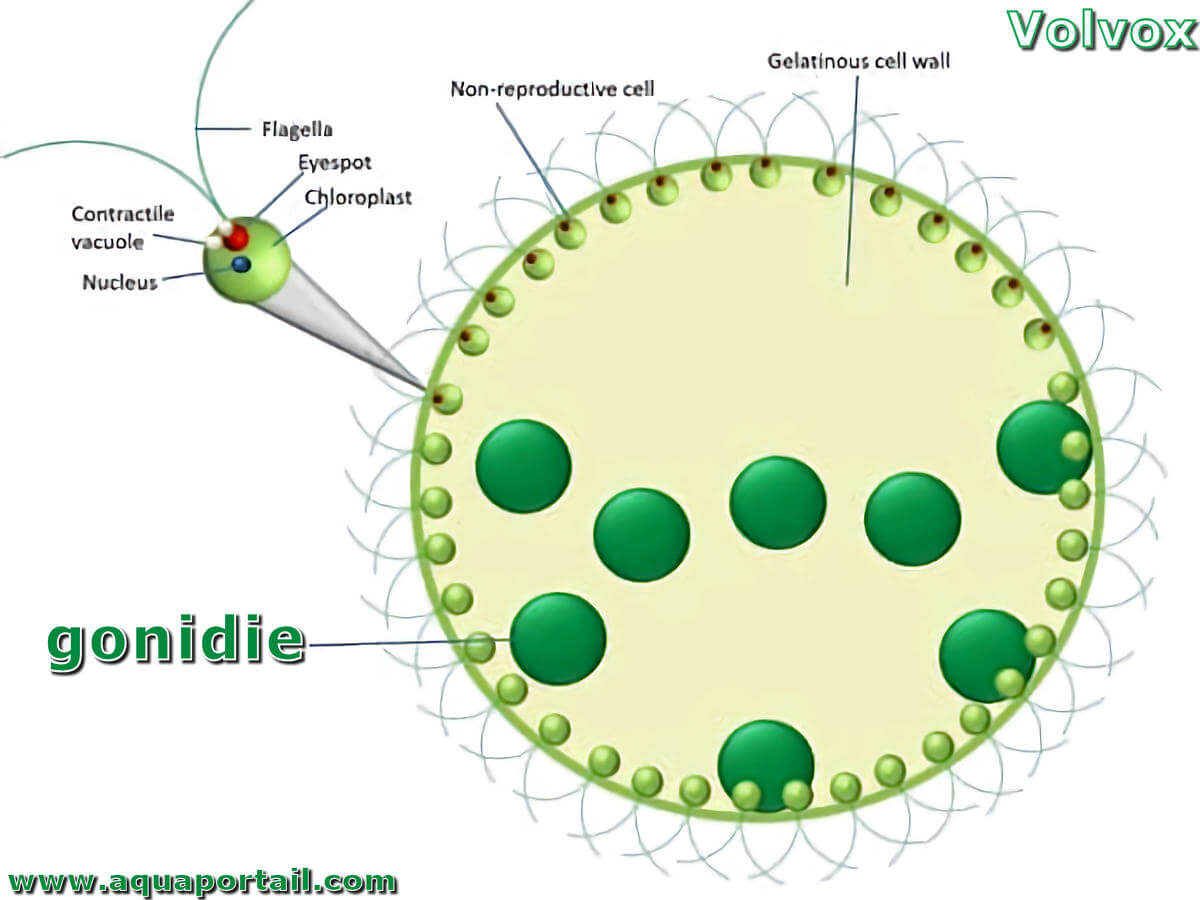
In Volvox carteri, gonidia are non-motile and are considered immortal due to their capacity for repeated division and reproduction.
Explanations
A gonidium is an algal or cyanobacterial photobiont cell within a lichen. It is also an asexual reproductive cell or group of cells originating from or on gametophytes, usually within specialized organs.
Generally, this green cellular tissue forming the thallus in algae and lichens constitutes a continuous layer (gonidial layer) in which the vegetative vigor of these organisms appears to reside.
For example, zoospores and tetraspores are types of gonidia (gonidium). The term also refers to any alga living in symbiosis with a fungus in a lichen consortium. Each of the green, chlorophyll-containing cells inside a lichen thallus sometimes forms a distinct layer, though they are often scattered.
More simply, gonidia are unicellular green or blue-green algae that make up the photosynthetic partner of lichens. Gonidium is also an older name for nanocytes.
Nanocyte
A nanocyte (or gonidium) consists of each of the dwarf cells, functioning like spores, resulting from multiple divisions of a parent cell without subsequent enlargement of the daughter cells.
A nanocyte is an asexual reproductive cell or group of cells arising from or on gametophytes, generally inside specialized structures. For instance, zooids include zoospores and tetraspores. Nanocyte also refers to any alga entering into symbiosis with a fungus in a lichen consortium. Each of the green chlorophyllous cells found within a lichen thallus sometimes forms a defined layer, though they are frequently dispersed.
History
Karl Friedrich Wilhelm Wallroth (1792–1857) introduced the term "gonidia" to describe the green cells observed inside lichens. They were thought to be "brood cells" or reproductive organs of the lichen fungus. This interpretation of their function persisted until the publication of Schwendener's classic work.
Although many years passed before the dual-nature theory of lichens proposed by Schwendener gained universal acceptance, the gradual realization that gonidia were identical to free-living algae brought about a complete shift in the term's meaning.
The term could no longer retain its original application to cells presumed to participate in the reproduction of the fungal partner, and instead came to denote an organism capable of independent existence with no direct role in reproducing the lichen fungus. Its continued use was favored out of convenience despite terminological imprecision.
⭐ Previously, lichen gonidia were mistaken for asexual reproductive structures formed at the tips of hyphal branches (S. Schwendener, 1863).
However, following the studies of A.S. Famintsyn (1867) and O.V. Baranetsky, which proved that lichen gonidia can live independently and produce zoospores like free-living algae, Schwendener abandoned his earlier view, ultimately demonstrating that gonidia are algae living in symbiosis with fungi (forming the composite lichen organism).
It proved possible to separate the fungus and the algae and culture them independently; conversely, researchers succeeded in recombining them artificially to produce a normal lichen thallus. Gonidia are green algae (Chlorophyceae) or blue-green algae (Cyanophyceae, Phycochromaceae), most often simpler, lower representatives of these groups.
Synonyms, antonyms
Spanish translation: gonidio
2 synonyms (similar meaning) for "gonidium":
0 antonyms (opposite meaning).
Related words and expressions to GONIDIUM are directly connected by general or specific meaning.
The word GONIDIUM is listed on page 1 of words starting with G in the dictionary glossary.
Related to "gonidium"
antheridium
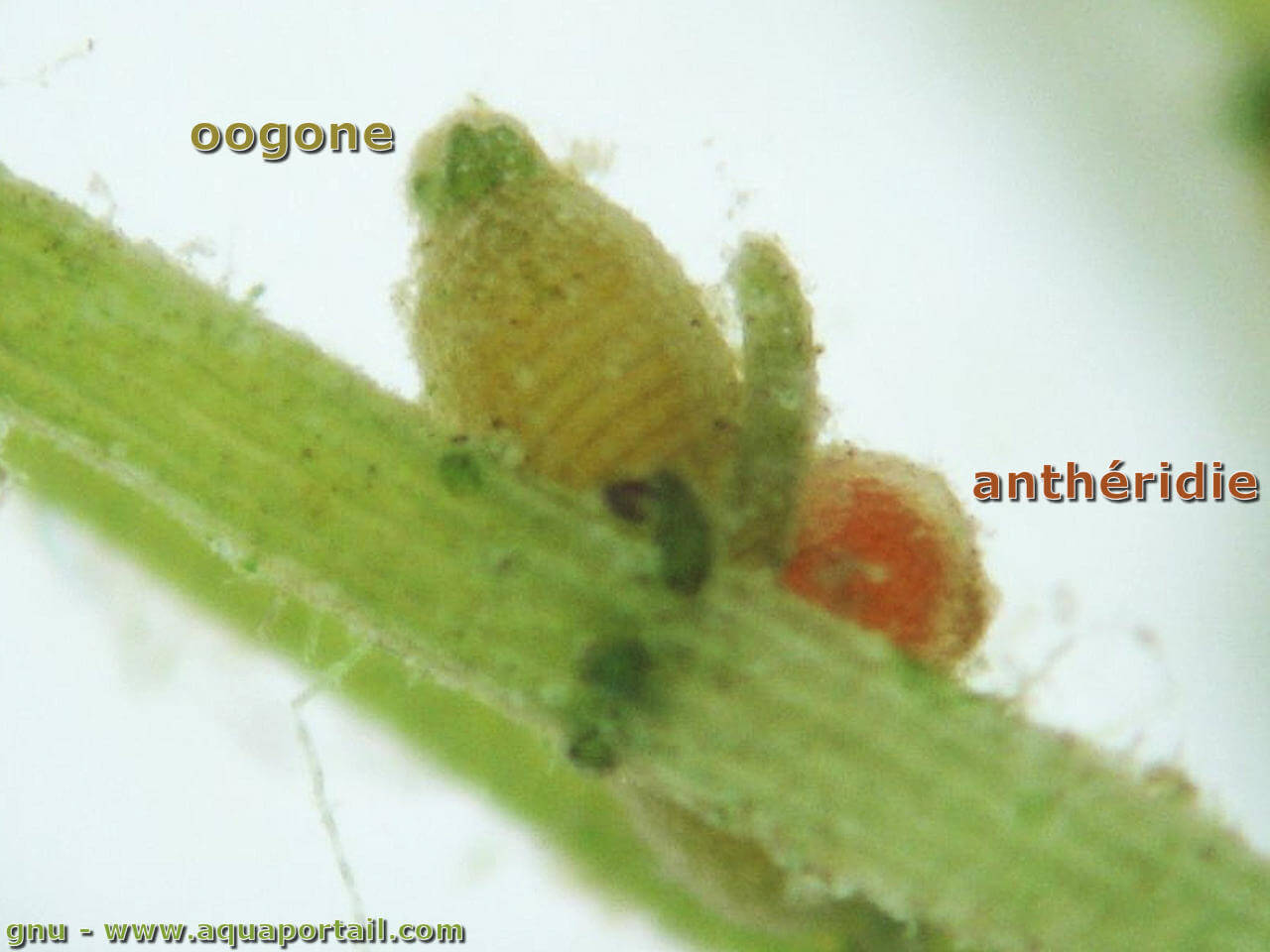
In botany, an antheridium is a male gametangium producing male gametes (antherozoids). It is the sexual organ of cryptogamic plants such as mosses, ferns...
gabelle

The gabelle was an ancient excise tax on salt. This indirect tax remained the main source of revenue for the French monarchy until the Revolution of 1789...
galactan
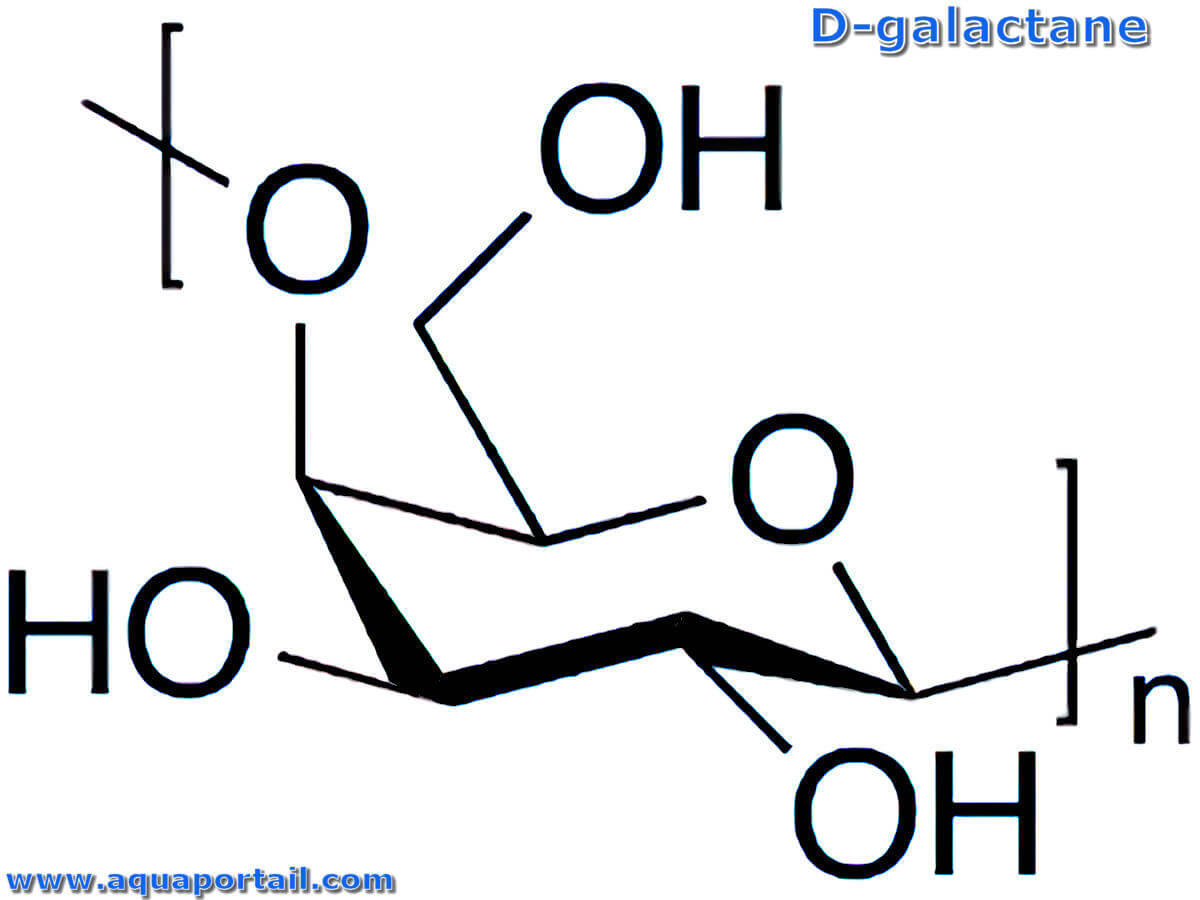
A galactan (galactosan) is a polymer composed of L- and D-galactose, a water-soluble hemicellulose made up of branched hydrosoluble polysaccharides.
gametangium

In botany, a gametangium is an organ or cell structure in which gametes are produced, as seen in mosses and liverworts.
