Pegmatite
noun (n.)
Definition
Pegmatite is an igneous rock having a very coarse grain size exceeding 20 mm (0.8 in), even sometimes with giant crystals several meters (yards) across or weighing thousands of tons. Rocks with this grain size have a pegmatitic texture. These magmatic rocks belong to the granite family and are specifically related to granitic intrusions, yet clearly distinct in structure and, to a lesser extent, mineralogical composition.A pegmatitic rock (pegmatite):
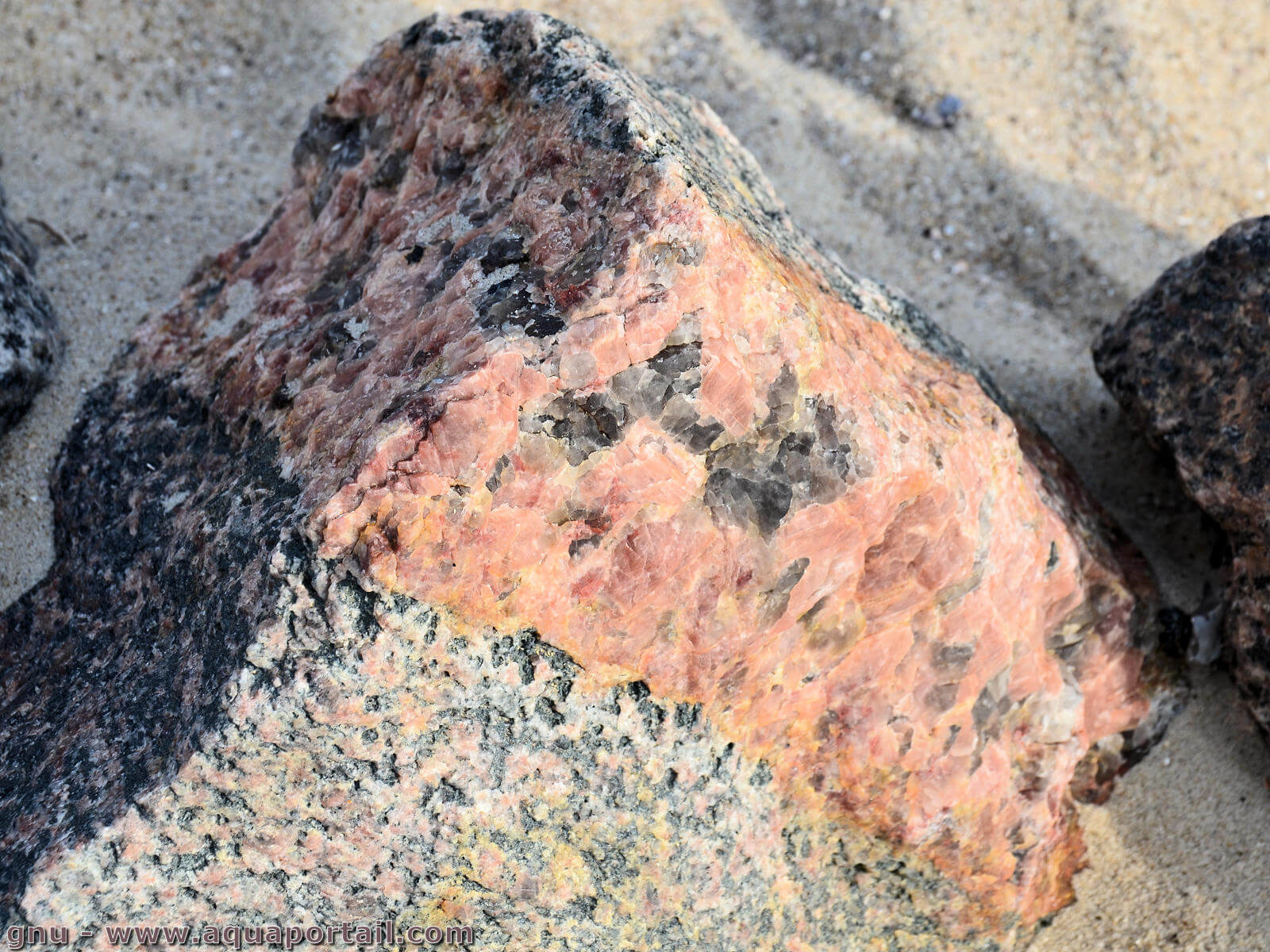
In this granite pegmatite, the typical grain size is greater than 1 cm (0.4 in), though crystals well over a meter (yard) in size are not uncommon. Here, layers of pegmatite (granite with coarse crystalline quartz and potassium feldspar as main components) appear within a rock.
Explanations
A pegmatitic structure is the structure of plutonic magmatic rocks with crystals exhibiting a large size greater than 1 cm (0.4 in), and with no upper limit. Contrasts with microlitic.
See also apatite and hydroxyapatite.
Characteristics
The vast majority of pegmatites are granitic or alkaline in composition and consist primarily of the minerals quartz, feldspars (orthoclase, microcline, and sodium-rich plagioclase), and micas such as biotite, muscovite, or lepidolite. Mafic and syenitic pegmatites are subordinate in quantity but sometimes economically very important.
Pegmatites generally form veins or lenticular bodies with thicknesses on the order of a few decimeters (inches) to a few tens of meters (yards). The veins may be internally zoned, meaning certain minerals tend to be marginal while others occur at the core of the pegmatite.
Genesis
The melt that leads to pegmatite formation occurs when incompatible elements such as lithium, rare earth elements, thorium, or uranium—generally components that do not fit into the crystal structure of common rock-forming minerals—alongside volatile substances such as water, phosphorus, boron, or fluorine, become enriched in the residual melt during the crystallization of a pluton. A similar process occurs during the partial melting of rocks with a high degree of metamorphism.
The presence of volatile constituents on the one hand considerably lowers the melting point, so that the melt solidifies only at a temperature of about 450 °C (842 °F), and on the other hand makes it more fluid, meaning viscosity is greatly reduced. Because of these properties, the melt can penetrate far into the surrounding rock, often for several kilometers (miles) along fissures.
Classification
Due to their chemical composition, mineral content, and environment (metamorphic facies), (granitic) pegmatites can be divided into different classes:
- abyssal pegmatites: arise from anatexis in an amphibolite-to-granulite facies environment and rarely contain minerals of the elements U, Th, Zr, Nb, REE. Countless pegmatites of this class can be found in high-grade metamorphic zones of Precambrian shields worldwide
- muscovite pegmatites: originate from anatexis under amphibolite facies conditions. They occasionally contain minerals of Li, Be, Ti, Nb, Ta, U, Th, and REE and constitute a source of industrial muscovite production
- rare-element pegmatites: formed by progressive fractionation of granitic magmas in the upper greenschist and lower amphibolite facies. Frequently contain minerals of Li, Rb, Cs, Be, Ga, REE, Sn, Ti, U, Th, Hf, Nb, and Ta. Depending on mineralogy, rare-element pegmatites are further divided into 1) rare-earth pegmatites (allanite, monazite, gadolinite); 2) beryl pegmatites (beryl, columbite); 3) complex lithium pegmatites (spodumene, petalite, amblygonite, lepidolite); 4) albite-spodumene pegmatites (spodumene); 5) albite pegmatites
- miarolitic pegmatites: form pockets in hypabyssal plutons and are, in a sense, a low-pressure variant of rare-earth pegmatites.
Uses
Industrially important minerals and rare earths such as boron, beryllium, and lithium are obtained from pegmatites. Occasionally, gemstones such as topaz, smoky quartz, various tourmalines, or beryl also occur. Due to their vein-like occurrence with unevenly distributed mineralization and mostly small volumes, pegmatites play only a minor deposit role by global standards.
Mineral collectors prize pegmatites for their sometimes very rare and/or exceptionally large minerals.
Notable examples include the two-kilometer-long (1.2-mile-long) and 45- to 60-meter-thick (148- to 197-foot-thick) Bikita pegmatite in Zimbabwe, which is one of the largest lithium, cesium, and beryllium deposits in the world. In the Altai mountains of Mongolia, there is a 20- to 70-kilometer-wide (12- to 43-mile-wide) swarm belt in which numerous pegmatite fields and swarms align over a length of about 450 kilometers (280 miles). Deposits of rare earth metals in particular are mined here. The Bancroft pegmatite (Ontario) and the huge Rössing deposits in Namibia are especially valued for their uranium extraction.
Synonyms, antonyms
Spanish translation: pegmatita
1 synonym (similar meaning) for "pegmatite":
- intrusive igneous rock with large interlocking crystals
0 antonyms (opposite meaning).
Related words and expressions to PEGMATITE are directly connected by general or specific meaning.
The word PEGMATITE is listed on page 1 of words starting with P in the dictionary glossary.
Related to "pegmatite"
P680-P700
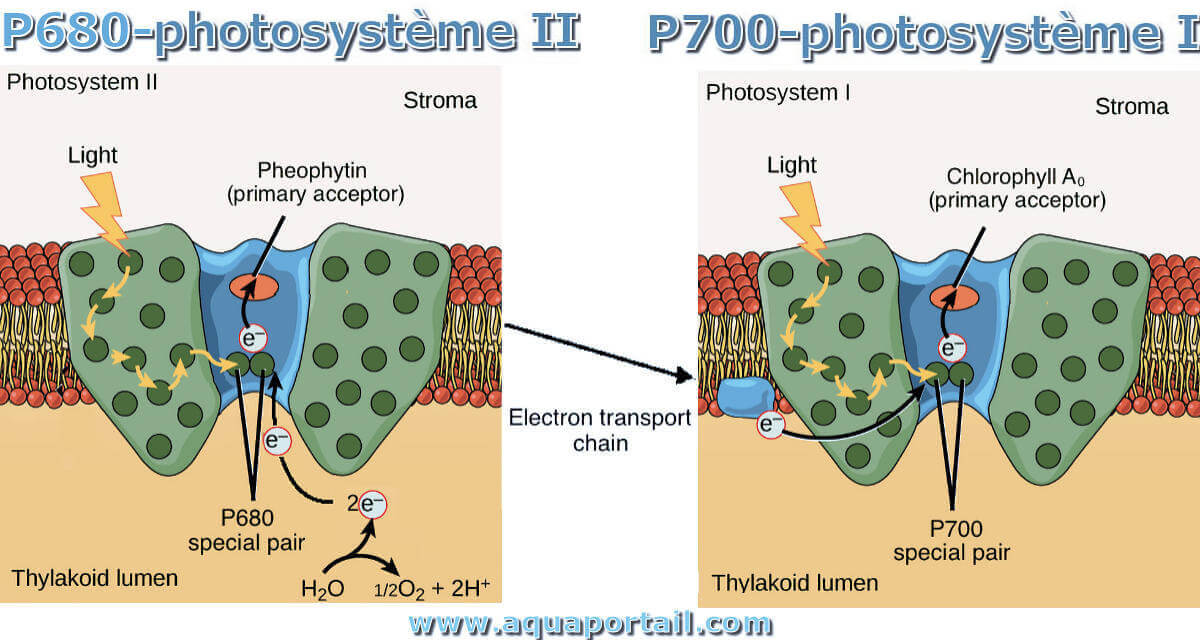
P680-P700 is an association of chlorophyll a molecules absorbing at 680 nm and 700 nm, respectively, possessing particular photochemical properties.
paedomorphosis

Paedomorphosis (juvenilization) is a phylogenetic change involving the retention of juvenile or even larval traits into a later (adult) stage.
painkiller
A painkiller, or analgesic, is a pain reliever, a medication used to soothe or eliminate pain, whether headaches, muscle aches, arthritis, etc.
Paleocene

The Paleocene is the geological epoch of the Cenozoic era spanning from -66 to -56 Ma in the stratigraphic scale.
Simple summary
Pegmatite is an intrusive igneous rock characterized by large crystals, generally exceeding 1 cm (0.4 in) in diameter. It forms through the crystallization of magma and has a chemical composition close to that of granite, often containing significant amounts of quartz, feldspar, and mica. Pegmatites are distinguished by the occasional presence of rare minerals and gemstones, resulting from their formation process. They are frequently found as dikes and veins within the host rock.
