Cytological alternation of phases
noun phrase (n. phr.)
Definition
A cytological alternation of phases corresponds to alternating stages characterized by different ploidy levels in an organism's life cycle. These consist of haplophase and diplophase. The phases are studied in cytology.
Generations may differ from one another both in their genetic makeup (their chromosome number following a nuclear phase change) and in their external appearance. See phase and alternation of generations, notably morphological alternation of generations.
A cycle with cytological alternation of phases:
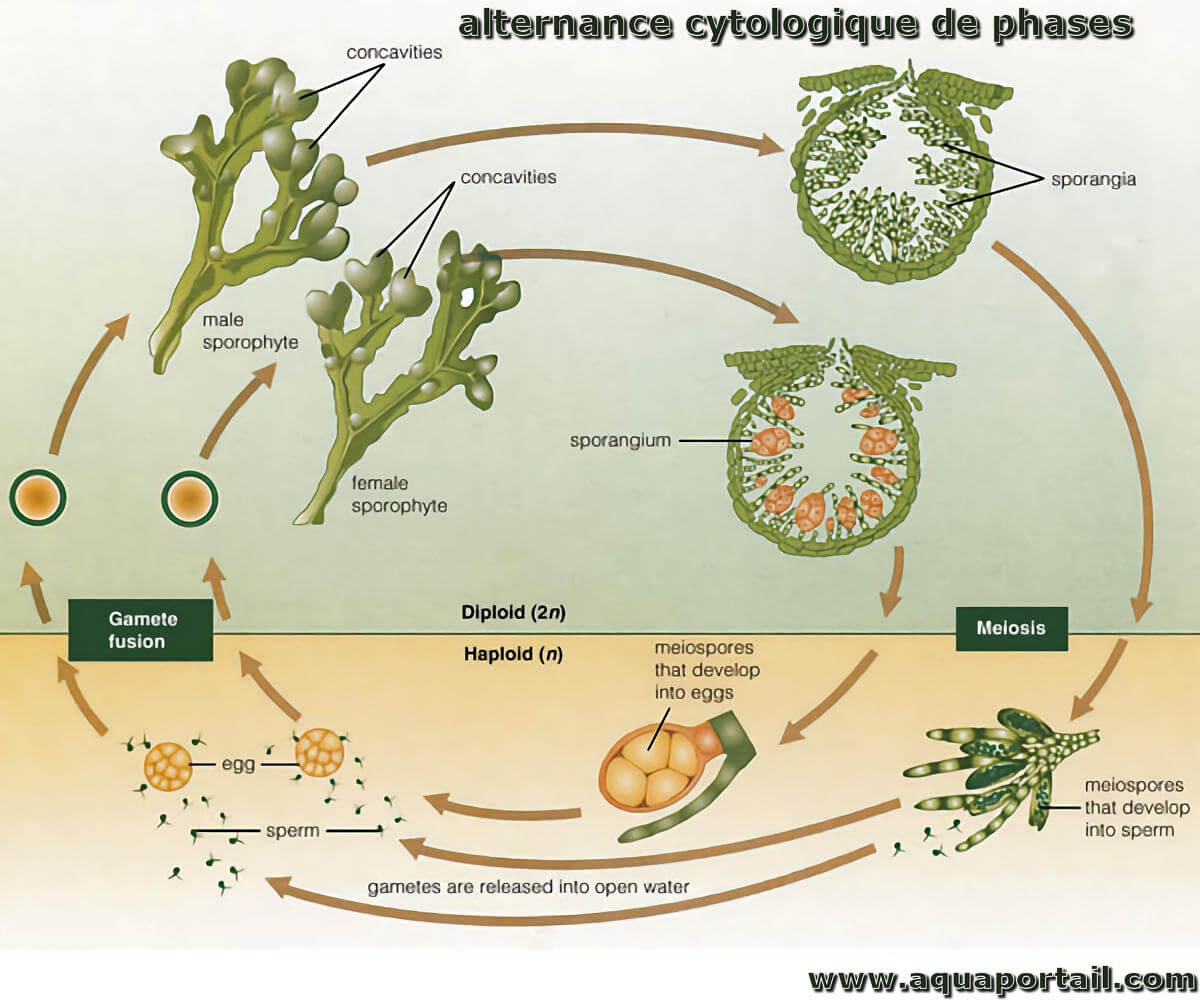
Gametic life cycle with cytological alternation of phases in the intertidal rockweed Fucus sp. In this life cycle, only the unicellular gametes are haploid.
Explanations
Eduard Strasburger (1874) discovered the alternation between diploid and haploid nuclear phases, also called cytological alternation of nuclear phases. Although they most often coincide, morphological alternation and nuclear phase alternation are sometimes independent of each other; for example, in many red algae, the same nuclear phase may correspond to two distinct morphological generations.
In certain ferns that have lost sexual reproduction, there is no change in nuclear phase, yet alternation of generations is maintained.
✅ A gametic life cycle, such as that of the brown alga rockweed (Fucus), begins with a multicellular sporophyte. The sporophyte is relatively large and complex, with regions resembling roots, stems, and leaves. Within cavities of the body, specialized cells enlarge and become sporangia, and their nuclei undergo meiosis. One type of sporangium produces large meiospores and another type produces small ones.
The meiospores are not released from their sporangia right away. Each large meiospore first differentiates into a female gamete (an egg), and each small meiospore differentiates into a motile male gamete (a spermatozoid).
Next, the gametes are released into the waves in such vast numbers that many eggs and sperm are brought together. Only eggs from one parent and sperm from another can fuse; eggs and sperm produced by the same plant will not be attracted to one another.
Plasmogamy and karyogamy take place, and the zygote immediately begins dividing and developing into a sporophyte. As it grows larger, it sinks to the bottom of the intertidal zone, attaches to a rock, and then reaches maturity. Fucus has a gametic life cycle because the sole haploid stage is a single-celled gamete. There is no multicellular 1n stage.
Related to "cytological alternation of phases"
cactus

A cactus is a thick, fleshy plant that grows in many hot, dry regions of the world. Cacti do not have leaves, and many are covered with spines.
caecilian

A caecilian (gymnophione) is a limbless, burrowing, worm-like amphibian whose legs are vestigial or absent.
cancer
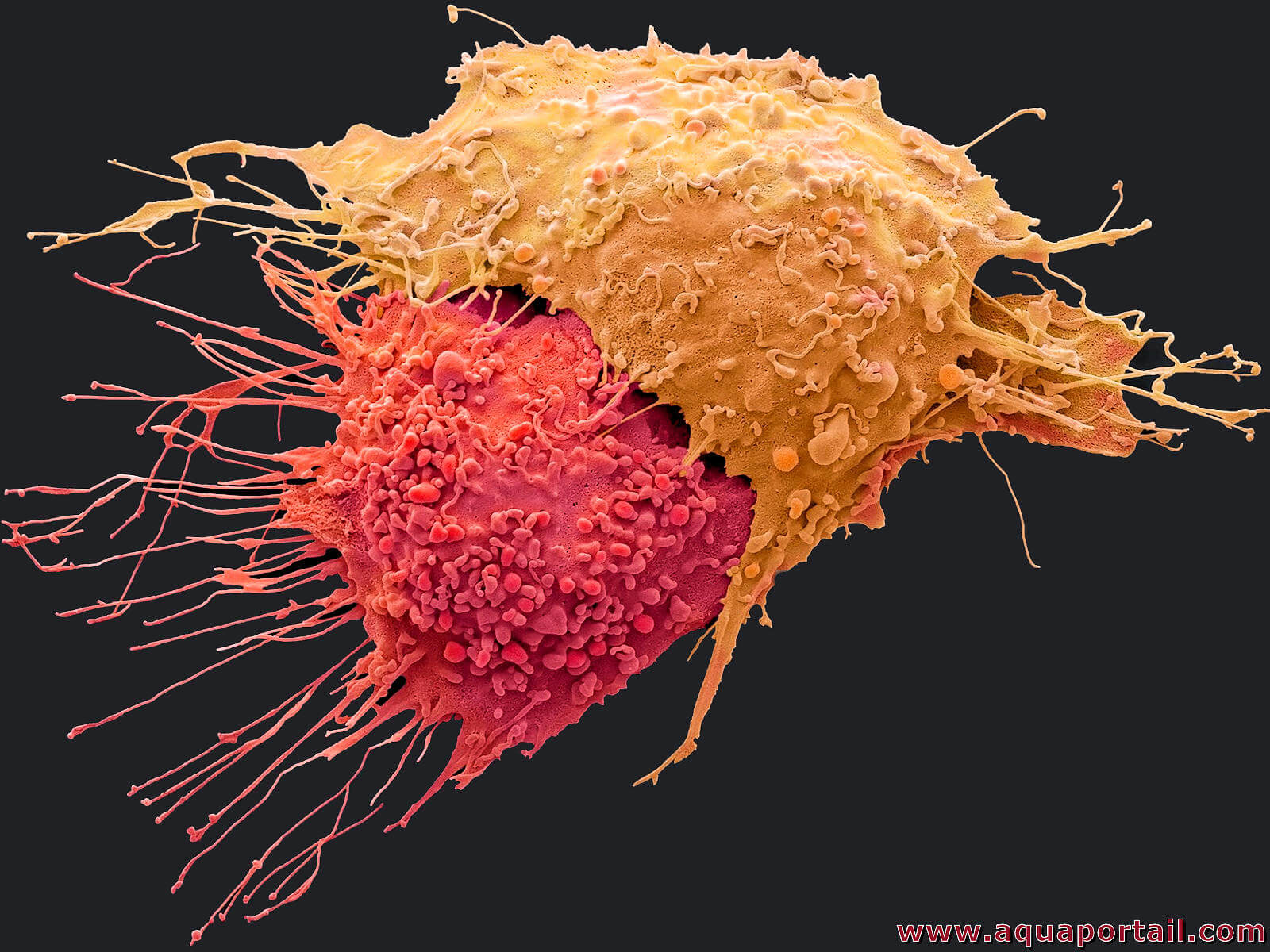
Cancer is a disease in which certain cells of the body grow uncontrollably and spread to other parts of the body.
capsule

A hard capsule (gelcap) is a small, hollow, hard-shelled capsule made of two interlocking halves containing a medication, nutraceutical, or dietary...
