A trigenetic cycle (as distinct from a monogenetic cycle or a digenetic cycle) refers to a life cycle in which, between an individual and an immediate descendant identical to itself, three types of organisms succeed one another, differing at least in the nature of the reproductive cells they produce.
digenetic

A digenetic life cycle is the life cycle of an organism comprising two generations—a cycle in which, from one individual to an immediate descendant identical...
parthenogenetic
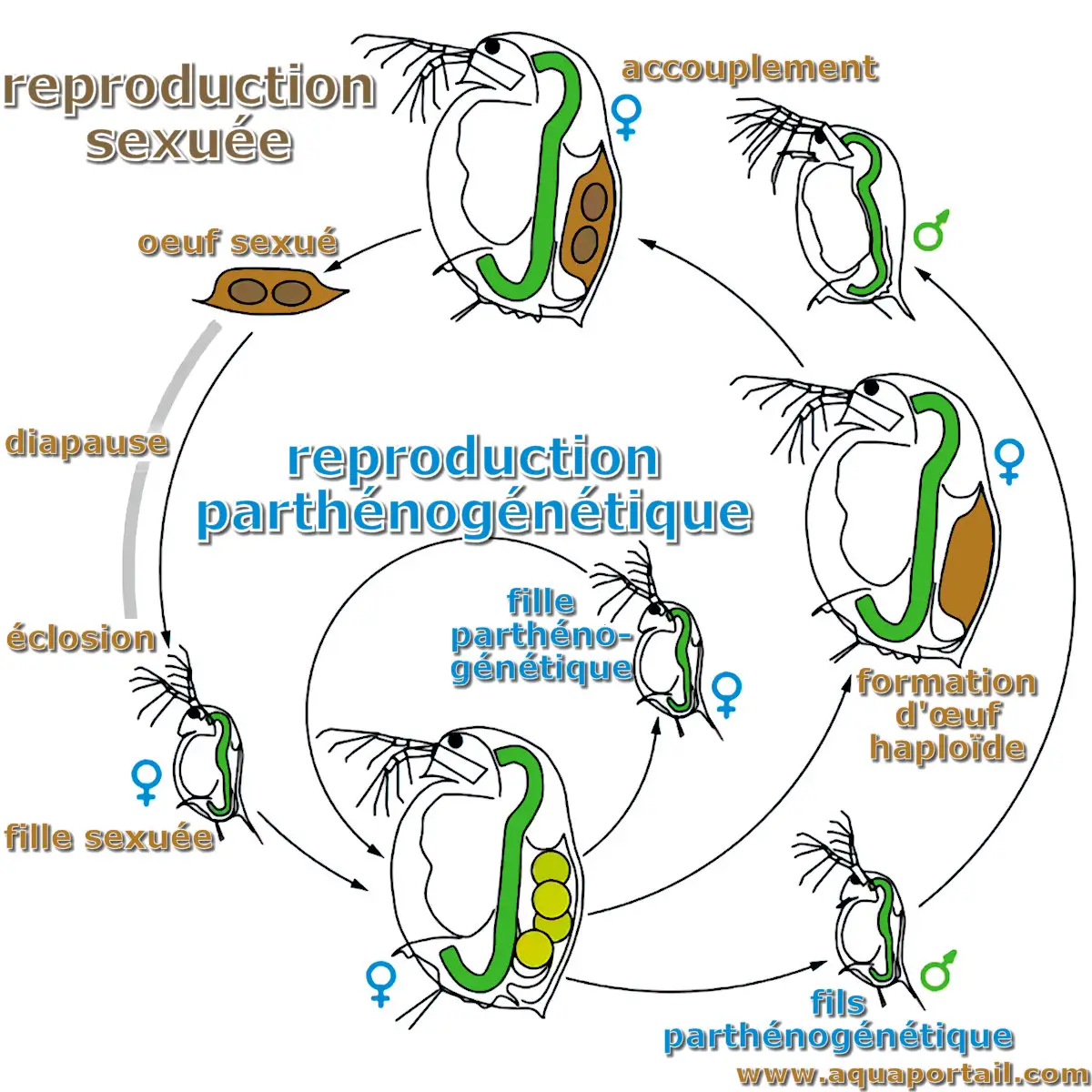
A parthenogenetic organism is an invertebrate (or occasionally vertebrate) animal capable of reproducing without fertilization, even though the species...
tagma

A tagma is a group of fused segments formed by series of metameres differentiated from the rest of an arthropod's body.
tapeworm

The tapeworm, or solitary worm, is a long, ribbon-like, segmented flatworm, a parasitic cestode of the genus Taenia.
