
Biological and Mechanical Filtration: Marine Reef Aquarium Manual
Filtration, protein skimming, and biological purification methods in seawater
Filtration and biological waste removal in saltwater setups differ depending on whether you keep corals or not. First review the foundational definitions of biological filtration and water purification.
A protein skimmer for purifying marine aquarium water: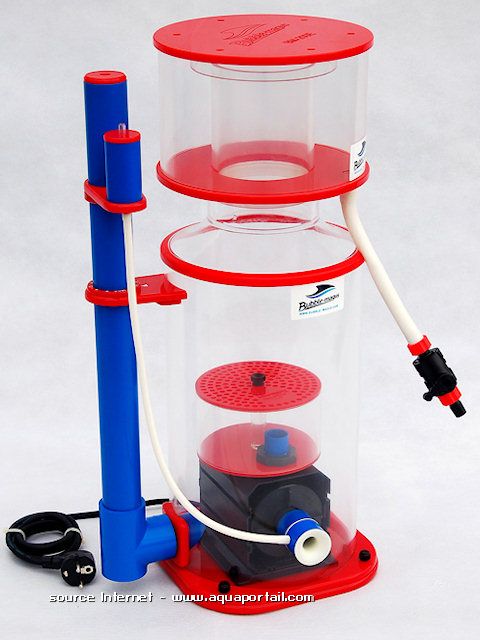
A protein skimmer is indispensable in a marine aquarium, especially in a coral reef setup.
Different approaches to purifying marine aquarium water
- A pure Fish Only (F.O.) tank with zero invertebrates (no shrimp, hermit crabs, anemones, or corals) can run on a wet/dry trickle filter similar to freshwater setups, though such filters accumulate nitrate levels far too high for anything beyond hardy fish.
- Undergravel filters (sand/gravel bed filters) should be avoided whenever possible—they are outdated relics for marine tanks that trap detritus and drive excessive NO3 nitrate levels.
- Internal box or canister filters act as decent mechanical filters, but their usefulness stops there because trapped detritus quickly breaks down into excess nitrates.
In short, the moment you enter the world of marine invertebrates, you must shift to true biological water management and abandon legacy filters that maintain nitrate concentrations incompatible with the ultra-low (near-zero) levels required by invertebrates—especially sensitive stony corals. Modern reef keeping relies on natural biological methods (such as the Berlin method, the Jaubert plenum method, or Ron Shimek's Deep Sand Bed) typically paired with a protein skimmer.
Under biological filtration, organic waste produced by consumers (animals) is mineralized into inert inorganic nutrients assimilated by primary producers (algae and symbiotic zooxanthellae), completing the nitrogen cycle.
- Protein skimming uses physical foam fractionation to strip dissolved organic compounds out of the water before they decompose into toxic ammonia. Removing this organic load upfront dramatically reduces the burden on biological filtration during water purification. Buy the best protein skimmer your budget allows—it is the single most important piece of hardware you will purchase. Be skeptical of optimistic manufacturer ratings: a skimmer rated for "up to 1,000 L" may struggle to handle half that volume depending on brand testing standards. Do your homework!
- Live rock (LR)—and/or live sand in Jaubert and DSB systems—handles virtually all biological filtration on its own alongside a protein skimmer. Plan on roughly 20 kg of live rock per 100 liters of gross tank volume; depending on rock density and porosity, this fills roughly 30% of the tank volume, which is the key target to achieve. Live rock is vital for long-term stability and ultra-low nitrate levels!
- Filter socks (micron bags) placed in a sump compartment provide convenient, removable mechanical filtration.
In nature, seawater quality is remarkably stable
The chemical composition of seawater is so constant that only minor, localized fluctuations ever occur. Vital trace elements remain steady, dissolved oxygen stays consistent, organic matter and inorganic nutrients remain extremely low, pH holds steady between 8.1 and 8.3, free-floating bacterial counts are low, and water motion is continuous. Coral reefs represent an optimal, stable environment supporting immense biodiversity and dense populations competing fiercely for food and territory alongside constant predation—which is why so many wild reef fish bear scars of daily survival.
Paradoxically, that very environmental stability creates our biggest challenge in home aquariums: reef organisms evolved without needing tolerance for sudden parameter swings (unlike freshwater species adapted to seasonal floods and runoff). They possess only limited adaptability, and it adjusts SLOWLY.
Two golden rules follow: never subject reef livestock to abrupt parameter shifts, and maintain an artificial environment as close to natural reef stability as possible. It is demanding work, yet it is the core goal of every marine aquarist!